US holds second Myanmar talks; junta offensive brings fresh civilian deaths; ICJ ruling nears
This edition tracks expanding external engagement with Myanmar’s military, from a second US meeting to Malaysia’s welcome for Min Aung Hlaing, alongside continuing offensives and airstrikes. The tension is sharpest as the ICJ approaches a Rohingya genocide ruling while fuel shipments, border scam infrastructure and civilian attacks test claims of enforcement, diplomacy and accountability.
Tracking: NUG · Rohingya · Myanmar
Geography: Myanmar, Rakhine State, Bangladesh
US Holds Second Talks With Myanmar Junta Within a Month
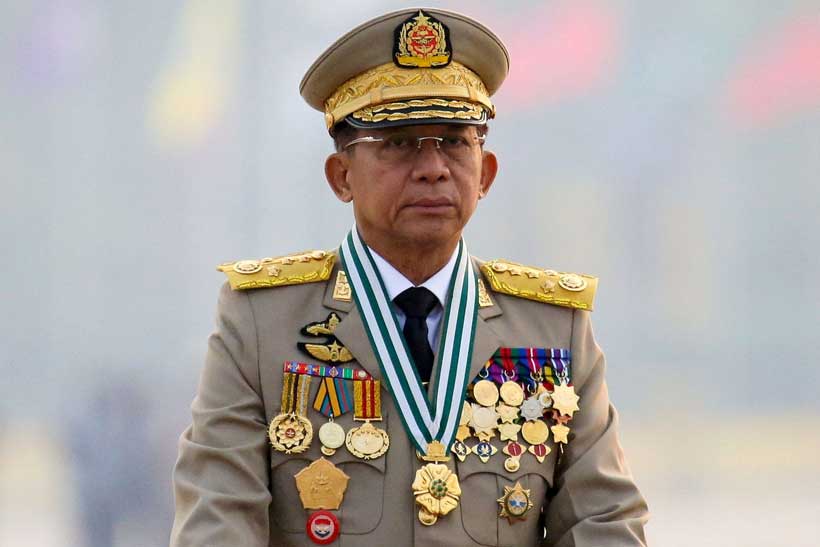
US officials held a second round of talks with Myanmar’s military-backed government in Tokyo last week, within a month of a September meeting in Naypyitaw.
The delegation was led by Assistant Secretary of State Michael Vance, but the regime’s representatives and Tokyo agenda were not identified.
Washington’s stated priorities include securing an American businessman’s release and shutting scam centers targeting Americans.
The outreach could expand into security, economic cooperation and access to heavy rare earths, although the sources say their role remains unclear.
The Irrawaddy reported that US officials also urged the regime to reduce attacks on civilians, release political prisoners, engage ethnic armed groups and permit humanitarian aid.
NUG Foreign Affairs Minister Zin Mar Aung called the approach transactional, while a Karenni official warned that engagement and aid cuts could hurt federal democracy and human rights efforts.
Key facts:
Why it matters: The talks reopen a channel between Washington and Myanmar’s military rulers after years of US-led isolation.
For the junta, continued contact may reduce diplomatic pressure; for the NUG and ethnic resistance groups, the risk is that US priorities shift toward transnational crime, detained Americans and critical minerals rather than accountability and democratic change.
Rare-earth cooperation would also be difficult: deposits are located in areas controlled by anti-junta groups, while China remains the main buyer and a major influence on Myanmar’s military leadership.
The next indicators are whether Washington publicly confirms the talks, expands sanctions relief or secures concrete steps on civilian protection, political prisoners and humanitarian access.
Junta Offensive and Airstrikes Deepen Myanmar’s Conflict

Myanmar’s military intensified pressure on multiple fronts this week. On October 14, Myanmar Now reported that junta forces were trying to enter Rakhine State from three locations in Magway Region, while attacks on civilians accompanied the operation.
On October 15, two late-night junta airstrikes on villages near the Mon-Karen border killed at least eight civilians, according to residents and regional media.
The same day, the KIO/KIA rejected the junta’s offer of peace talks, saying increased military deployments in Kachin State meant the proposal would not change conditions on the ground.
Separately, a Chinese court sentenced three members of the Wei family gang to death for crimes linked to scam compounds in Myanmar’s Kokang region.
The separate developments point to continuing armed conflict inside Myanmar and growing pressure around its borderlands, from both military operations and Chinese law enforcement.
Key facts:
Why it matters: The junta’s battlefield push and the reported civilian deaths make a negotiated de-escalation less credible in the immediate term.
KIO/KIA’s rejection also removes one possible channel for talks while the military continues increasing its presence in an ethnic-minority region. Civilians bear the clearest immediate cost, with airstrikes producing deaths as the junta tries to project force.
China’s death sentences show Beijing applying direct judicial pressure to criminal networks operating in Myanmar’s borderlands, but that action does not address the wider conflict or the junta’s military campaign.
Iranian Jet Fuel Reached Myanmar Despite U.S. Blockade

Reuters reported on October 16 that an Iranian tanker carrying jet fuel reached a Myanmar port in September, based on satellite imagery and SynMax analysis. Myanmar’s military government did not respond when asked whether it received the cargo.
The delivery came despite U.S. sanctions on Myanmar’s aviation-fuel sector, imposed in 2023 over allegations that military airstrikes targeted civilians and opposition forces.
Iran also moved at least eight LPG cargoes from the Gulf of Oman since mid-July, according to UANI; Reuters estimated 4.1 million barrels, while six tankers and the Myanmar-bound vessel were under U.S. sanctions.
Washington calls its naval blockade “ironclad,” but a U.S. official said passage alone does not prove a vessel evaded it.
Key facts:
Why it matters: The reported arrival indicates that targeted sanctions and naval pressure have not fully prevented aviation-fuel deliveries to Myanmar. Access to sanctioned supply routes could reduce the practical effect of U.S.
pressure on the military, although the reporting does not establish whether the junta received or used this shipment.
The episode also exposes an enforcement gap: Washington maintains that the blockade remains in force, while maritime movements can still proceed under vessel-by-vessel assessments.
The broader LPG flows appear limited rather than a major Iranian breakthrough; Kpler recorded no Iranian crude exports in September.
ICJ ruling on Myanmar’s Rohingya genocide case nears

The International Court of Justice is expected to rule in the coming weeks on whether Myanmar committed genocide against the Rohingya, bringing a case rooted in the military’s 2017 operations closer to its conclusion.
The ruling could become the court’s first finding that a state was fully responsible for genocide. More than 700,000 Rohingya fled to Bangladesh after the August 2017 violence, and about 1.2 million now live in Cox’s Bazar camps.
Rohingya witnesses and advocates say justice also requires restoring citizenship, recognizing Rohingya identity, and returning land and property; a survey of nearly 500 refugees found 86 percent considered citizenship and identity essential.
Legal experts expect the judgment to shape other genocide proceedings, including South Africa’s case concerning Israel’s war in Gaza.
Key facts:
Why it matters: A ruling against Myanmar would establish a major legal precedent and could influence how the ICJ assesses other genocide cases, including South Africa’s proceedings concerning Israel and Gaza.
It would also intensify pressure for accountability for senior Myanmar military figures identified by the UN mission. For Rohingya refugees, a legal finding alone would not address the conditions they identify as the roots of persecution.
Their stated priorities—citizenship, recognition as Rohingya, and the return of land and property—point to a dispute over Myanmar’s laws and political status, not only the violence of 2017.
Malaysia Welcomes Min Aung Hlaing as Regional Rehabilitation Grows

Malaysia gave Myanmar’s military leader Min Aung Hlaing a red-carpet welcome during his visit last week, despite ASEAN’s earlier exclusion of him from high-level meetings.
Prime Minister Anwar Ibrahim said Malaysia would help reintegrate Myanmar into ASEAN, while Min Aung Hlaing said Myanmar could send nationals home at its own cost, including by navy ship; Malaysia hosts about 193,000 Myanmar nationals, mostly Rohingya.
The visit marks the latest step in Min Aung Hlaing’s regional rehabilitation: he has also visited Thailand, Vietnam, Cambodia and Laos since becoming president, after an election that barred major opposition parties.
Critics say the diplomacy prioritizes pragmatism over accountability for the war, which has killed as many as 100,000 people and displaced at least 3.5 million.
The United States has called the 2017 crackdown that drove more than 700,000 Rohingya into Bangladesh a genocide, while an activist said returning refugees is unfair.
Key facts:
Why it matters: Min Aung Hlaing gains diplomatic legitimacy as neighbours increasingly prioritize border stability, trade and migration management over ASEAN’s stalled peace plan.
That weakens regional pressure on Myanmar’s military, which ASEAN has excluded from high-level meetings for refusing to implement the Five Point Consensus.
For Rohingya refugees, Malaysia’s willingness to discuss repatriation alongside the military-led government raises protection concerns while Myanmar remains at war.
The next indicators are whether Indonesia and Brunei host Min Aung Hlaing, whether ASEAN restores higher-level engagement, and whether diplomatic contacts produce anything beyond repatriation proposals and transactional cooperation such as US talks on scam centres.
Report Finds Nearly 70 Percent of Junta Airstrikes Targeted Civilians
A report presented during BNI-MPM’s online launch of its peace-process guide says nearly 70 percent of Myanmar junta airstrikes between January 2024 and July 2026 targeted civilians.
Sagaing Region and Rakhine State recorded the highest civilian casualties, according to the findings.
Civilian fatalities from junta airstrikes reached 3,059 by July 2026, while attacks in southern Myanmar, including Karen National Union territories, killed at least 200 people.
Analysts said bombardments intensify after the rainy season, lost military outposts or major battlefield setbacks, as the regime seeks to weaken support for resistance forces and divide communities.
KNU spokesperson Padoh Saw Kler Say said the attacks contradict the junta’s peace claims and instead aim to create fear and force submission. BNI-MPM warned that continued civilian harm could push humanitarian crises toward an irreversible tipping point.
Key facts:
Why it matters: The findings portray air power as a tool of political coercion as well as battlefield violence.
By striking communities after military setbacks, the junta appears to be pursuing two linked aims identified by the analysts: weakening public support for resistance forces and creating divisions between civilians and armed groups.
That strategy places civilians at the center of the conflict while undercutting the regime’s claims to be pursuing peace.
The immediate consequence is a widening humanitarian burden; the key development to watch is whether airstrikes continue to intensify after battlefield losses or other setbacks, particularly in areas already recording high civilian casualties.
Thai Police Find Fiber-Optic Link Serving Myanmar Scam Compound
Thai authorities have reportedly uncovered a 350-meter fiber-optic cable running from Nong Lu, in Thailand’s Kanchanaburi province, across the border into Myanmar.
Police said the 48-core line was carrying about six terabytes of data daily to keep a suspected compound online, including an illegal casino and scam center.
The cable reportedly drew enough capacity for 300–400 people and passed through a local home, whose occupant was paid 700 baht a day.
The case points to a cross-border support network around Myanmar’s Three Pagodas Pass, described in the reports as a cyber-scam hub; NGOs cited by the reports say hundreds or thousands of workers there are trafficked and forced into the trade.
Reports attribute protection to ethnic armed militias but identify neither a specific group nor a direct role for Myanmar’s junta, NUG, PDFs, or Arakan Army.
Key facts:
Why it matters: The discovery shows how Myanmar-based scam operations can rely on infrastructure physically located in neighboring Thailand.
Cutting the connection may disrupt one compound, but the reports describe a broader shift toward smaller, decentralized facilities that could be harder to detect and dismantle.
The alleged role of ethnic armed militias raises a security and accountability question, but no group is identified in these reports.
Follow-up enforcement against local facilitators, the casino, the scam center, and trafficking networks will indicate whether the operation becomes more than a one-off cable seizure.