Myanmar’s Drone War Reaches Airports, Homes and Hospitals
Myanmar’s expanding drone and air campaign is disrupting a major airport while killing displaced civilians and damaging health facilities as fighting intensifies in Rakhine. UN and rights groups warn of mounting civilian harm, blocked aid and abuses by multiple armed actors, while responsibility and target claims remain contested. Beyond the battlefield, Poland blocked a rice shipment over pest contamination, and advocates pressed the UN over Myanmar’s representation without any reported change.
Friday, Sep 11, 2026
Tracking: NUG · Rohingya · Myanmar
Geography: Myanmar, Rakhine State, Bangladesh, Cox's Bazar
Drone strike shuts Mandalay airport before flights resume

Six “suicide drones” struck near Mandalay International Airport on September 10, according to Myanmar’s military-backed government, disrupting flights but causing no reported casualties.
The government blamed pro-democracy rebels, while the supplied reporting says the attack’s civilian or military target could not be independently verified. The airport, Myanmar’s second-busiest, was closed protectively after the strike.
TRT World reported a planned two-day closure, while Arab News, citing AFP, said flights resumed at about 4 p.m. local time on September 11; a separate security officer described the shutdown as maintenance.
The airport is a major domestic and international hub, and civilian air-raid warning groups identify it as a runway for military sorties.
The episode is therefore both a disruption to civilian travel and a sign that drone warfare is reaching an urban facility linked to the military’s air campaign.
Key facts:
Six drones attacked Mandalay airport on September 10; authorities reported no casualties.
The airport initially closed for two days, but flights resumed around 4 p.m. September 11.
The government blamed pro-democracy fighters; the target’s civilian or military status remains unverified.
Mandalay is Myanmar’s second-busiest airport and a reported runway for military sorties.
Why it matters: The attack briefly disrupted a major transport hub and exposed the tension around dual-use infrastructure: the government calls it civilian, while air-raid warning groups identify it as a military launch point.
For pro-democracy forces, the reported strike signals an ability to threaten a facility in a city generally described as a military stronghold; for military authorities, it creates pressure to protect air operations without further disrupting civilian aviation.
The immediate operational effect was limited because flights resumed the next day, and no casualties were reported.
The next indicators are whether authorities extend security restrictions, whether responsibility is credibly established, and whether similar drone attacks spread to other urban or military-linked sites.

Drone Strike Kills Displaced Woman as Fighting Intensifies in Rakhine
A Myanmar military FPV drone strike killed a displaced 63-year-old woman in Kyaukseik Village, Ponnagyun Township, early on September 11, according to local sources and the Phyu Sin Yin Khwin Foundation.
Daw Hla Than Yi had fled earlier fighting in neighboring Werathani Township and died from severe shrapnel wounds.
The attack came as clashes along the Sittwe–Ponnagyun border intensified after a military offensive began on September 4 to capture Ponnagyun, an area controlled by the Arakan Army.
The military has also used jet fighters, heavy artillery, and kamikaze drones against settlements and religious sites, including a September 7 airstrike on Phetkya Village and an attack near Guwa Cave Pagoda that damaged Buddha statues.
Key facts:
Daw Hla Than Yi, 63, was killed by shrapnel in Kyaukseik Village.
The FPV drone strike occurred around 2:00 a.m. on September 11.
The Arakan Army controls the area around Ponnagyun Township.
The military offensive to capture Ponnagyun began on September 4.
Why it matters: The strike shows how the military’s campaign to retake Ponnagyun is exposing civilians, including people already displaced by earlier fighting, to expanding air and drone attacks.
The Arakan Army’s territorial control has made the township a direct battlefield, while residents face hazards from multiple forms of military firepower.
The immediate consequence is greater pressure on civilians and local relief networks as fighting continues.
The Phyu Sin Yin Khwin Foundation accused the regime of intentionally targeting civilians; that allegation remains an attribution by the local organization, but the reported death adds to concerns about attacks affecting villages and religious sites.
Further military advances or continued air operations would be the key developments to watch.
UN mechanism warns Rakhine conflict is intensifying as civilians flee
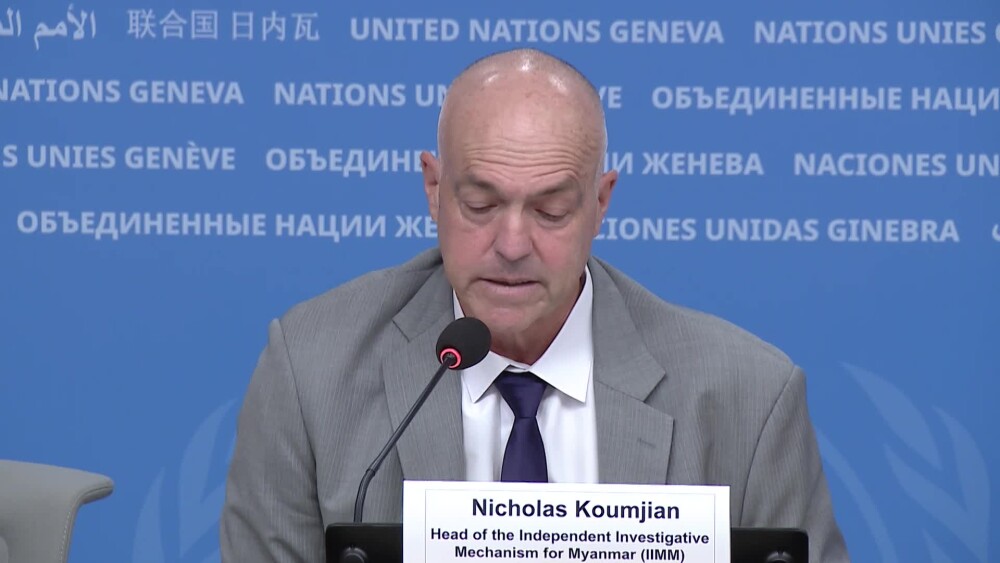
On 8 September 2026, Nicholas Koumjian, head of the Independent Investigative Mechanism for Myanmar, said fighting in Rakhine State had “intensified significantly.
” He reported aerial bombing, artillery attacks and barriers to humanitarian assistance, while Rohingya and other minorities took dangerous risks to escape the violence.
The warning sharpens the picture of a conflict worsening for civilians in a state already marked by mass displacement and grave abuses.
Amnesty International’s account says military airstrikes in 2025 rose more than 50% from 2024; attacks in Rakhine included a September strike that killed at least 19 students and a December strike on a hospital that killed dozens.
Together, the reports point to continuing civilian harm, restricted relief and renewed displacement pressures, while documenting abuses by the military and other armed groups.
Key facts:
On 8 September 2026, Nicholas Koumjian said Rakhine’s conflict had intensified significantly.
The mechanism reported aerial bombing, artillery attacks and humanitarian-assistance obstructions.
Rohingya and other minorities took enormous risks to escape violence.
Amnesty recorded more than 3.5 million displaced people in Myanmar.
Military airstrikes increased more than 50% in 2025 versus 2024.
Why it matters: Rakhine’s civilians are facing a combined security and access crisis: attacks threaten lives, while obstruction of humanitarian assistance limits relief.
Rohingya and other minorities are especially exposed because the mechanism says they are caught between combatants and must take dangerous risks to flee.
For policymakers, the immediate test is whether humanitarian access can be restored and civilian protection improved.
The statements also strengthen the contemporaneous record for accountability efforts, while Amnesty’s documentation shows abuses were not confined to one actor: the military and armed groups both used forced labour, recruitment and other abuses, although it says most violations were carried out by the military.
Myanmar Air Force Attacks Intensified Against Health Care
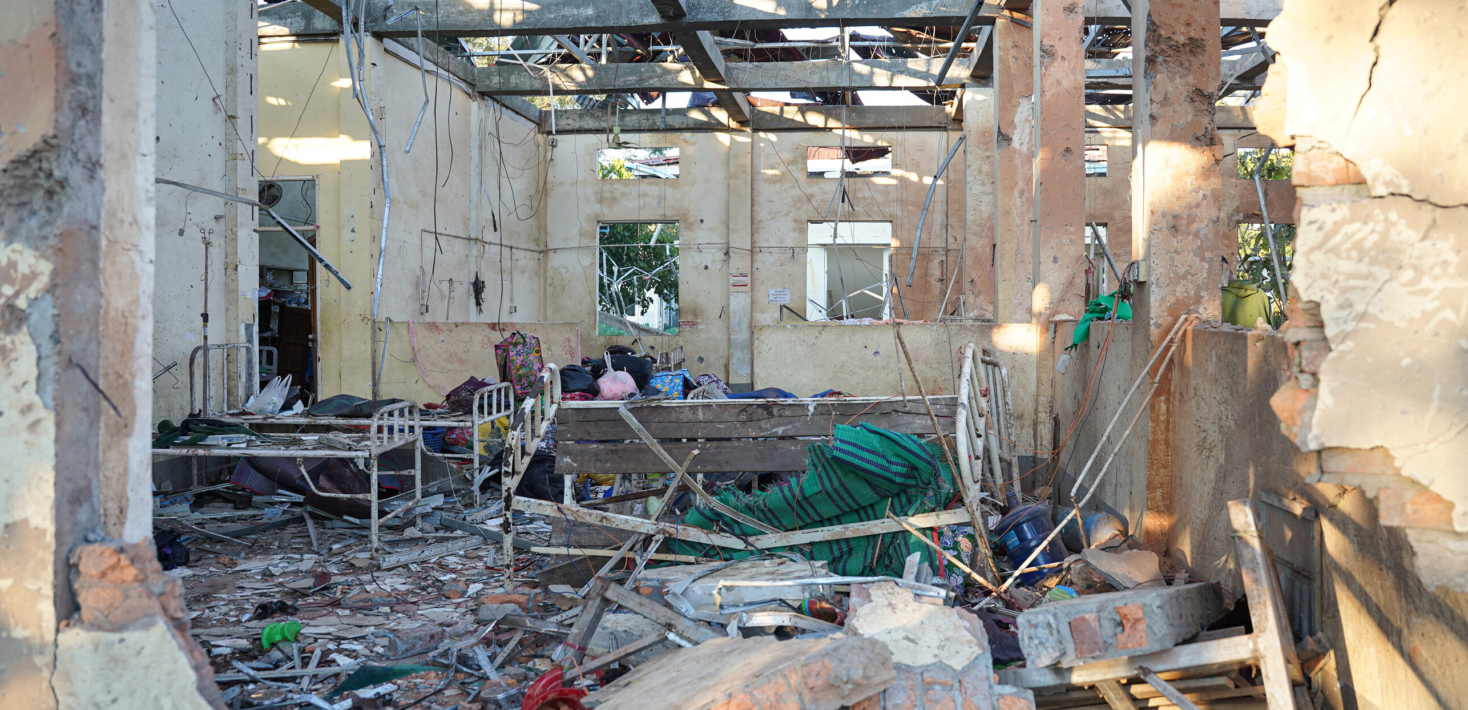
A report published September 10 documents 259 incidents of violence against or obstruction of health care in Myanmar during 2025.
It says the use of explosive weapons increased, with Myanmar Air Force aircraft-delivered strikes rising from 66 incidents in 2024 to 81 in 2025.
The attacks reached facilities in areas controlled by armed groups, including hospitals operating under the National Unity Government.
In Bago, Mandalay and Sagaing, the report says low-flying paramotors and gyrocopters dropped bombs on health facilities, killing at least six health workers.
A Myanmar Air Force medic was also reportedly killed in Kayin by improvised attacks attributed to Karen National Liberation Army and People’s Defense Force forces.
Key facts:
Data counted 259 incidents of violence against or obstruction of health care during 2025.
Myanmar Air Force aircraft-delivered strikes rose from 66 in 2024 to 81 in 2025.
The air force’s share of explosive-weapon incidents increased from 52% to 67%.
Paramotors and gyrocopters reportedly bombed facilities in Bago, Mandalay and Sagaing.
At least six health workers were killed by these weapons.
Why it matters: The findings point to growing danger for health workers and patients in areas outside military control, including NUG-run hospitals.
The increase in air-delivered attacks gives the Myanmar military a wider-area strike capability against opposition-held communities, while improvised attacks by resistance forces show that health-care personnel can also be exposed on opposing fronts.
The immediate consequence is a more hazardous operating environment for medical services in contested areas.
Future reporting should clarify whether the pattern documented for 2025 continued through 2026 and whether attacks are further disrupting access to hospitals and emergency care.
Poland blocks 250 tonnes of Myanmar rice over pest contamination

Poland has blocked the sale of 250 tonnes of rice imported from Myanmar after authorities found substantial pest residues in goods at Gdańsk, according to Myanmar Now.
The Polish Agricultural and Food Quality Inspection Authority said the measure took effect immediately, but provided no details on when the shipment arrived or whether other Myanmar exports would be affected.
The Myanmar Rice Federation is investigating the shipment’s departure from Yangon, its sea voyage and arrival in Poland.
A federation official said the rice had passed inspection before export, while initial information indicated contamination was detected after the cargo entered circulation.
Poland bought 57,899 tonnes of Myanmar rice during the 2025–26 fiscal year, making it Myanmar’s fifth-largest buyer, while total rice exports exceeded 2.7 million tonnes.
Key facts:
Poland blocked the sale of 250 tonnes of Myanmar rice on Wednesday.
Authorities found substantial pest residues in the shipment at Gdańsk.
The Myanmar Rice Federation is investigating the cargo’s journey from Yangon to Poland.
Myanmar exported 57,899 tonnes of rice to Poland during fiscal year 2025–26.
Myanmar’s total rice exports exceeded 2.7 million tonnes during fiscal year 2025–26.
Why it matters: The immediate impact is the loss or delay of a 250-tonne shipment and a required investigation into where contamination occurred.
The Myanmar Rice Federation’s review will need to clarify whether the problem arose before export, during the voyage, or within Poland’s distribution system.
Because Poland is a major buyer of Myanmar rice, the case could increase scrutiny of future shipments, although the article provides no evidence that Poland has imposed broader restrictions.
The federation’s findings and any Polish decision affecting additional cargoes are the next developments to watch.
Fortify Rights raises Rohingya abuses at UN Human Rights Council
On 8 September, Fortify Rights Senior Director Benedict Rogers addressed the UN Human Rights Council’s 63rd session on abuses against civilians in Myanmar.
According to Fortify Rights, he accused both the Myanmar military junta and Arakan Army of atrocities against Rohingya and called for accountability; he also cited junta airstrikes, including attacks by paramotors and gyrocopters.
A separate 10 September Mizzima post urged the United Nations to keep Kyaw Moe Tun as Myanmar’s permanent representative.
It recalled his 2021 rejection of the military’s coup attempt and said the UN did not transfer the seat to the generals after the junta announced his dismissal.
Together, the posts connect scrutiny of abuses against Rohingya with the unresolved question of who represents Myanmar internationally.
Neither article reports a new UN decision, making advocacy and pressure—not a settled change in representation—the immediate development.
Key facts:
Benedict Rogers addressed the UN Human Rights Council’s 63rd session on 8 September.
Fortify Rights attributed atrocities against Rohingya to the junta and Arakan Army.
Rogers highlighted junta airstrikes using paramotors and gyrocopters.
Mizzima urged Kyaw Moe Tun to remain Myanmar’s UN representative on 10 September.
The UN did not hand Myanmar’s seat to the generals after his 2021 dismissal.
Why it matters: The UN forum puts alleged abuses by the Myanmar military and Arakan Army in the same accountability frame, challenging any narrative that civilian protection concerns involve only one armed actor.
For Rohingya communities, renewed international attention keeps responsibility and justice on the diplomatic agenda.
Kyaw Moe Tun’s continued representation would preserve an international platform associated with Myanmar’s elected government rather than the military authorities.
The immediate issue to watch is whether UN members maintain that arrangement; the supplied reports establish advocacy for his continuation, not a new decision.
Drone Attack Closes Mandalay Airport for Two Days
Mandalay airport, Myanmar’s second-busiest, was closed for two days after six suicide drones attacked the facility on Thursday, according to the military-backed government and security sources cited by AFP.
No casualties were reported, but flight schedules were disrupted and the airport was closed protectively through Friday and Saturday.
The government blamed pro-democracy guerrillas, including groups associated with the People’s Defence Forces, while AFP could not independently verify whether the attack site was civilian or military.
The airport is a major domestic and international hub, but civilian warning groups also identify it as a runway used by military aircraft.
The episode is a rare acknowledged rebel attack in a major city that has generally remained under military control, highlighting the expanding use of drones by both sides in Myanmar’s civil war.
Key facts:
Six drones attacked Mandalay airport on Thursday afternoon.
No casualties were reported, but flight schedules were disrupted.
Security sources said the airport would remain closed through Saturday.
The military-backed government blamed pro-democracy guerrillas.
AFP could not verify whether the attack site was civilian or military.
Why it matters: The closure temporarily cuts access to a major transport hub in central Myanmar and shows that armed groups can threaten infrastructure in a city generally viewed as a military stronghold.
It also creates competing narratives: the authorities can present the attack as a threat to public transportation, while the attackers demonstrate reach against a facility reportedly used by military aircraft.
The immediate consequence is disruption for civilians and travelers, alongside heightened security around aviation.
The longer-term question is whether drone attacks become more frequent against urban or dual-use infrastructure, and whether the military responds with broader restrictions or intensified air operations.