Myanmar’s Political Gambits Leave Rohingya Safety Unresolved
Myanmar’s resistance coalition is tightening coordination as Min Aung Hlaing rejects ASEAN’s framework and promotes his own military-led path, deepening the divide over the country’s political future. Meanwhile, talks and screening on Rohingya returns produce no safety guarantees, even as international justice advances and more than 600,000 Rohingya children remain without citizenship, security, or meaningful prospects.
Monday, Aug 3, 2026
Tracking: NUG · Rohingya · Myanmar
Geography: Myanmar, Rakhine State, Bangladesh
1. Resistance coalition finalizes pact as Rohingya rights minister resigns
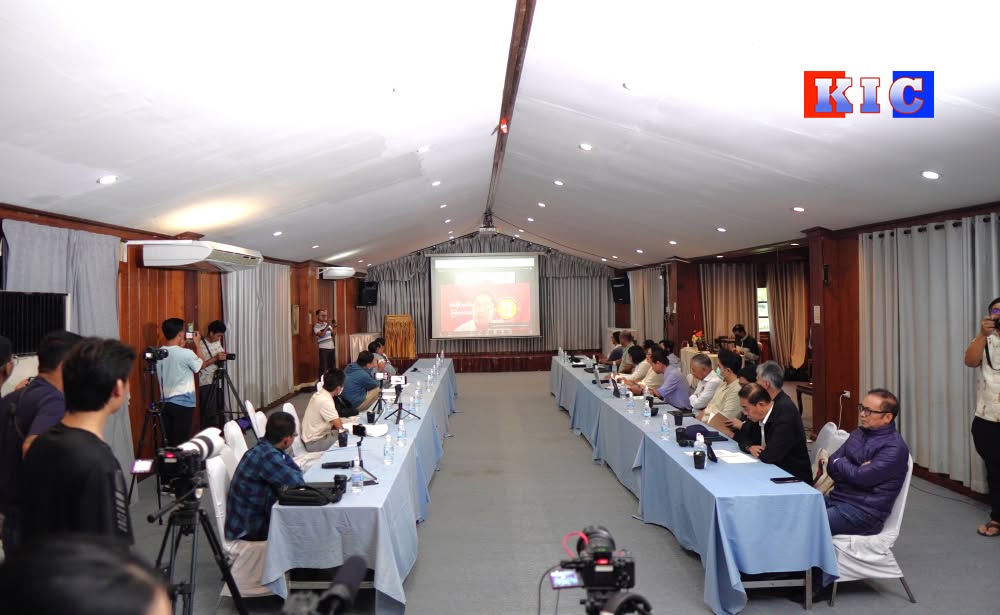
On July 30, the National Unity Government (NUG), the National Unity Consultative Council, parliament’s Committee Representing Pyidaungsu Hluttaw, and federal units in Sagaing and Mandalay approved the first draft of a Common Political Agreement.
The pact is intended to coordinate resistance during the current revolutionary period, advance a federal democratic union, and answer junta chief Min Aung Hlaing’s political agenda during his first 100 days as military-appointed president.
Separately, Aung Kyaw Moe announced his resignation as NUG deputy human rights minister, effective July 31; the NUG confirmed it.
The first Rohingya national to hold a ministerial-level post in a Myanmar government since 1962, he said he was moving to a role focused on Rohingya political representation, dignity, aid, and justice—not leaving shared democratic goals or because of conflict with NUG leadership.
Key facts:
The resistance coalition approved the CPA’s first draft at a hybrid meeting on July 30.
The NUG, NUCC, CRPH, and Sagaing and Mandalay federal units ratified the draft.
Aung Kyaw Moe’s resignation took effect July 31; NUG spokesperson Nay Phone Latt confirmed it.
Aung Kyaw Moe became the first Rohingya national in a Myanmar government ministerial-level role since 1962.
CPA drafting began in 2024 and continued through 2025 and the first half of 2026.
Why it matters: These are separate developments, but together they show the resistance’s effort to build both political coordination and an inclusive federal-democratic vision.
The Common Political Agreement gives participating groups a shared political commitment and publicizes their unity, while the call for other resistance forces to join shows that broader buy-in is still being pursued.
The agreement is a framework for coordination, not evidence here that implementation has begun.
Aung Kyaw Moe’s departure changes the NUG’s formal ministerial representation of Rohingya interests, but he said he will continue working on Rohingya political leadership, community unity, aid, and justice.
The next test is whether his new role and the CPA translate commitments to equality, rights, and representation into cooperation among the NUG, ethnic revolutionary organizations, democratic forces, and civil society.
2. Myanmar Leader Rejects ASEAN’s Five-Point Consensus
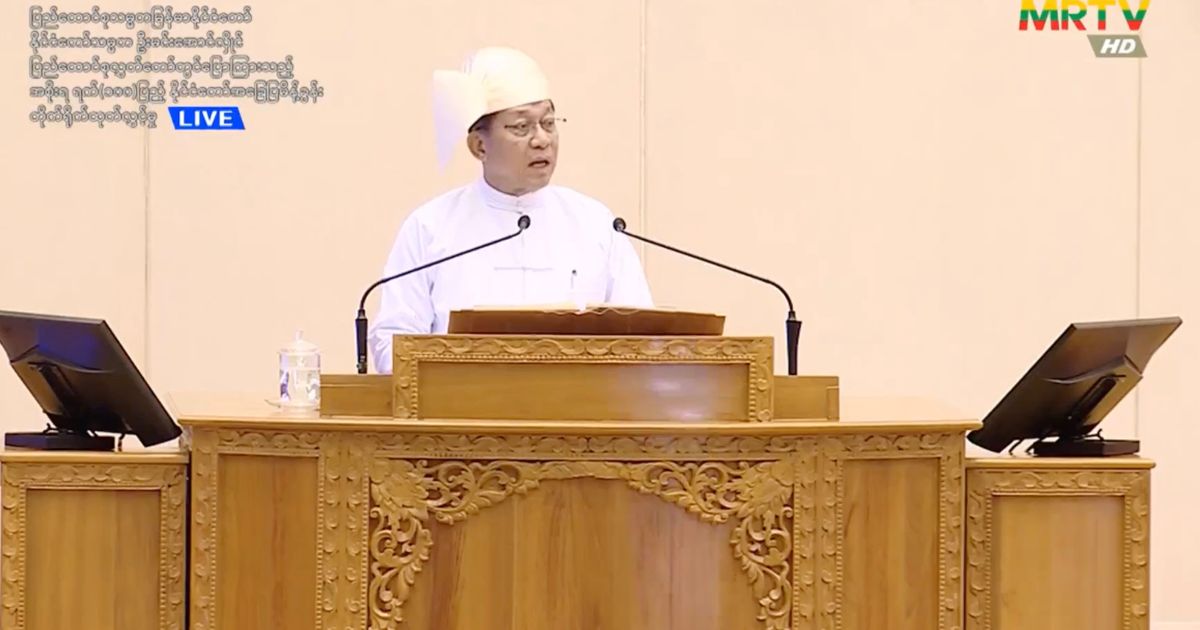
On July 31, Min Aung Hlaing rejected the Five-Point Consensus as a collective ASEAN position, saying it was only a statement by Brunei, the bloc’s 2021 chair.
He made the claim during the first 100 days of his presidency, while accusing unnamed ASEAN members of discriminating against Myanmar.
The agreement, reached on April 24, 2021, called for an immediate end to violence, dialogue among all parties, humanitarian access, and a special envoy.
The speech also reaffirmed the administration’s intention to pursue its own conflict “solution”: it plans to strengthen the armed forces, establish a people’s militia, and continue talks with ethnic armed organizations, saying it has met 13.
ASEAN still excludes the junta’s political appointees from summits and ministerial meetings. Philippine special envoy Ma.
Theresa Lazaro said full reintegration remains far off without genuine implementation, while advisers cited the rejection as damaging confidence in future commitments.
Key facts:
On July 31, Min Aung Hlaing rejected the Five-Point Consensus as a collective ASEAN position.
The consensus agreed April 24, 2021, called for ending violence, dialogue, humanitarian aid, and a special envoy.
Min Aung Hlaing said authorities had discussed participation with 13 ethnic armed organizations.
ASEAN still bars the junta’s political appointees from its summits and ministerial meetings.
Philippine envoy Ma. Theresa Lazaro said reintegration remains far off without genuine implementation.
Why it matters: By disputing the consensus while seeking readmission to ASEAN, Min Aung Hlaing’s administration is attempting to separate regional acceptance from compliance with the bloc’s conflict framework.
That position leaves ASEAN facing a familiar dilemma: Thailand has advocated bringing Myanmar back into the “ASEAN family,” while the bloc’s current special envoy says political reintegration requires genuine implementation.
The rejection also carries consequences beyond ASEAN diplomacy. Advisers cited it as evidence that resistance groups may doubt the regime’s willingness to honor future commitments.
The supplied reports do not describe a new NUG or Rohingya-specific decision; they instead show the military-backed administration consolidating its own negotiating position, while maintaining security-force expansion and political repression.
3. Malaysia begins screening Rohingya refugees for possible Myanmar return
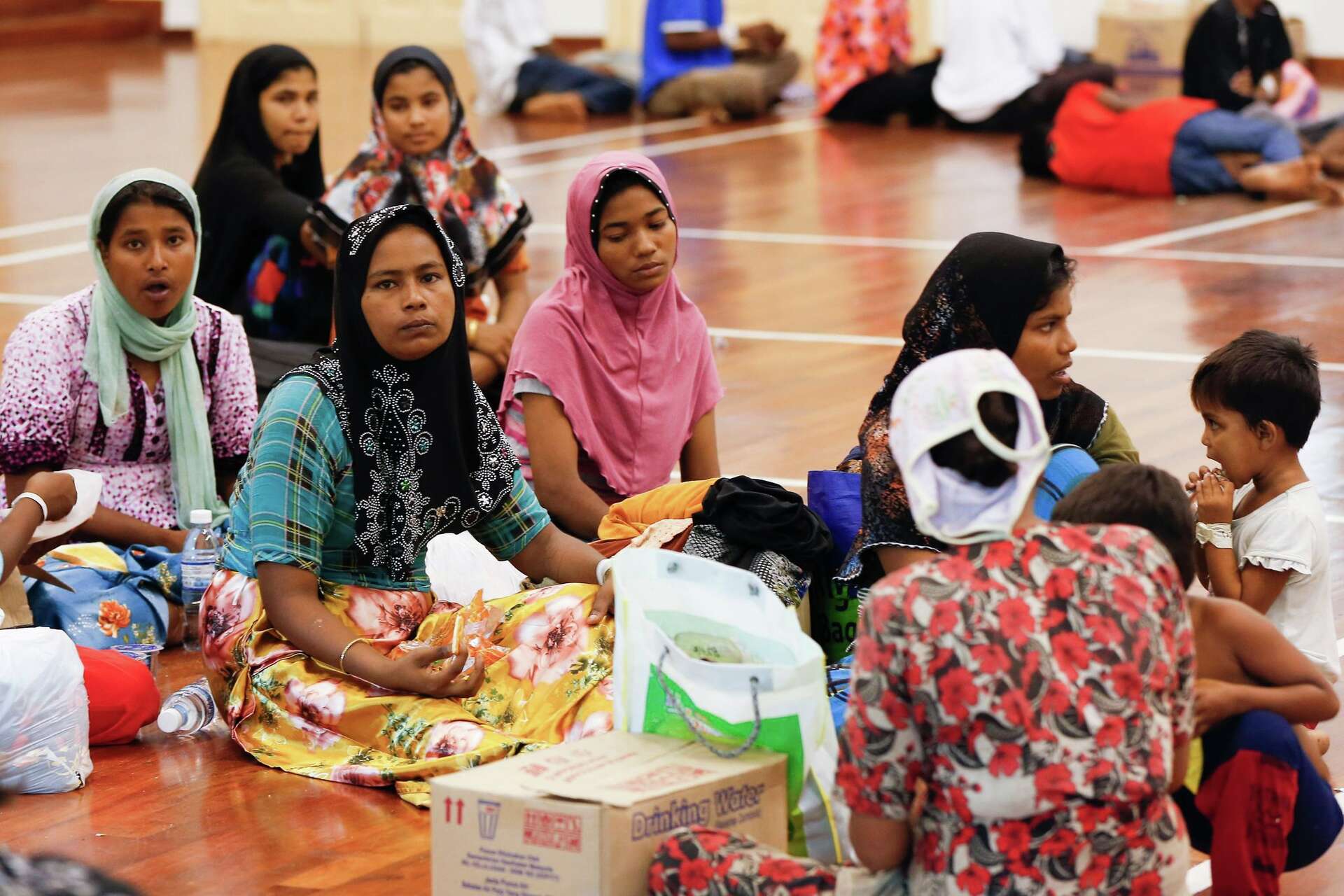
Malaysia’s Home Ministry has begun identifying, documenting and screening Rohingya refugees as part of preparations to repatriate 5,000 Myanmar nationals.
The article says Myanmar’s government agreed to accept their return, but Malaysia has not yet confirmed which individuals qualify. The process uses Malaysia’s Refugee Registration Document system under National Security Council Directive No. 23.
Police and Immigration Department checks will trace identities, conduct security screening and determine each person’s status; about 4,000 identified Myanmar nationals will be moved to one depot from 19, while Malaysia holds about 22,000 detainees nationwide.
The minister said documents will be issued after decisions.
Key facts:
Malaysia and Myanmar agreed initially on returning 5,000 people.
Malaysia’s Home Ministry began identification, documentation and screening procedures.
About 4,000 Myanmar nationals have been identified for screening.
Those 4,000 people will be consolidated at one immigration depot.
Malaysia holds about 22,000 detainees across 19 immigration depots.
Why it matters: The process creates an administrative pathway toward returns, but it is not itself evidence that repatriations have begun.
Individual identification, security checks and refugee-status decisions remain outstanding, making the resulting documents and eligibility criteria the next important indicators.
For Rohingya people, the report provides no assurances about citizenship, safety, rights or conditions after return.
It also does not describe any role for the NUG, Bangladesh or international protection agencies, leaving the political authority responsible for receiving returnees and the safeguards governing the process unclear.
4. Bangladesh and Myanmar Discuss Trade and Rohingya Repatriation
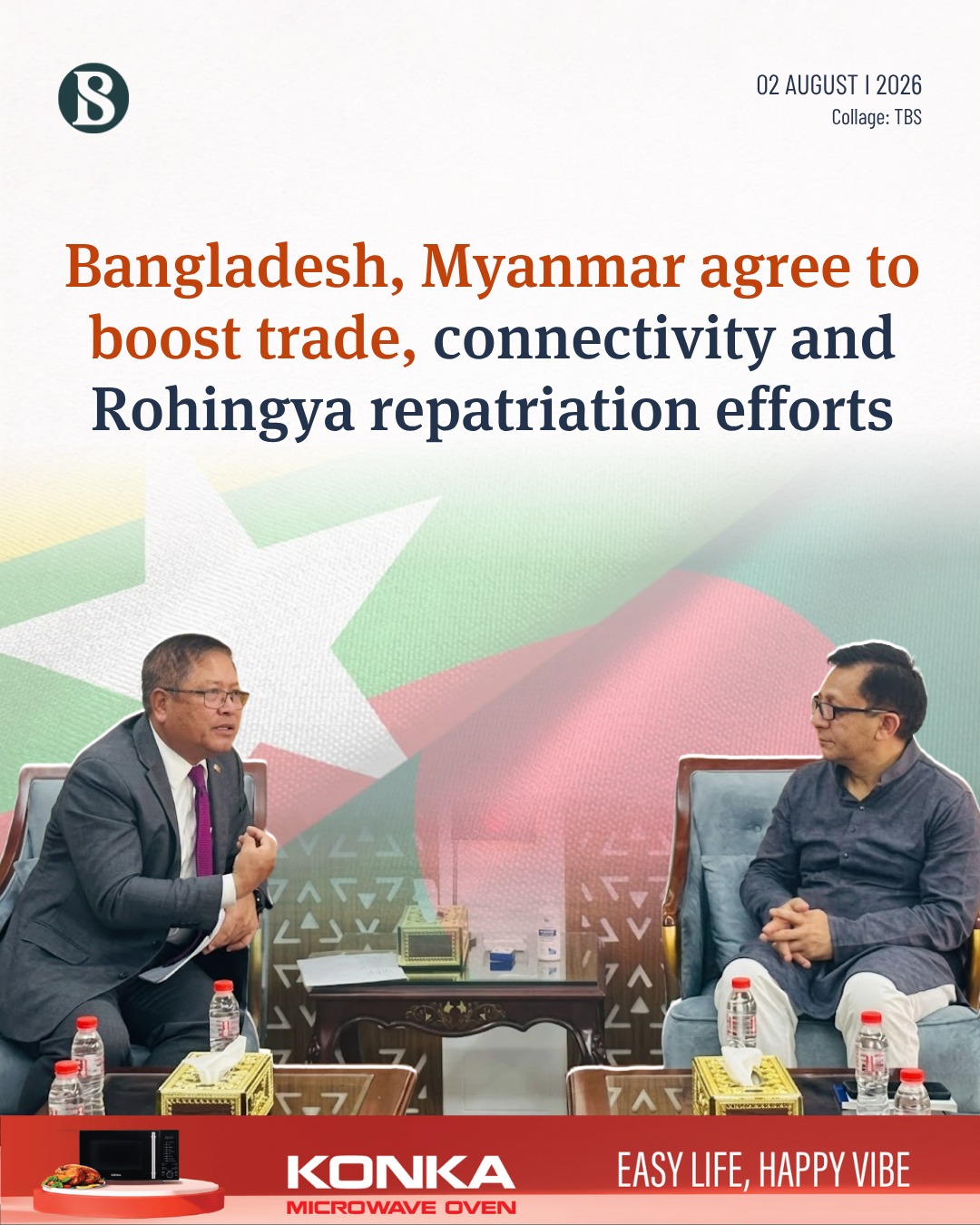
Bangladesh and Myanmar discussed three linked issues on Sunday: expanding bilateral trade, restoring commerce across their border, and accelerating the repatriation of Rohingya refugees, according to New Age BD.
The report presents the discussion as linking economic ties with the unresolved movement of Rohingya refugees. The available report excerpt does not identify participants, set a timetable, describe an agreement, or explain conditions for any return.
It also does not mention the National Unity Government, Myanmar’s military, security arrangements, citizenship, or guarantees for Rohingya people.
The concrete development is therefore the discussion itself, rather than a confirmed repatriation decision or trade measure. The excerpt leaves open whether the talks produced any shared position or follow-up mechanism.
Key facts:
Bangladesh and Myanmar held discussions on Sunday.
The talks covered expanding bilateral trade.
The sides discussed restoring border commerce.
They discussed accelerating Rohingya refugee repatriation.
Why it matters: The agenda places economic relations and refugee return in the same diplomatic channel.
If followed by agreements, expanded trade and restored border commerce could deepen contact between Bangladesh and Myanmar, while any repatriation initiative would directly affect Rohingya refugees.
The immediate signal for the NUG and Rohingya communities is limited: the supplied report gives no role to the NUG and no indication of Rohingya consultation, citizenship arrangements, or protection guarantees.
The next developments to watch are any timetable, written commitments, named participants, or evidence that discussion has become implementation.
5. Rohingya Refugees Demand Safe Return During Gor’s Bangladesh Camp Visit

U.S. Special Envoy for South and Central Asia Sergio Gor visited Rohingya camps in Ukhiya, Cox’s Bazar, during a three-day Bangladesh trip. The visit included camps 4, 6 and 8 and a World Food Programme food-distribution centre.
Refugees lined the convoy route with signs demanding a safe, sustainable return to Myanmar, while Gor reviewed camp conditions with officials. The visit brought no announced repatriation arrangement.
Bangladesh shelters more than 1.2 million Rohingya, most displaced by Myanmar’s 2017 military campaign; none has returned, and a Bangladeshi official said roughly 60 continue crossing from Rakhine each week.
Rohingya leader Syed Ullah linked any durable solution to accountability, while Reuters recorded refugees accusing the United States of recognising genocide without producing safety or change.
Key facts:
Gor visited camps 4, 6 and 8, plus a World Food Programme distribution centre.
Bangladesh hosts over 1.2 million Rohingya refugees in Cox’s Bazar.
No Rohingya has returned through previous repatriation attempts.
A Bangladeshi official said about 60 Rohingya flee Rakhine weekly.
Refugees displayed signs demanding safety, homecoming, accountability and US action.
Why it matters: Gor’s visit gives Washington direct exposure to the gap between international recognition of Rohingya persecution and conditions on the ground.
But the refugees’ message was that funding and diplomatic attention are insufficient without security, accountability and a credible pathway home.
Continued arrivals from Rakhine, combined with the absence of any return, shows that the visit produced visibility rather than an immediate change in repatriation prospects.
The Arakan Army’s reported control of most of Rakhine adds a further complication to any return plan.
The supplied reports identify no new National Unity Government policy or role in this episode, so they do not establish movement in NUG–Rohingya relations; the clearest development is renewed pressure on the United States and other international actors to protect Rohingya people and create conditions for return.
6. ICRC Confirms Visit With Detained Aung San Suu Kyi
The International Committee of the Red Cross (ICRC) confirmed that a delegate visited detained former Myanmar leader Daw Aung San Suu Kyi on August 3, 2026.
Myanmar’s junta-controlled President’s Office said the meeting took place Monday morning and released four photographs, including images of Suu Kyi with Arnaud de Baecque, the ICRC’s resident representative, and a birthday cake marked June 19, 2026.
Neither the ICRC nor the junta provided an account of what was discussed.
UPI reported that the encounter appeared to be Suu Kyi’s first confirmed meeting with a foreign representative since her detention after the February 1, 2021 coup; she is serving an 18-year sentence and was moved from prison to house arrest in late April.
The supplied reports do not connect the visit to the National Unity Government, Rohingya communities, Rakhine State, refugee policy, or any political negotiation.
Key facts:
On August 3, 2026, an ICRC delegate visited Daw Aung San Suu Kyi.
Junta authorities released four photographs, including Suu Kyi with Arnaud de Baecque.
The ICRC confirmed the visit but disclosed no discussion details.
Suu Kyi is serving an 18-year sentence and moved to house arrest in late April.
The reports provide no link between the meeting and NUG or Rohingya issues.
Why it matters: The visit confirms a rare channel of international contact with Suu Kyi, but it does not establish a political opening, negotiations, or any change in her legal status.
The lack of publicly released discussion details leaves the junta’s photographs as the main public account, giving authorities control over how the encounter is presented.
The immediate watchpoints are whether the ICRC gains further access, whether additional information emerges about Suu Kyi’s condition or communications, and whether her house arrest leads to more contact with foreign representatives.
Nothing in the supplied reporting indicates downstream changes for the NUG, Rohingya communities, Rakhine State, or refugees in Bangladesh.
7. International justice advances, but Rohingya children remain excluded
Nearly nine years after the Myanmar military’s 2017 “clearance operations” against the Rohingya, international accountability is moving forward: the International Court of Justice is hearing a genocide case, the International Criminal Court has sought an arrest warrant for Senior General Min Aung Hlaing, Argentina’s universal-jurisdiction cases are advancing, and the Independent Investigative Mechanism for Myanmar is building evidence.
Yet for more than 600,000 Rohingya children in Bangladesh and many thousands in Rakhine State, justice remains abstract: they lack citizenship, quality education, security and meaningful prospects.
The Lowy Institute argues that these children reveal international justice’s central limitation.
Courts focus on identifiable episodes—killings, rape, village burnings and deportation—while overlooking the slower system that began at birth: the 1982 Citizenship Law and later denial of birth registration, identity, schooling, healthcare and movement.
A child who survived 2017 may reach adulthood without education, legal identity or sustained psychological support, meaning delayed accountability cannot restore lost childhood or fully repair the Rohingya community’s future.
Key facts:
The 1982 Citizenship Law rendered generations of Rohingya children stateless.
More than 600,000 Rohingya children are growing up in Bangladesh refugee camps.
The ICC has sought an arrest warrant for Senior General Min Aung Hlaing.
The ICJ is hearing a genocide case concerning Myanmar.
Many thousands of Rohingya remain trapped in Rakhine State.
Why it matters: Accountability can establish responsibility and preserve evidence, but it does not automatically deliver citizenship, schooling, safety or psychological support.
The immediate cost falls on children whose development continues while courts work backward through past crimes; the Rohingya community loses not only lives but a generation’s legal and social future.
The key test is whether children’s views and long-term exclusion are treated as evidence and harm, rather than focusing only on spectacular violence and reparations after judgment. The Lowy Institute’s analysis argues that international justice must become generation-centred if it is to repair, rather than merely document, the damage.