Myanmar’s Junta Faces Battlefield Setbacks and Deepening Isolation
Myanmar’s junta is under pressure on several fronts: its offensive near Sittwe has stalled, resistance groups are rejecting separate peace talks, and its effort to remove UN envoy Kyaw Moe Tun faces a credentials decision. As conflict continues, foreign investment has plunged and plans for Rohingya returns expose the gap between regional diplomacy and conditions on the ground; watch whether the junta can regain territory, legitimacy, or investor confidence.
Monday, Sep 14, 2026
Tracking: NUG · Rohingya · Myanmar
Geography: Myanmar, Rakhine State
Myanmar Junta Offensive Stalls Against Arakan Army Near Sittwe
Myanmar’s military junta has launched Operation 4926, a roughly 1,000-troop offensive along the Sittwe–Ponnagyun border in Rakhine State, with fighting continuing as of Sept. 14.
Begun Sept. 4, the assault uses five columns of 170–200 soldiers to target positions across the two townships and push across Minchaung Bridge into Arakan Army-controlled Ponnagyun.
After more than a week, Arakan Army counter-offensives reportedly forced several junta columns to retreat, with hundreds of soldiers, including column commanders, reported killed or wounded between Sept. 4 and 10.
The junta has used artillery, naval bombardment, drones and airstrikes, while an analyst warned the fighting is likely to intensify as the Arakan Army seeks control of remaining Rakhine towns before 2027.
Key facts:
Operation 4926 began on Sept. 4 along the Sittwe–Ponnagyun border.
The junta deployed approximately 1,000 troops in five military columns.
Each column reportedly contained between 170 and 200 soldiers.
Arakan Army counter-offensives forced several junta columns to retreat.
Hundreds of junta soldiers were reportedly killed or wounded by Sept. 10.
Why it matters: The operation shows the junta is trying to reverse Arakan Army territorial gains by forcing a crossing at Minchaung Bridge into Ponnagyun.
Early battlefield results point the other way: several columns retreated, and the reported losses weaken the offensive’s ability to achieve its stated objective.
The Arakan Army’s counter-attacks also reinforce its broader push to control the remaining towns in Rakhine State.
With both sides using heavy firepower and an analyst predicting further escalation, the Sittwe–Ponnagyun corridor is likely to remain a major pressure point in the state’s conflict.
Myanmar Targets UN Envoy Ahead of Credentials Decision

Myanmar’s military-backed government has escalated its effort to remove Kyaw Moe Tun, accusing the UN ambassador of “illegal activities” and saying his status was revoked and withdrawn.
It alleges he misused state property and mission funds and collaborated with the National Unity Government (NUG), which the authorities classify as unlawful; it also says it is coordinating with Interpol and US channels to pursue action.
Kyaw Moe Tun was appointed before the February 2021 coup and remained in the UN seat after the Credentials Committee repeatedly deferred deciding who represents Myanmar.
A new nine-member committee, appointed September 8, is expected to consider the dispute after the General Assembly later this month.
The NUG says the military cannot unilaterally revoke a UN diplomatic post, while the government says continued representation is only a temporary arrangement, not recognition of his legitimacy.
Key facts:
On September 14, Myanmar accused Kyaw Moe Tun of “illegal activities” and revoked his status.
The Credentials Committee has deferred Myanmar’s representation question since 2021.
A new nine-member committee was appointed September 8 to consider the dispute.
The NUG says military authorities cannot unilaterally revoke a UN diplomatic post.
Why it matters: The dispute is a direct contest over who can speak for Myanmar internationally.
Kyaw Moe Tun’s continued seat preserves a channel associated with the NUG and the ousted civilian government; removing him would advance the military-backed government’s effort to normalize external relations and settle an unresolved post-coup diplomatic question.
The immediate test is whether the committee ends the annual deferral or extends it again after the UN General Assembly.
The military government’s stated coordination with Interpol and US channels also creates a further pressure point around the envoy, though no resulting action is reported.
Myanmar Resistance Coalition Rejects Junta’s Separate Peace Talks

An alliance linking Myanmar’s shadow National Unity Government (NUG), parliament, and major ethnic armed organizations has reaffirmed that it will reject separate peace talks with the junta.
The Steering Council for the Emergence of a Federal Democratic Union (SCEF) says negotiations must include all stakeholders and follow a federal democratic framework.
The stance comes after the junta tried to reach the Chin National Front through intermediaries, including representatives sent to Aizawl, India; the CNF rejected the approach.
The Kachin Independence Organization said it had received no official notice of a reported September 4 invitation, while the Karenni National Progressive Party and Karen National Union also oppose divide-and-rule talks.
The coalition rejects negotiations based on the military-drafted 2008 Constitution or 2015 Nationwide Ceasefire Agreement and instead seeks an end to military rule, civilian control of the armed forces, a new federal charter, and transitional justice.
Its refusal keeps the resistance politically aligned but leaves no immediate negotiated channel with the junta.
Key facts:
SCEF was formed March 30 by the NUG, CRPH, and four major ethnic armies.
The junta approached the CNF through intermediaries, but the Chin group rejected the offer.
KIO spokesperson Col. Naw Bu said no official September 4 invitation had arrived.
SCEF objectives include abolishing the 2008 Constitution and pursuing transitional justice.
Why it matters: The junta’s outreach has so far produced rejection from key armed groups, limiting prospects for bilateral deals that could fracture the resistance.
For the NUG, SCEF provides a shared political and military platform with influential ethnic organizations, strengthening its claim to represent a broader alternative to military rule.
The coalition’s conditions also set a high bar for diplomacy: talks must address all political stakeholders and Myanmar’s future constitutional order, not simply ceasefires with individual groups.
That position preserves unity among resistance actors but reduces the likelihood of quick, piecemeal negotiations.
Malaysia backs voluntary Rohingya returns as Myanmar remains at war
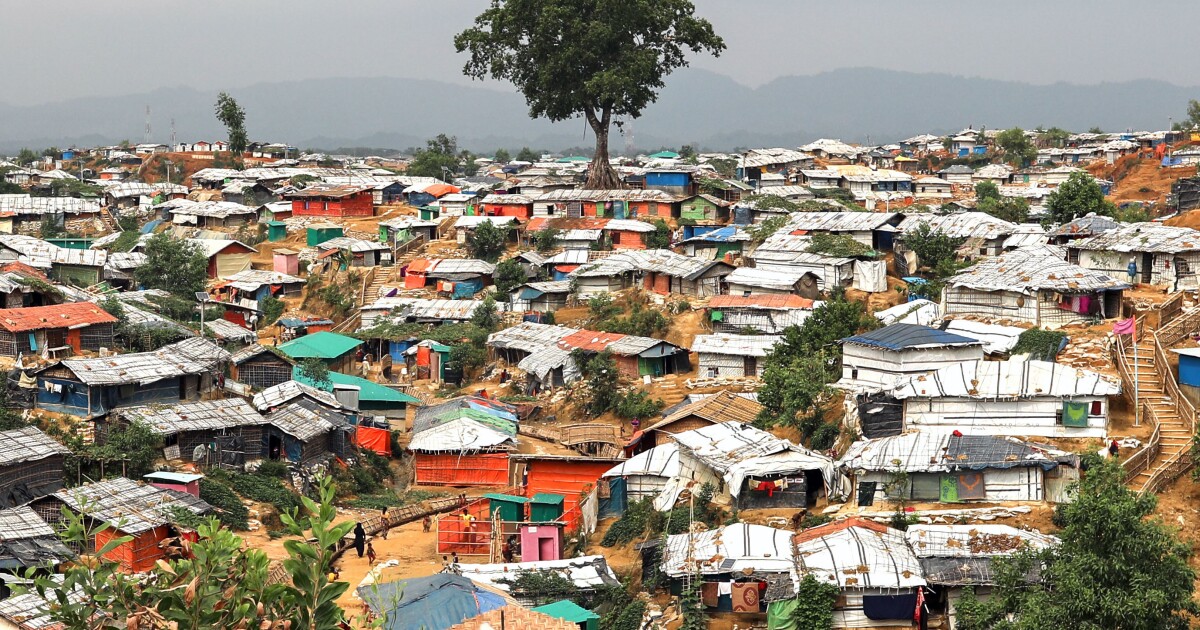
Regional governments are discussing the return of some Rohingya refugees to Myanmar, as more than one million remain in Bangladesh’s Cox’s Bazar settlement after nearly nine years of displacement.
Malaysia says any return should be voluntary and safe, while human-rights advocates warn that refugees could be sent back into danger.
The proposed returns come as Myanmar’s conflict continues and Rakhine State is mainly controlled by the Arakan Army, according to SBS News.
Many Rohingya want to go home but fear being trapped between the junta and rebel forces; their concerns follow the 2017 military campaign that drove more than 700,000 people across the border after villages were burned and survivors reported killings, rape and sexual violence.
Key facts:
More than one million Rohingya refugees have lived in Cox’s Bazar for nearly nine years.
More than 700,000 fled Myanmar for Bangladesh after the 2017 military campaign.
Malaysia says Rohingya returns should be voluntary and safe.
Rakhine State is mainly controlled by the Arakan Army, according to SBS News.
Refugees fear being caught between Myanmar’s junta and rebel fighters.
Why it matters: The return discussion puts the central test on implementation: whether Rohingya can make a genuinely voluntary choice and find safety in a conflict zone.
Malaysia’s assurance addresses the formal conditions for return, but advocates’ warnings highlight the gap between policy language and refugees’ lived risks.
For Rohingya families in Bangladesh, the debate could shape whether prolonged displacement continues or a return process begins before conditions are secure.
The next indicator is whether governments provide credible evidence that returns are voluntary and safe, rather than treating movement out of refugee camps as the measure of success.
South Korea defeats Myanmar 5-0 in Asian Games opener
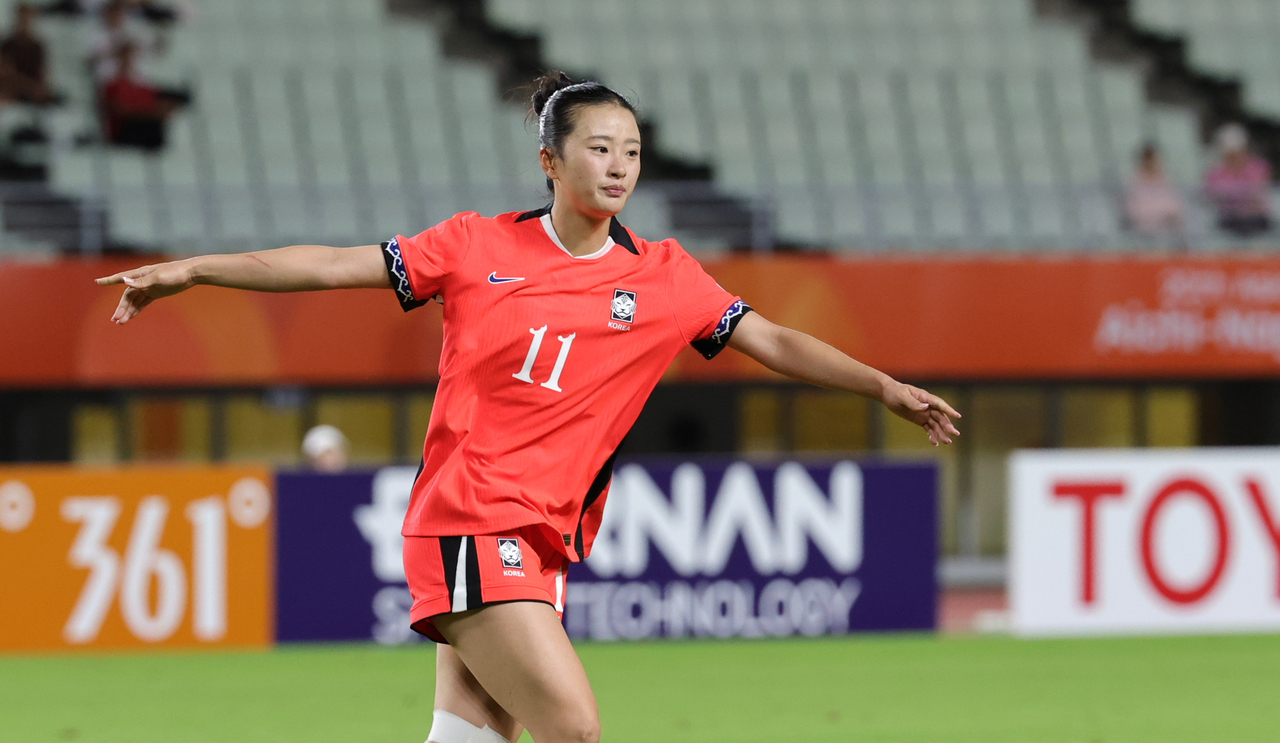
South Korea opened its 2026 Aichi-Nagoya Asian Games women’s football campaign with a 5-0 victory over Myanmar on September 14 at Nagai Stadium in Osaka. Kim Min-ji scored three goals, while Jang Seul-gi and Choi Yu-ri added one each.
The result gives Korea three points in Group F, although North Korea leads on goal difference after beating Bangladesh 10-0.
Myanmar, coached by former South Korea manager Colin Bell, defended deep and tried to counterattack, but Korea controlled the match and sustained pressure. Korea also missed two second-half penalties, suggesting the margin could have been wider.
The top two teams in each group, along with the two best third-place teams, advance to the quarterfinals.
Key facts:
South Korea beat Myanmar 5-0 on September 14 at Osaka’s Nagai Stadium.
Kim Min-ji scored a hat-trick for South Korea.
Jang Seul-gi scored once and assisted twice.
North Korea leads Group F after defeating Bangladesh 10-0.
Myanmar is coached by former South Korea manager Colin Bell.
Why it matters: South Korea has taken an important first step toward the knockout stage, but its goal difference leaves it behind North Korea after the group’s opening matches.
Korea’s next fixtures against Bangladesh and North Korea will determine whether it can secure a top-two position rather than rely on third-place qualification.
For Myanmar, the defeat shows the immediate competitive gap against a higher-ranked opponent, though the match also provides a clear benchmark for Bell’s team before its remaining group games.
The two missed penalties underline both Korea’s attacking dominance and the possibility that the final score understated its control.
Myanmar’s Foreign Investment Plunged During Five Post-Coup Years
Five years after Myanmar’s February 2021 coup, the country remains locked in armed conflict and economic decline, with analysts seeing little prospect of recovery under junta leader Min Aung Hlaing.
A September 14 report says foreign investors remain deterred by conflict, weak rule of law, power outages, inflation and unstable policies. The report links this deterioration to the post-coup political and security environment.
The clearest measure is foreign direct investment: Myanmar received more than $28.7 billion from 2016 to 2020, but only $7.4 billion from 2021 to 2025.
Regional politicians also report no transparent governance or comparable peace effort, while military authorities and armed groups compete for border trade routes.
Min Aung Hlaing’s outreach to China, Russia and India has not overcome diplomatic isolation or restored investor confidence, according to the report.
Key facts:
Myanmar attracted more than $28.7 billion in foreign investment from 2016 through 2020.
Foreign direct investment fell to $7.4 billion between 2021 and 2025.
A Mon politician said no comparable peace process has followed the coup.
A Kachin politician cited inflation, trade disruption and opaque governance.
Authorities and armed groups are competing for critical border trade routes.
Why it matters: The five-year comparison turns broad complaints about Myanmar’s post-coup economy into a measurable loss of investor confidence.
Min Aung Hlaing’s international outreach has not produced a visible reversal in the investment figures cited, while conflict and weak governance continue to raise the cost of doing business.
The contest over border trade routes also shows that economic recovery is inseparable from the security crisis.
The next indicators to watch are whether authorities pursue transparent governance and substantive peace efforts, and whether foreign investment rises beyond the sharply reduced 2021–2025 baseline.