Myanmar’s Regional Outreach Collides With War and Rohingya Abuses
Myanmar’s military leadership is seeking regional ties and investment while a new UN report documents renewed abuses, displacement and humanitarian pressure on Rohingya civilians. Vietnam’s engagement and Malaysia’s planned refugee returns contrast with UNHCR’s warning that Myanmar is unsafe for return, while a disputed drone-attack case and a leadership change in the KNU show the conflict’s wider regional and political consequences.
Friday, Sep 4, 2026
Tracking: NUG · Rohingya · Myanmar
Geography: Myanmar, Rakhine State, Bangladesh, Naypyidaw, Yangon
UN report documents renewed Rohingya abuses by military and Arakan Army
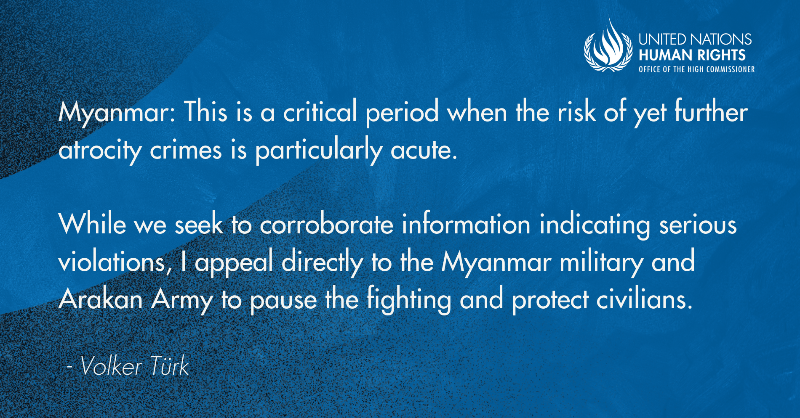
A new UN Human Rights report says Rohingya civilians in northern Rakhine were trapped between Myanmar’s military and Arakan Army from June 2025 through May 2026.
It documents airstrikes, arson, displacement, aid denial and abuses by the Arakan Army, including arbitrary arrest, torture, sexual violence, forced labour, recruitment and land confiscation; local sources recorded 2,353 forced-labour cases in January 2026, including 75 children.
The report says 2025 was the deadliest year on record for Rohingya maritime journeys, with 892 people dead or missing.
By May 2026, 280 people were reported dead or missing among 4,665 attempted crossings, while nearly 150,000 Rohingya newly registered as refugees in Bangladesh.
Food prices rose 31% amid military blockades, while rare-earth mining sites expanded from 215 before the coup to 590 by May 2026; an unregulated-site explosion killed roughly 50 people on May 31.
Key facts:
UN report covers abuses documented from June 2025 through May 2026.
Local sources indicated 2,353 Rohingya forced-labour instances in January 2026.
Seventy-five January forced-labour cases involved children.
Rohingya maritime journeys left 892 people dead or missing in 2025.
Nearly 150,000 Rohingya newly registered as refugees in Bangladesh by April 2026.
Why it matters: The report describes a narrowing protection space for Rohingya: abuses in Arakan Army-held areas coincide with military blockades, rising food prices and deadly attempts to flee by sea.
The combination of renewed displacement and new refugee registrations shows that violence is still producing cross-border humanitarian pressure, while the documented abuses undermine prospects for safe return.
The rare-earth findings broaden the picture from Rakhine’s conflict to armed-group-controlled extraction in Kachin and Shan.
Mining expansion is generating major mineral trade while nearby communities bear toxic contamination, health risks and fatal accidents, linking Myanmar’s conflict economy to wider environmental and humanitarian damage.
Myanmar’s Min Aung Hlaing Begins Vietnam Visit to Rebuild Regional Ties

Min Aung Hlaing arrived in Hanoi on September 4 for a three-day visit aimed at strengthening political and business ties with Vietnam.
He is due to meet President To Lam, attend a business forum and visit digital and electronic technology industries as Myanmar seeks better relations with ASEAN and more foreign investment.
The visit is his third to an ASEAN member state since becoming president in April after a tightly restricted election critics say entrenched military rule.
Vietnam has maintained defense links and investment in Myanmar, including through Mytel, but bilateral trade fell from $853 million in 2020 to $335 million in the first half of 2026.
Rights campaigners accuse Vietnam of supporting the junta through Mytel, while Min Aung Hlaing remains associated with the military’s Rohingya crackdown and the post-coup civil war.
Key facts:
Min Aung Hlaing arrived in Hanoi on September 4 for a three-day official visit.
He is scheduled to meet Vietnamese President To Lam and attend a business forum.
The trip is his third visit to an ASEAN member state since becoming president.
Myanmar-Vietnam trade declined from $853 million in 2020 to $335 million in early 2026.
Vietnamese and Myanmar military-linked entities jointly own major telecom operator Mytel.
Why it matters: The Hanoi welcome advances Min Aung Hlaing’s effort to replace post-coup isolation with working relationships, investment and regional access.
It benefits the military-backed government by treating its new civilian presidency as an interlocutor, despite criticism that the election excluded major opposition forces and conflict-affected areas.
For the NUG, Rohingya advocates and accountability efforts, sustained engagement with Myanmar’s military leadership makes diplomatic isolation harder to maintain.
Vietnam’s existing role through Mytel also keeps technology, surveillance and corporate ties under scrutiny.
The next indicators are whether the business forum produces new investment, whether Vietnam expands cooperation, and how other ASEAN governments respond.
UNHCR Rejects Role in Malaysia’s Planned Return of Myanmar Refugees
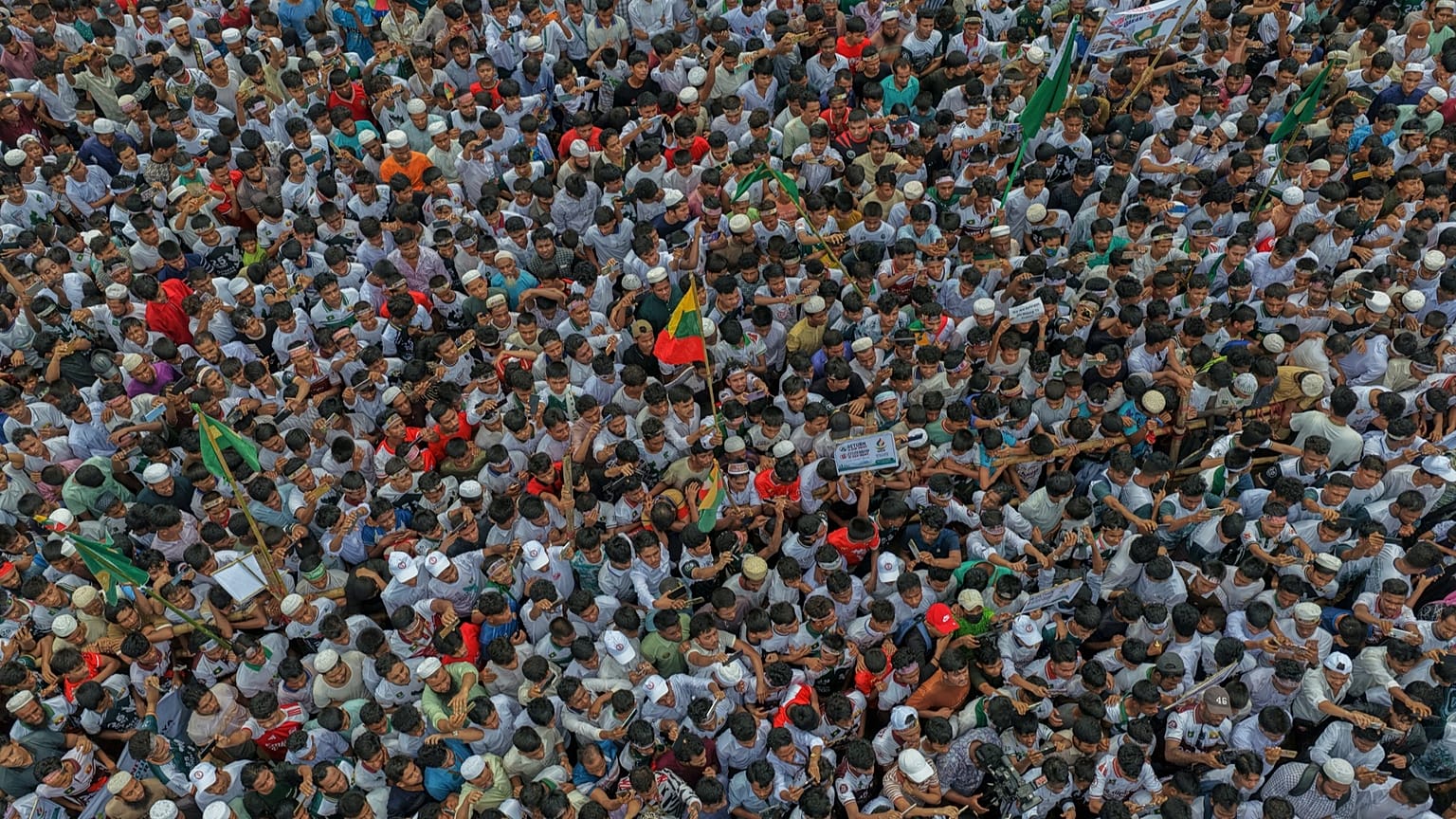
Malaysia is preparing to return 1,476 Myanmar nationals on September 29, using two Myanmar Navy warships and a hospital ship.
It describes the first phase of a planned voluntary program covering about 5,000 people, while Malaysia’s Home Ministry says the group is drawn from immigration detention depots.
UNHCR says it is not involved and warns that Myanmar’s armed conflict and repression prevent a safe, dignified, sustainable return. The agency invoked customary international law, saying returns must be voluntary, informed, and conducted in safety and dignity.
Prime Minister Anwar Ibrahim earlier said Myanmar had agreed to take 5,000 Rohingya, but authorities have not disclosed the first group’s ethnic composition; many could be Rohingya.
Malaysia hosts roughly 193,800 refugees from Myanmar, including Rohingya and Chin, according to UNHCR data, amid growing hostility toward Rohingya communities.
Key facts:
Malaysia plans to return 1,476 people on September 29 aboard two warships and a hospital ship.
The program targets about 5,000 Myanmar nationals among 10,388 people held in immigration detention.
UNHCR says it is not involved and considers Myanmar unsafe for refugee returns.
Anwar said Myanmar agreed to repatriate 5,000 Rohingya; Malaysia has not disclosed the first group’s ethnicity.
Malaysia hosts about 193,800 refugees from Myanmar, including Rohingya and Chin.
Why it matters: The immediate dispute is between Malaysia’s plan to reduce its detention and migration pressures and UNHCR’s insistence that return conditions are absent.
Malaysia has framed the influx as a financial, social, and security burden, while UNHCR says formal assurances are insufficient without safety, informed consent, and protection safeguards.
For Rohingya refugees, the plan risks turning repatriation into a transport arrangement rather than a rights-based process.
The next test is whether Malaysia pauses or modifies the September 29 operation, and whether it discloses who is being returned and what safeguards Myanmar will provide.
India’s NIA Links Foreign Nationals to Drone Attack on Myanmar Passenger Plane

India’s National Investigation Agency has told a Delhi court that an American and six Ukrainians arrested in March were linked to a drone attack on a Myanmar National Airlines passenger plane.
The court has allowed investigators to question two detainees, Matthew Van Dyke and Viktor Kaminskyi, at Tihar jail, where they are held.
The NIA says 14 Ukrainians entered India on tourist visas, traveled through Mizoram into Myanmar, and trained ethnic armed groups in drone operations, assembly and jamming.
It also alleges that drones supplied through a network connected to a “Matthew Van Dyke module” struck an ATR-72-600 at Myitkyina on February 20, damaging its nose, fuselage and tail.
The Indian Express noted that the court application did not clearly establish whether that was the attack referenced. Investigators cite images, videos and voice samples from seized devices, but the allegations remain unproven in court.
Key facts:
August 31: A Delhi court authorized NIA questioning of Van Dyke and Kaminskyi in Tihar jail.
NIA says 14 Ukrainians crossed from India into Myanmar for drone-warfare training.
Two FPV drones allegedly damaged a Myanmar National Airlines ATR-72-600 on February 20.
Investigators cite seized images, videos and voice samples as evidence.
Why it matters: The investigation pushes Myanmar’s drone war into an Indian legal and security arena. The NIA is examining alleged training, supply routes and contacts with ethnic armed groups, while also alleging possible links to proscribed Indian insurgent groups.
The court’s authorization gives investigators a route to test those claims against the detainees and pursue the wider network. The central uncertainty is evidentiary.
Reports describe allegations and ongoing forensic analysis, and one account says the application did not clearly identify the aircraft attack; the next signal is whether questioning and device analysis produce corroborated evidence or charges.
Padoh Thaw Thi Bwe Returns to KNU Leadership at 17th Congress

The Transnational Institute has published a four-part Burmese podcast featuring Padoh Thaw Thi Bwe, a veteran Karen National Union (KNU) leader whose political career spans nearly four decades.
The episode announcement says he was elected Joint General Secretary-1 at the KNU’s current 17th Congress, restoring him to a senior leadership post after he was not elected at the 16th Congress.
Thaw Thi joined the Karen revolution in 1988 and worked in the KNU’s central administration through the fall of Manerplaw in 1995 and its aftermath.
He later served under former KNU leader Padoh Mahn Sha Lah Phan, continued through the KNU Taxation Office, and now discusses the movement’s history, challenges, education, youth and Myanmar’s political future.
The publication presents the podcast as a rare first-person account, but the announcement provides no further details of his policy positions or the congress’s other decisions.
Key facts:
The Transnational Institute published the podcast on September 4, 2026.
Padoh Thaw Thi Bwe was elected Joint General Secretary-1 at the KNU’s 17th Congress.
He was not elected at the 16th Congress but continued through the KNU Taxation Office.
Thaw Thi joined the Karen revolution in 1988, aged 28.
The podcast is divided into four Burmese-language episodes.
Why it matters: His re-election places a long-serving administrator back in a key KNU post, linking the organization’s current leadership to institutional memory from earlier stages of Karen resistance.
The move may support continuity, but the article provides no evidence that it changes the KNU’s strategy, relations with other resistance groups, or Myanmar’s wider conflict. The main issue to watch is how Thaw Thi’s views inform the KNU’s next phase.
The four episodes may clarify his perspectives on the peace process, Karen education, youth and Myanmar’s political future; for now, the confirmed development is leadership continuity rather than a new policy.