Nine Years On, Rohingya Return Remains Unsafe and Justice Elusive
Nine years after the 2017 exodus, Rohingya repatriation has not begun as the UN documents systematic abuses by Myanmar’s military and the Arakan Army, while conditions deteriorate for more than 1.2 million refugees in Bangladesh. Myanmar cites security concerns and disputed verification figures, but the continuing violence, aid cuts and stalled accountability efforts point to the same unresolved issue: a safe, rights-respecting return remains out of reach.
Friday, Aug 28, 2026
Tracking: NUG · Rohingya · Myanmar
Geography: Myanmar, Rakhine State, Bangladesh, Cox's Bazar
Rohingya refugees rally as Myanmar return plans remain unsafe

On August 25, tens of thousands of Rohingya refugees rallied in Bangladesh’s Cox’s Bazar camps, marking nine years since the 2017 exodus and demanding a safe return to Rakhine.
Nearly 1.2 million refugees remain in the camps, while Bangladesh says it will not force repatriation after earlier efforts stalled over security fears.
Myanmar’s military-backed authorities say they have verified about 308,000 of 820,000 names submitted by Bangladesh, but will wait for improved security; Bangladesh disputes Myanmar’s figures and its refusal to call the group Rohingya.
The timing highlights a widening gap: the Arakan Army controls much of Rakhine, analysts describe return as unsafe amid civil war, and 15 diplomatic missions plus the European Union urged sustained international support for refugees in Bangladesh.
Key facts:
On August 25, tens of thousands rallied across Cox’s Bazar camps for safe return.
Myanmar said it had verified about 308,000 of Bangladesh’s 820,000 submitted names.
Bangladesh says it will not force repatriation after two earlier efforts stalled.
The Arakan Army controls much of Rakhine, including areas many Rohingya fled.
Fifteen diplomatic missions and the European Union urged sustained international support for refugees.
Why it matters: The rally shows that Rohingya refugees continue to demand return, but only under conditions they consider safe.
Myanmar’s verification announcement may help the junta present repatriation as progress, yet the lack of security, citizenship guarantees and control over much of Rakhine leaves refugees without a credible near-term pathway home.
The Arakan Army’s territorial gains make any future return arrangement dependent on more than Myanmar’s military-backed authorities.
Bangladesh faces continuing responsibility for nearly 1.2 million refugees, while international backing for humanitarian support remains important.
The key indicators are whether verification becomes a voluntary, rights-based process and whether security conditions in Rakhine materially improve.
UN Reports Widespread Abuses Against Rohingya by Myanmar Military and Arakan Army

A new UN human rights report says Myanmar’s crisis reached a new low during June 2025–May 2026, documenting widespread, systematic abuses against Rohingya by both the military and the Arakan Army, which controls much of Rakhine State.
The findings, reported on August 25, include killings, torture, forced recruitment, forced labour, arbitrary detention and displacement.
In northern Rakhine, the UN says the Arakan Army detained and tortured Rohingya, while witnesses described children as young as six being used for labour.
It also reported about 2,000 acres seized and displaced Rohingya blocked from returning as non-Rohingya were resettled on their land.
The military’s wider campaign has killed at least 8,075 civilians since the 2021 coup, while displacement reached 3.6 million and 12.4 million people faced acute hunger.
Key facts:
The UN report covers abuses documented from June 2025 through May 2026.
The military and Arakan Army were both accused of systematic abuses against Rohingya communities.
At least 8,075 civilians have been killed since Myanmar’s 2021 coup.
Internal displacement reached 3.6 million people.
The UN reported about 2,000 acres of Rohingya land seized in northern Rakhine.
Why it matters: The UN’s findings place Rohingya communities between two armed authorities accused of serious abuses, rather than presenting persecution as solely a legacy of military rule.
Land seizures, detention and blocked returns make safe return and recovery harder for displaced Rohingya, while continued military violence sustains broader displacement and hunger.
The report also connects Myanmar’s conflict to a growing illicit rare-earth economy.
Mining sites expanded sharply in Kachin and Shan states, with trade estimated at $1.4 billion in 2023, while toxic contamination damaged farmland and waterways and reached rivers flowing into Thailand.
Nine years on, Rohingya repatriation remains stalled as Cox’s Bazar camps deteriorate

Nine years after the Myanmar military’s 2017 campaign drove Rohingya into Bangladesh, repatriation has not begun.
Reporting from Prothom Alo says no Rohingya has successfully returned, while more than 154,000 additional arrivals over the past 18 months have pushed the registered and unregistered camp population above 1.4 million across 33 camps in Ukhiya and Teknaf.
The prolonged limbo is worsening both humanitarian and security pressures.
Prothom Alo records 292 camp murders since 2017 and says armed groups are driving killings, abductions and trafficking; Views Bangladesh reports at least 202 deaths in clashes over the past four years.
Meanwhile, UN food assistance has been cut from $12.50 to $6 per person monthly, and Myanmar has offered no formal response to the repatriation effort, according to Views Bangladesh.
Australia issued a statement on August 25 marking the anniversary of the military’s attacks.
Key facts:
More than 1.4 million registered and unregistered Rohingya live in 33 camps in Ukhiya and Teknaf.
No Rohingya has been successfully repatriated to Myanmar in nine years.
More than 154,000 additional Rohingya arrived in Bangladesh during the past 18 months.
UN food assistance fell from $12.50 to $6 per Rohingya per month.
Prothom Alo reports 292 murders in the camps over nine years.
Why it matters: Bangladesh is absorbing a crisis that has become harder to manage: insecurity restricts NGO workers’ operating hours, local communities face spillover, and shrinking food aid raises pressure inside the camps.
The reports use different timeframes—292 murders over nine years versus 202 clash deaths over four—but both describe serious violence during prolonged displacement. The immediate constraint is political as much as humanitarian.
Myanmar’s lack of a formal response and added conditions leave repatriation without a credible pathway, while funding cuts weaken camp stability.
The next test is whether Bangladesh and international partners can restore aid, contain armed-group violence and create conditions for safe, dignified returns.
IIMM Marks Nine Years of Rohingya Displacement Without Justice

On 25 August 2026, the Independent Investigative Mechanism for Myanmar (IIMM) marked nine years since Myanmar security forces launched violent operations against the Rohingya in Rakhine State.
The mechanism said the campaign involved widespread killings, sexual violence, and the destruction of homes and livelihoods.
The IIMM said hundreds of thousands of Rohingya fled to Bangladesh and other neighbouring countries, where they remain forcibly displaced. Nine years after the 2017 crackdown, it said they still cannot safely return to their homes.
The anniversary statement places accountability and safe return back at the centre of attention, while underscoring that the displacement remains unresolved.
Key facts:
IIMM marked nine years since Myanmar security forces began violent operations in Rakhine State.
The operations involved killings, sexual violence, and destruction of homes and livelihoods.
Hundreds of thousands fled to Bangladesh and other neighbouring countries.
Rohingya remain forcibly displaced and unable to safely return home.
Why it matters: The IIMM’s anniversary statement reinforces that the Rohingya crisis is both a displacement emergency and an unresolved accountability issue.
For Rohingya communities, the central conditions identified by the mechanism—justice and a safe return—remain unmet nine years after the mass flight.
The immediate watchpoints are whether international evidence-gathering contributes to prosecutions and whether conditions eventually allow a genuinely safe return.
Until then, Bangladesh and other host locations continue to shelter a population the IIMM says remains forcibly displaced.
Human Rights Watch renews Rohingya accountability call nine years after atrocities
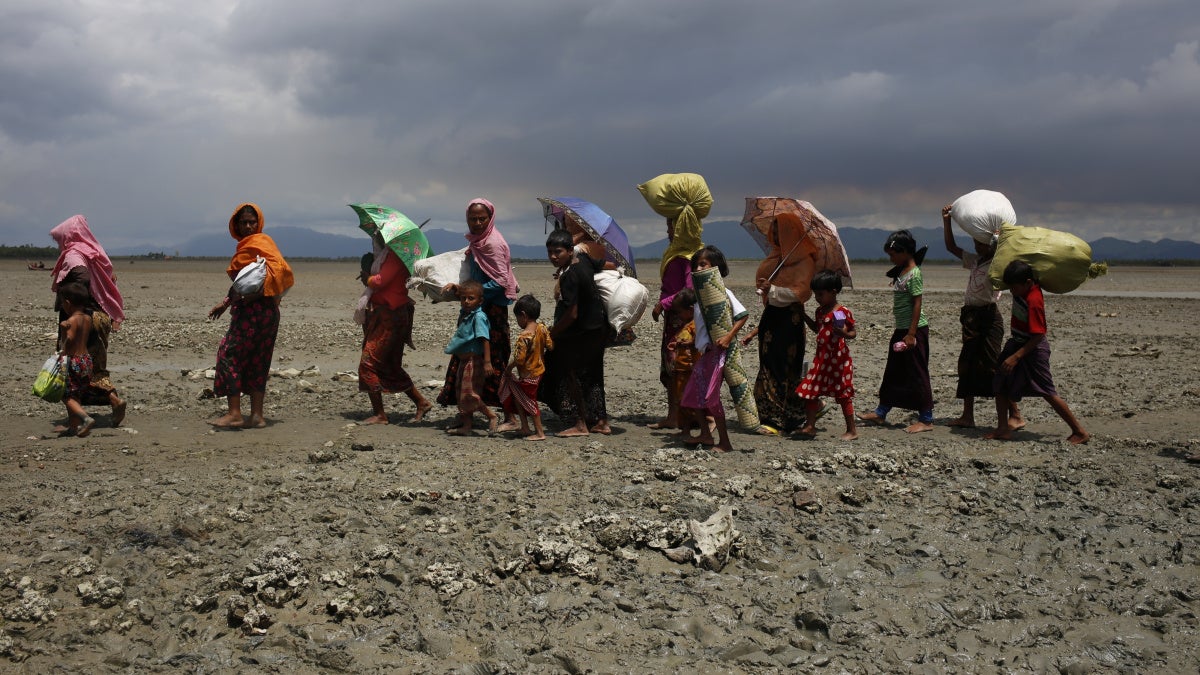
Human Rights Watch on August 25 renewed its call for accountability, nine years after Myanmar’s military began its 2017 campaign of mass atrocities against the Rohingya in Rakhine State.
The campaign killed thousands, destroyed hundreds of villages and drove at least 700,000 people into Bangladesh, yet HRW says no one has been held accountable.
International justice efforts have advanced: Argentina issued arrest warrants for Myanmar military officials, the International Criminal Court prosecutor requested a warrant for Min Aung Hlaing, and the International Court of Justice held merits hearings in January 2026.
The organization also says abuses continue under both the junta and the Arakan Army, which controls most Rakhine townships after renewed fighting with the military.
An estimated 150,000 Rohingya have fled to Bangladesh since mid-2024, pushing the refugee population above 1.2 million; aid cuts are worsening conditions in Cox’s Bazar.
Forced recruitment and dangerous boat journeys, especially toward Malaysia, show how persecution and insecurity are driving further displacement.
Key facts:
August 25, 2026, marks nine years since the Rohingya atrocity campaign began.
At least 700,000 Rohingya fled to Bangladesh after the 2017 campaign.
An estimated 150,000 Rohingya arrived in Bangladesh since mid-2024.
The ICJ held merits hearings in January 2026; its genocide-case judgment remains pending.
The ICC prosecutor requested an arrest warrant for Min Aung Hlaing in November 2024.
Why it matters: The anniversary renews pressure for accountability, but the main international cases remain unresolved: the ICC prosecutor’s request has no publicly reported judicial ruling, while the ICJ judgment is pending.
That leaves legal consequences uncertain despite continuing allegations against Myanmar’s military leadership. Rohingya civilians also face threats from both the junta and the Arakan Army, leaving no clearly safe power in much of Rakhine State.
In Bangladesh, aid cuts and deteriorating camp conditions are increasing vulnerability to abduction, forced recruitment and dangerous sea journeys, adding fresh pressure to an already expanded refugee population.