Myanmar
PublicSituation in Myanmar
Myanmar junta's new chief escalates mass civilian killings
Monday, Jul 27, 2026
The junta under new chief Ye Win Oo has sharply escalated civilian killings and village destruction, while simultaneously tightening political control by eliminating parties and holding its first official jade sale in China.
Anti-junta forces are building alliances, as seen in the SCEF's first formal meeting with the Arakan Army, even as Rohingya refugees face increased persecution in Malaysia with school closures and mass detentions.
Readers should watch how the junta's brutal crackdown and external legitimacy-seeking collide with growing resistance coordination and a deepening humanitarian crisis.
Tracking: NUG · Rohingya · Myanmar
Geography: Myanmar, Rakhine State, Bangladesh, Sittwe, Cox's Bazar, Naypyidaw, Yangon
1. Myanmar junta sharply escalates civilian killings under new military chief, monitor says
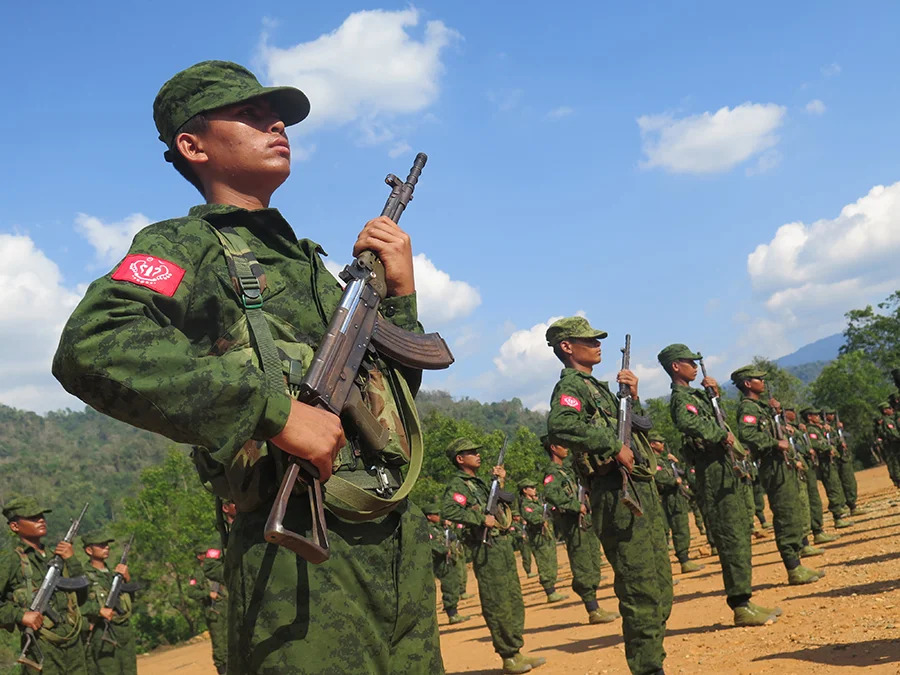
A conflict monitor reported that Myanmar's military has sharply escalated attacks on civilians since a new administration took office in late March, with intensified aerial bombing campaigns and mass killings.
The Armed Conflict Location & Event Data Project (ACLED) recorded over a dozen mass killings in the first half of 2026, resulting in more than 450 civilian fatalities, roughly 40% of them in the central dry zone known as the Anyar region.
The escalation coincides with the appointment of former spymaster Ye Win Oo as the military's new commander-in-chief, after coup leader Min Aung Hlaing transitioned to civilian president following an election that banned most opposition.
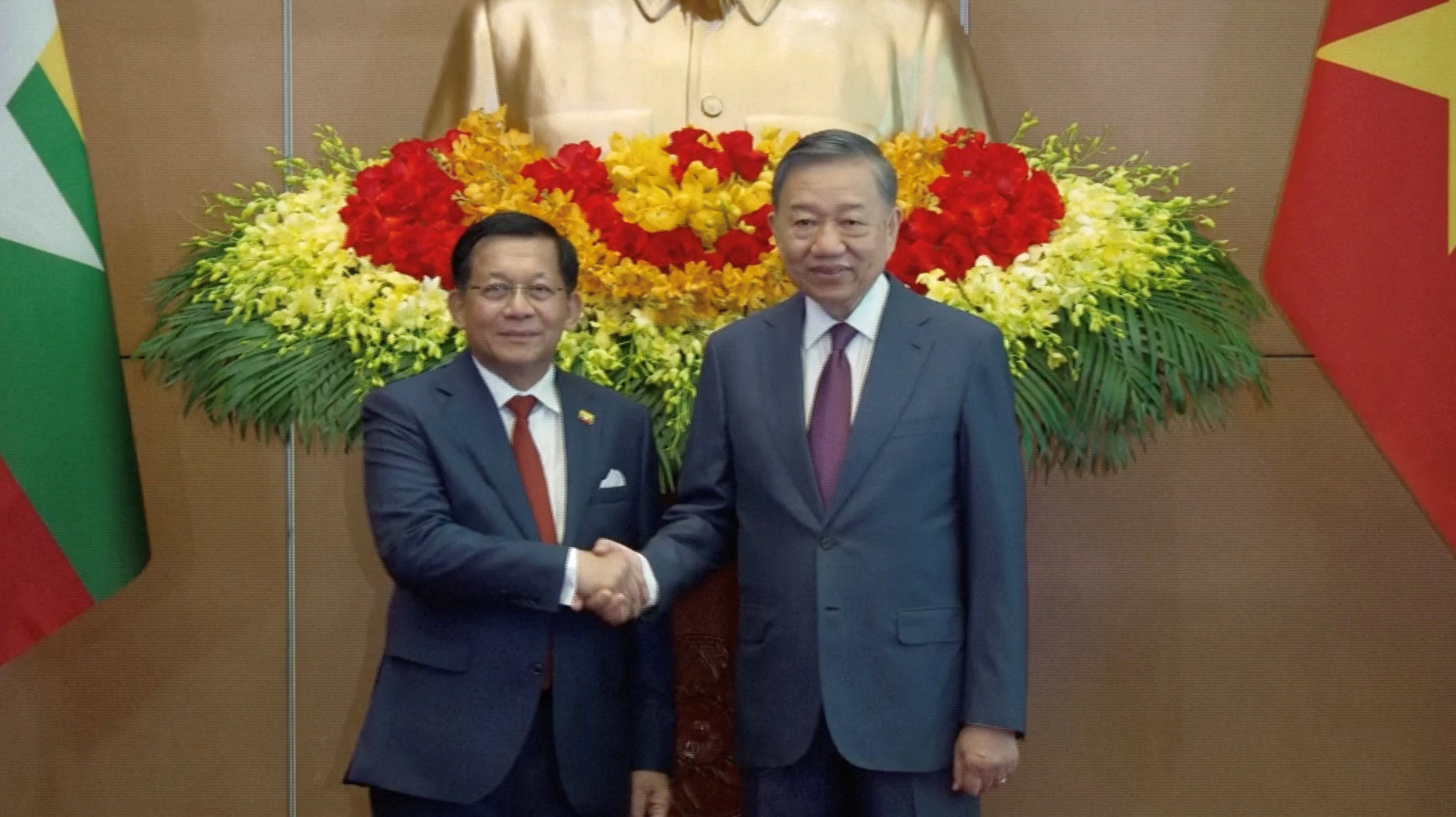
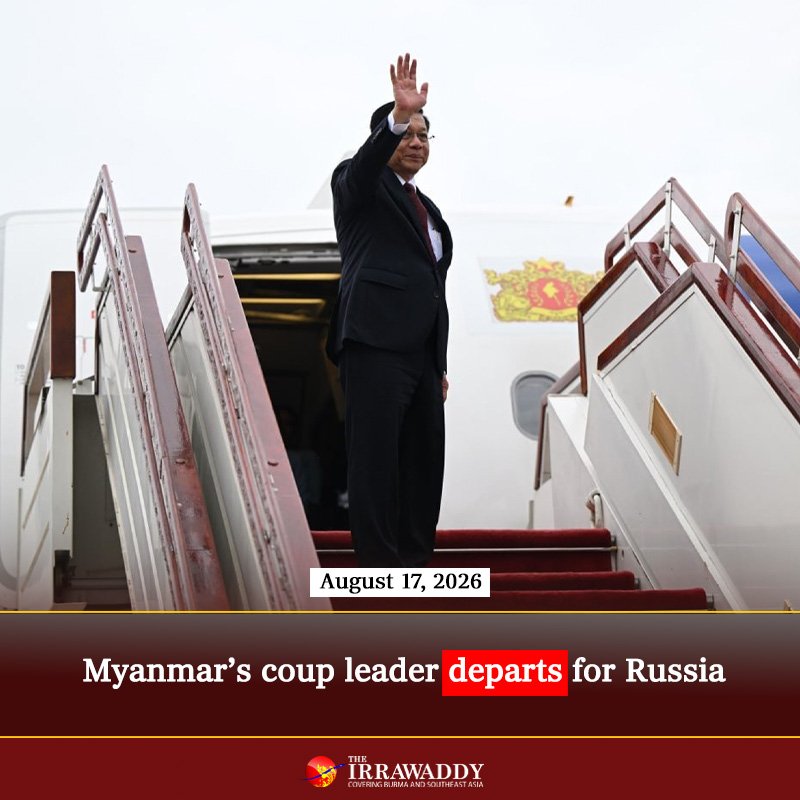
ACLED said the tactics show "merely shifting modalities of civilian repression rather than any reduction in its severity," even as the junta leader has embarked on diplomatic visits to India, China, and Thailand to seek legitimacy.
Key facts:
- ACLED recorded over 450 civilian fatalities from mass killings in first half of 2026.
- New military chief Ye Win Oo took command in late March under President Min Aung Hlaing.
- Around 40% of civilian killings occurred in Myanmar's central Anyar dry zone.
- In May, 700 junta troops killed at least 40 people in Myit Chay township.
- Min Aung Hlaing will make an official visit to Thailand on August 6–7.
Why it matters: The findings directly challenge the junta's claims of stabilizing the country after Min Aung Hlaing's transition to civilian president, showing that civilian repression has actually intensified.
This complicates ASEAN's tentative re-engagement with the regime and undercuts the legitimacy the junta seeks through diplomatic outreach.
The shift in military tactics — using small groups of jet fighters for sustained strikes — suggests a more systematic and potentially deadlier phase of the civil war.
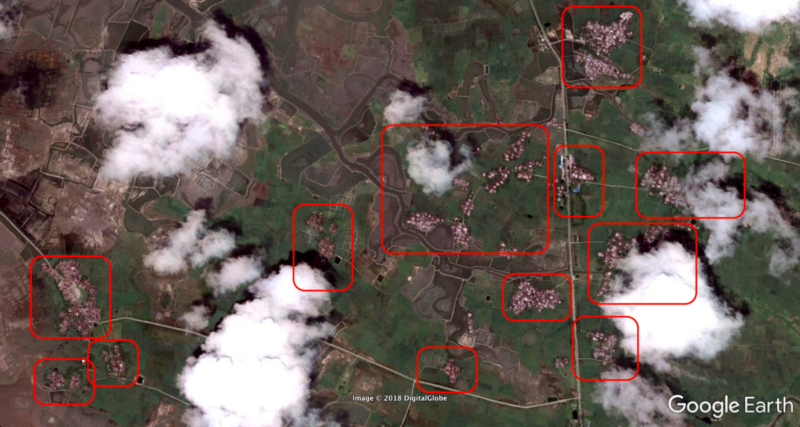
2. Bellingcat maps 115 razed villages in Myanmar's Rakhine State since the 2021 coup

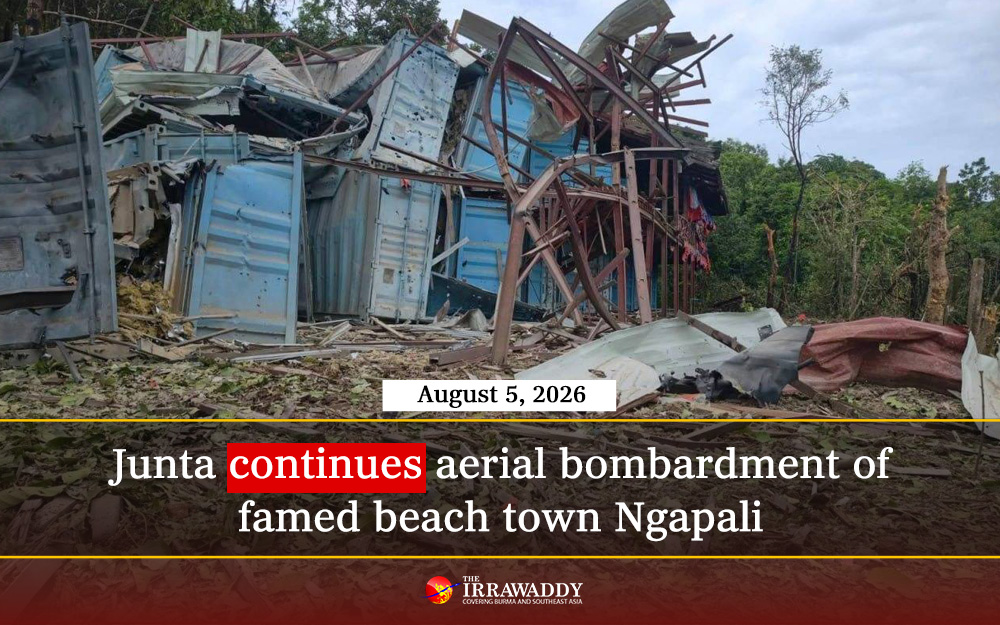
A new Bellingcat investigation using satellite imagery has identified 115 villages in Myanmar's Rakhine State that have been partially or fully destroyed since the 2021 military coup and the outbreak of the civil war.
The report documents that some Rohingya villages, which were rebuilt after being destroyed in the 2017 crackdowns that analysts have labeled a genocide, were razed again in 2023 and 2024.
The research tracks destruction patterns as the Arakan Army (AA) gradually takes territory from the Myanmar junta, with both sides converting some destroyed villages into military outposts.
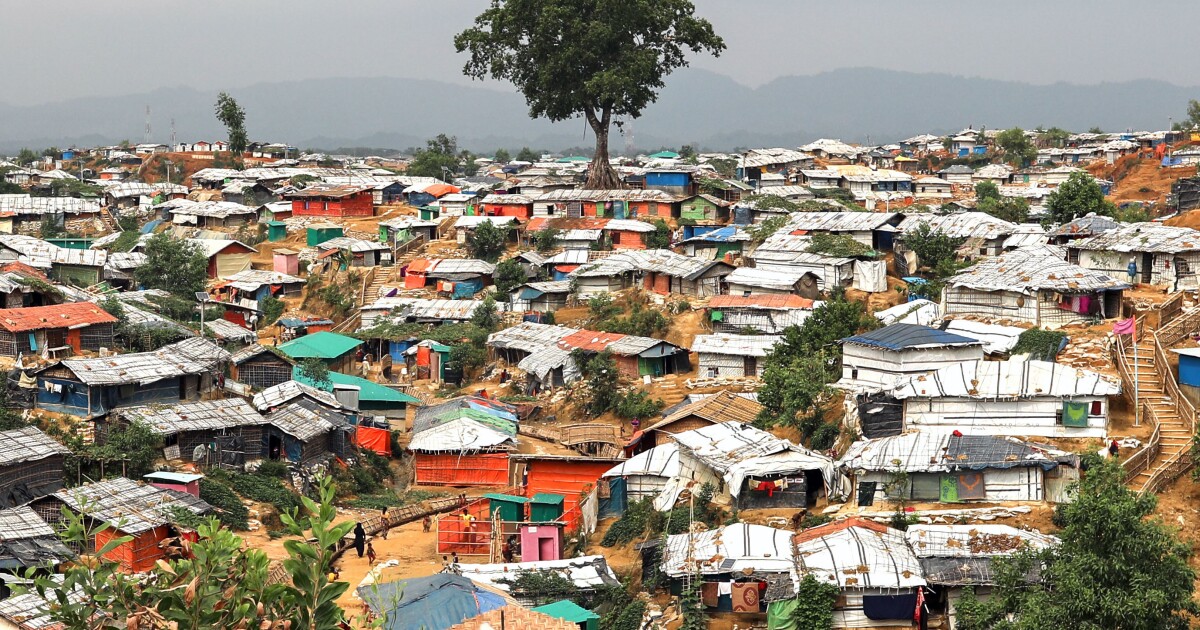
The conflict has displaced half a million people in the region, representing 13 percent of the total population there.
Key facts:
- 115 villages in Rakhine State were partially or fully razed since the 2021 coup.
- Some Rohingya villages rebuilt after 2017 were destroyed again in 2023 and 2024.
- Half a million people in the region (13% of the total) are displaced.
- Destroyed villages were turned into military outposts by both the AA and junta.
- The report uses low and high resolution satellite imagery to track destruction.
Why it matters: The repeated destruction of Rohingya villages, years after the 2017 genocide, signals that international condemnation failed to prevent new waves of ethnic cleansing.
The conversion of civilian sites into military outposts by both the Arakan Army and the junta guarantees that the humanitarian crisis will persist long after active fighting ends.
For regional actors like Bangladesh and ASEAN, this report underscores that the Rohingya crisis has no resolution as long as the civil war continues in Rakhine.
3. Malaysia detains over 100 Rohingya refugees after eviction protests at UNHCR

Malaysian authorities detained more than 100 Rohingya asylum seekers on July 27 after they gathered outside the UNHCR office in Kuala Lumpur, seeking protection following evictions from their homes in Penang state.
Prime Minister Anwar Ibrahim ordered enforcement, warning that anyone without proper permits would be taken by immigration authorities.
The evictions occurred amid a rise in online hate speech and misinformation targeting Rohingya since May, leading to harassment and school closures.
The refugees, including women and children, said they received no assistance from any authority after arriving at the UNHCR building.
Key facts:
- More than 100 Rohingya detained on July 27 in Kuala Lumpur.
- Refugees were evicted from their homes in Penang by local residents.
- PM Anwar Ibrahim said no one has the right to take over any part of the city.
- Around 126,000 Rohingya are registered with UNHCR in Malaysia as of February.
- Evictions follow a spike in online hate speech since May.
Why it matters: This marks a sharp shift in Malaysia's longstanding role as a safe haven for Rohingya fleeing Myanmar.
The government's crackdown, coupled with rising public hostility, could push refugees into deeper precarity and increase pressure on the UNHCR and regional governments.
It also signals a broader regional trend of hardening attitudes toward Rohingya, potentially complicating future resettlement and humanitarian efforts.
4. Anti-Junta Alliance SCEF Holds First Formal Meeting with Arakan Army

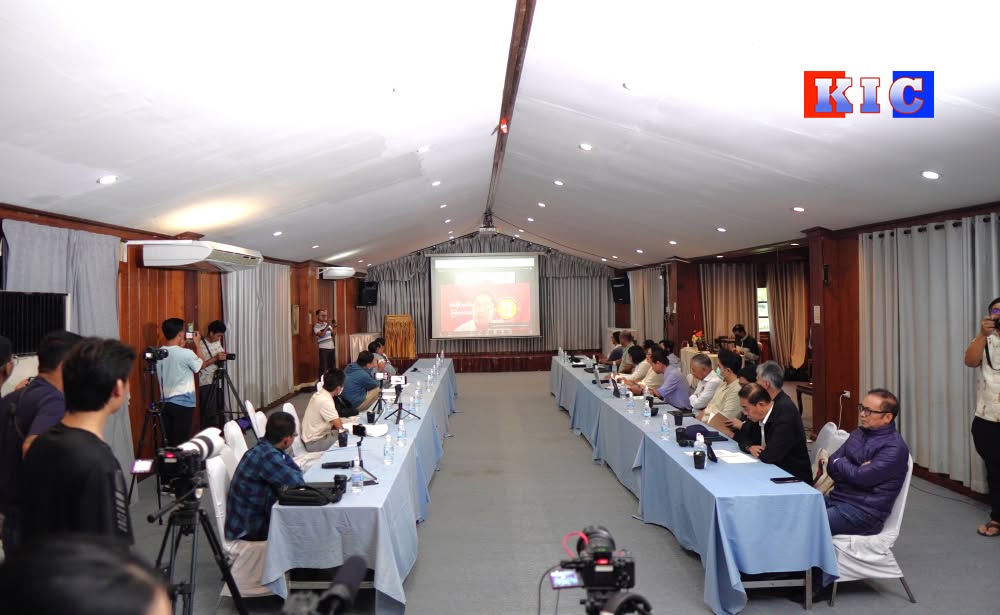
On July 23, the Steering Council for the Emergence of a Federal Democratic Union (SCEF) held a virtual, hour-long meeting with the United League of Arakan/Arakan Army (ULA/AA) — its first formal engagement with the powerful ethnic armed group.
The talks included SCEF Rotating Chairman Khu Oo Reh, National Unity Government Prime Minister Mahn Win Khaing Than, and ULA/AA Chairman Maj. Gen. Twan Mrat Naing, focusing on political coordination and emergency flood relief in Rakhine State.
The National Unity Government, a key SCEF member, had already disbursed 150,000 Chinese Yuan (CNY) in emergency aid to the ULA/AA for flood victims, and the ULA/AA sent a letter of appreciation.
This meeting is part of a broader SCEF diplomatic push that also included talks with Pa-O and Mon resistance forces, as well as regional governments from Sagaing, Magway, and Mandalay.
Key facts:
- SCEF held its first formal meeting with ULA/AA on July 23, 2024.
- NUG Prime Minister Mahn Win Khaing Than attended the virtual talks.
- NUG disbursed 150,000 CNY in emergency flood aid to the Arakan Army.
- SCEF was formed in March 2024 by NUG, CRPH, and four major ethnic armed organizations.
Why it matters: This meeting marks a significant step toward bridging the divide between the mainstream civilian-led resistance and the Arakan Army, a powerful ethnic armed group that has largely avoided direct confrontation with the junta in favor of consolidating control in Rakhine State.
The flood relief cooperation signals a practical entry point for deeper political alignment, which could expand the anti-junta front and pressure the military regime on multiple fronts.
However, the AA's long-term loyalty to the federal democracy vision remains uncertain, and its relationship with the NUG has historically been fraught.
Watch for whether the AA begins coordinating military operations with other SCEF members or shifts its neutral stance.
5. Myanmar junta moves to eliminate more political parties

Myanmar’s military regime is tightening restrictions on political parties after its sham election. The junta’s election commission is preparing to eliminate more parties, acting on the wishes of self-appointed president Min Aung Hlaing.
This crackdown follows the regime’s 2025 election, which was widely condemned as a farce. By shrinking the political space, the junta aims to block any organized opposition ahead of future votes it controls.
Key facts:
- Date of action: July 27, 2026.
- Actor: Myanmar junta’s election commission.
- Target: Political parties in Myanmar.
- Goal: Eliminate more parties per Min Aung Hlaing’s wishes.
- Context: Follows junta-controlled 2025 election.
Why it matters: The junta is systematically dismantling any institutional avenue for democratic transition. By removing political parties, it eliminates legitimized opposition and deepens its monopoly on power.
This signals that future elections will be even more tightly controlled, reducing prospects for a negotiated settlement with the National Unity Government or pro-democracy forces.
International actors will face a narrower set of credible partners inside Myanmar.
6. Myanmar junta holds first official jade sale in China
On July 24, 2026, Myanmar’s military junta conducted its first official jade sale in China, seeking to maintain revenue despite tightening international sanctions.
The sale comes as Western sanctions increasingly target the regime’s gemstone exports, which are a key source of foreign currency. Safety concerns among Chinese buyers, linked to the ongoing civil war and risks in mining areas, also shadow the event.
The jade industry has long been a financial lifeline for the junta, which seized power in a 2021 coup. By selling directly in China, the regime aims to bypass trade restrictions and sustain its war effort against resistance forces.
The move underscores the deepening economic ties between Naypyidaw and Beijing, even as the conflict drives displacement and humanitarian crises across Myanmar.
Key facts:
- Junta launched first official jade sale in China on July 24, 2026.
- Sale occurs amid tightening Western sanctions against the regime.
- Chinese buyers have safety concerns due to Myanmar’s civil war.
- Jade exports are a major revenue source for the military junta.
- The sale signals continued economic cooperation with China.
Why it matters: This jade sale highlights the junta’s strategy to evade sanctions by deepening trade ties with China, potentially prolonging the conflict and undermining international pressure.
Beijing gains influence over Myanmar’s resource sector, while the regime secures funds to sustain military operations. The move may also shift gemstone supply chains away from Western markets, with implications for ethical sourcing and conflict funding.
Watch for further Chinese-backed sales and possible sanctions evasion measures by other sectors.
7. At least nine Rohingya schools close in Malaysia amid hate speech surge
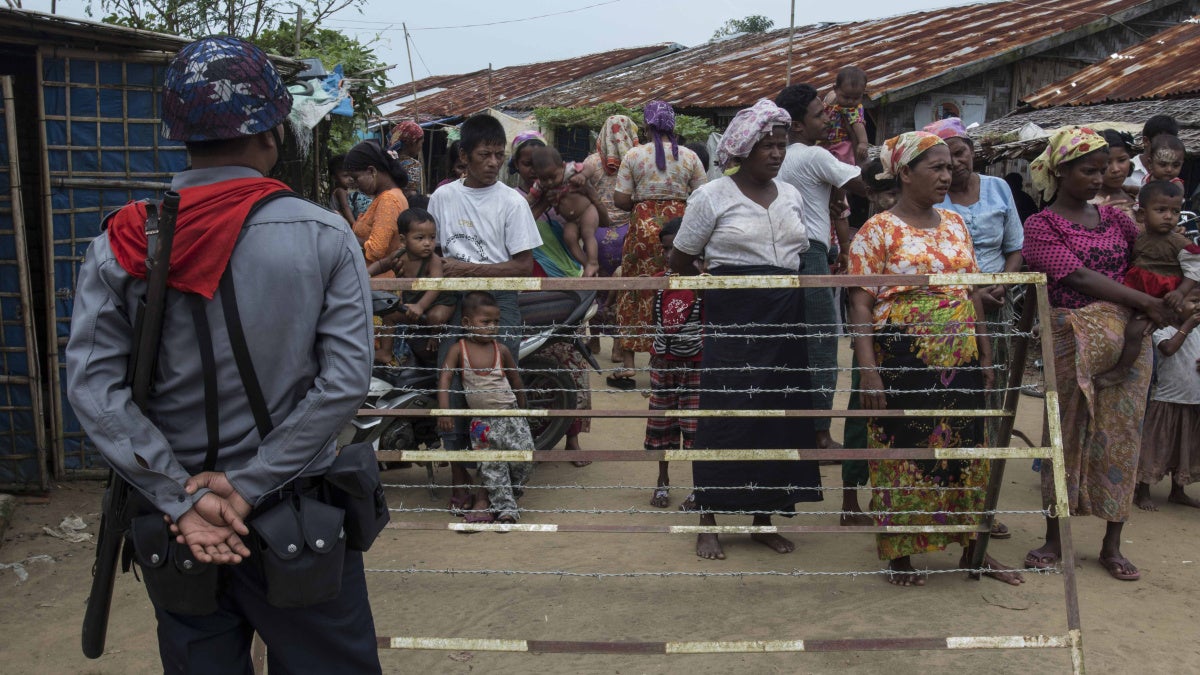
At least nine informal Rohingya schools have shut down across Malaysia in recent months, driven by a surge in online hate speech, harassment, and official crackdowns.
Rights groups report that children are afraid to leave home, and teachers at remaining schools have scaled back activities and asked students to avoid wearing uniforms to avoid attracting attention.
Malaysia does not formally recognise Rohingya as refugees, classifying them as undocumented migrants, though roughly 120,000 are registered with the UN refugee agency.
Anti-Rohingya sentiment spiked in May after a petition calling for their removal gathered nearly 500,000 signatures before being removed. Authorities have also closed Rohingya-linked businesses and schools, citing illegal operation.
Rights advocates warn that prolonged school closures could push children into child labour, begging, or child marriage.
Article 19 reports that Meta and TikTok removed some flagged content but left much of the hate speech online, raising concerns about platform enforcement.
Key facts:
- At least nine Rohingya schools closed nationwide in recent months.
- A May petition calling for Rohingya removal drew nearly 500,000 signatures.
- Malaysia classifies Rohingya as undocumented migrants; 120,000 are UNHCR-registered.
- Deputy Foreign Minister Lukanisman Awang Sauni said many Malaysians feel burdened.
- Teachers at remaining schools ask students not to wear uniforms to avoid attention.
Why it matters: The school closures deepen the Rohingya community's already precarious position in Malaysia, where children have no access to public education. Without informal learning centres, the risk of exploitation, child labour, and early marriage rises sharply.
The episode also exposes the failure of social media platforms to consistently enforce hate speech policies, and signals a broader shift in Malaysian public sentiment and government policy toward the Rohingya—from historic sympathy to growing hostility.
Watching for further crackdowns on refugee communities and possible spillover effects on Myanmar's ongoing civil war and regional diplomacy will be key.
Previous issues
- Junta Resumes Rakhine Offensive; ASEAN Rejects Election BidJul 24, 2026
- Over 500 Rohingya feared dead in two shipwrecksJul 20, 2026
- Over 500 Rohingya feared dead in boat disastersJul 17, 2026
- Resistance drafts transitional constitution; ASEAN meets juntaJul 13, 2026
- Landslide kills 8 Rohingya; Myanmar deaths top 100,000Jul 13, 2026
- Rohingya trafficking bail denied; landslide kills 8Jul 11, 2026
- Myanmar Pardons 10,000; Suu Kyi’s Status Still UnverifiedMay 17, 2026
- NUG presses ASEAN timelines to halt Myanmar airstrikesMay 13, 2026
- Myanmar’s normalization push meets resistance; Dhaka’s Rohingya pledges testedMay 6, 2026
- Min Aung Hlaing Becomes Myanmar President Amid Power ConsolidationApr 26, 2026
- UNHCR: Deadliest Rohingya Sea Year, 900 Dead/MissingApr 26, 2026
- China Backs Myanmar Government, Border Security, Scam CrackdownApr 26, 2026
- Rohingya Sea Flight Surges as Myanmar Crisis HardensApr 23, 2026
- Rohingya Sea Flight Surges as Myanmar Rebrands RuleApr 23, 2026
- Myanmar Intelligence Brief — Apr 22, 2026Apr 22, 2026
- Myanmar’s Fragmentation Fuels Humanitarian and Strategic CrisisApr 17, 2026
- Rohingya Pressure Mounts as Myanmar Junta Tightens GripApr 9, 2026