Shanghai becomes Intuitive’s hub for AI and robotics partnerships; endovascular robotics forecast reaches $1.37 billion
Healthcare robotics and AI are moving toward broader commercial and clinical use, from Intuitive Surgical’s Shanghai partnerships to a projected surge in endovascular robotics revenue. But the reports also stress that deployment depends on trained teams, suitable care pathways, prospective evidence, equitable testing and attention to environmental costs.
Tracking: Medicine Robotics · AI Medicine · AI Healthcare
Endovascular robotics market forecast to reach $1.37 billion by 2036
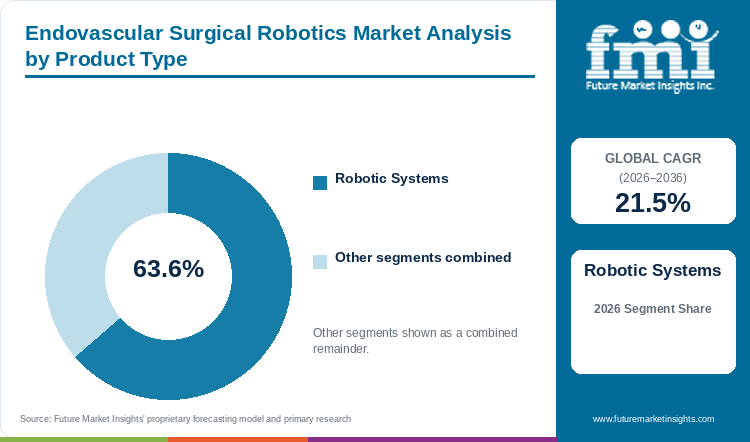
Future Market Insights projects the endovascular surgical robotics market will grow from $195.0 million in 2026 to $1.367 billion by 2036, representing a 21.5% compound annual growth rate.
Robotic systems are expected to generate 63.6% of 2026 product revenue, while hospitals account for 68.6% of end-user revenue. The forecast reflects expanding commercial activity, but the report stresses that equipment sales alone will not determine adoption.
Robotic treatment depends on eligible procedures, imaging, trained bedside teams and emergency support.
It cites Stereotaxis having treated more than 150,000 patients by August 2026 and Microbot Medical expanding from four to eight sales territories, while noting that remote stroke care still requires an equipped hospital pathway.
Key facts:
Why it matters: The forecast points to growing demand for robotic catheter systems, consoles, disposables and navigation services.
Hospitals are positioned as the main buyers, but recurring procedure volume will determine whether expensive systems move from isolated installations into routine use. The main constraint is operational rather than purely technological.
Remote and robot-assisted vascular care still requires advanced imaging, trained staff and emergency conversion capability, so adoption is likely to favor hospitals that can assemble the full treatment pathway rather than facilities purchasing robotics alone.
Intuitive Surgical expands Shanghai partnerships in AI and robotic surgery

Intuitive Surgical is expanding its China work from selling systems toward a broader Shanghai-centered partnership covering clinical training, the surgical-robotics supply chain, and artificial intelligence. Gary S.
Guthart, the company’s executive board chair, outlined the approach on October 11 at Shanghai’s 38th annual International Business Leaders’ Advisory Council meeting.
The company has operated in China for 20 years and made Shanghai its China base through Intuitive Fosun, a joint venture formed with Fosun Pharma in 2017.
More than 22,000 trained Chinese physicians have used Intuitive systems to treat about 1 million patients, according to Guthart.
The company runs a Shanghai clinical training center, works with local technology companies on computer vision and procedure planning, and already has its Ion robotic bronchoscopy system in China.
Intuitive plans to display the da Vinci 5 and da Vinci SP systems at the China International Import Expo in November, while calling secure, privacy-protected healthcare-data integration a priority for further cooperation.
Key facts:
Why it matters: The move positions Shanghai as more than a sales hub: training, local suppliers, AI partners, hospitals, and clinical resources are being connected around robotic care.
That could make adoption easier and support more personalized procedures, although the article provides no new evidence that these initiatives have improved clinical outcomes.
For hospitals and policymakers, the key test is whether cooperation produces secure, interoperable healthcare-data systems without weakening privacy or cybersecurity.
The November product showcase and future work with Chinese technology companies will indicate how quickly Intuitive’s partnership model moves from positioning to implementation.
New AI research puts diagnostic proof and environmental cost under scrutiny
Two October reports are tightening the test for AI in healthcare.
A Bioengineering review published October 8 says predictive accuracy—especially from retrospective studies—is not enough: diagnostic systems need independent, prospective validation, representative patients, subgroup analysis, workflow assessment, clinical-impact studies and post-deployment surveillance.
A separate paper discussed by Healthcare in Europe argues that environmental effects should stand alongside privacy, bias, fairness and transparency when health AI is developed.
At St. Olav’s Hospital, oncologist Åsmund Flobak describes AI already supporting cancer-cell drug testing, radiotherapy contours and automatically generated consultation notes, while saying environmental impact is not actively discussed in his experience.
Together, the reports shift attention from what AI can do to whether it improves care safely, equitably and sustainably.
Key facts:
Why it matters: The diagnostic review raises the evidence bar for hospitals and developers: strong test-set performance will not establish that an AI system improves patient care.
The next meaningful milestones are prospective studies, subgroup results, workflow evaluations, clinical-impact evidence and monitoring after deployment. The environmental paper adds a second constraint to adoption.
Hospitals may increasingly need to weigh AI’s clinical value against energy and water demands, while policymakers decide whether sustainability belongs in the same governance framework as privacy, bias and transparency.
The reports point toward a broader definition of responsible medical AI—one that measures outcomes for patients and costs for the systems and environments supporting care.