Medical technology moves toward autonomy—but evidence and oversight lag
Medical technology is moving from decision-support toward autonomous clinical workflows, robotic procedures and connected systems, while companies and institutions also reposition around the sector. Israel’s sandbox puts evidence, accountability and physician oversight at the center; the robotics partnerships and Shukra’s proposed pivot show expanding ambitions, but their announcements offer no clinical outcomes and, in Shukra’s case, still require approvals.
Monday, Aug 24, 2026
Tracking: Medicine Robotics · AI Medicine · AI Healthcare
Israel Launches Sandbox to Test Autonomous Medical AI
Israel’s Innovation Authority and Ministry of Health have launched a regulatory sandbox for highly autonomous medical AI in real clinical settings.
Its first cohort includes Pulsenmore, Cordio Medical and Simahook, developing systems for pregnancy care, heart-failure management and fetal ultrasound assessment.
The projects will test AI analysis of home ultrasound scans, early detection of heart-failure deterioration, protocol-based medication recommendations and fetal-weight assessments.
The initiative shifts regulatory attention beyond decision-support tools toward systems that may perform parts of clinical workflows with less physician review, forcing clearer decisions on evidence, accountability and human oversight.
Key facts:
The sandbox’s first cohort contains three Israeli health technology companies.
Pulsenmore will develop AI analysis for at-home pregnancy ultrasound scans with Beilinson Hospital.
Cordio will pilot heart-failure monitoring using voice, questionnaires, wearable and medical-record data.
Simahook will test AI-guided fetal-weight assessment at two Hadassah medical centres.
Pulsenmore says its platform has supported more than 250,000 home ultrasound scans.
Why it matters: This is a practical test of whether healthcare regulation can keep pace with agentic and increasingly autonomous AI systems.
Patients and overstretched health systems could benefit from home-based monitoring, automated routine assessments and broader task-sharing among healthcare workers.
The tradeoff is that clinical responsibility becomes harder to assign when software makes recommendations or performs defined parts of care.
The next regulatory test will be evidence: whether these systems work safely across patient groups and care settings, remain explainable, resist cybersecurity threats and avoid harmful model drift.
Simahook’s task-shifting model also makes training, competency and quality assurance central to any expansion beyond physician-led assessment.
Smith+Nephew and Imperial launch five-year surgical robotics partnership
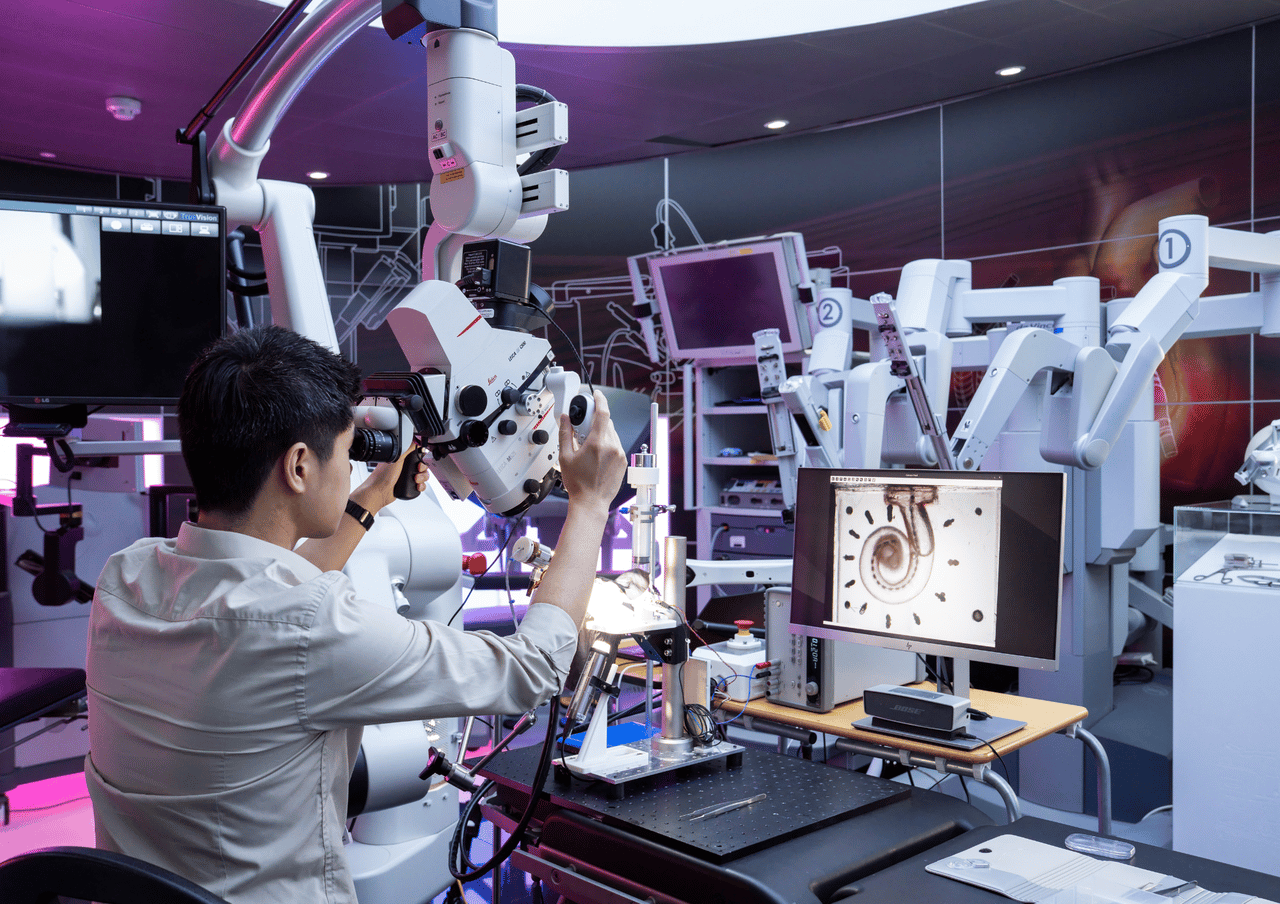
Smith+Nephew and Imperial College London have launched a surgical robotics centre through a five-year partnership, according to Med-Tech Insights.
Smith+Nephew is described as a global medical technology company, while Imperial brings an academic research setting; the stated purpose is to deliver “breakthrough research” in surgical robotics.
The announcement marks a commitment to sustained collaboration rather than a single product release or clinical deployment.
The five-year horizon gives the partners time to develop and assess research, but the announcement does not identify specific projects or results.
For hospitals and clinicians, the partnership is therefore an early-stage research development, not evidence of a newly approved system or improved patient care.
Key facts:
Smith+Nephew and Imperial College London launched a surgical robotics centre.
The partnership is planned to run for five years.
Med-Tech Insights says the collaboration aims to deliver breakthrough research.
Why it matters: The centre could provide a durable industry–academia platform for surgical-robotics research, connecting a medical-technology company with an academic institution.
That may help move research toward practical systems, but the announcement alone establishes neither clinical benefit nor safety.
The key downstream question is execution: which projects emerge, whether they reach clinical evaluation, and whether hospitals and regulators accept the resulting technologies.
Until those milestones appear, this is a research partnership—not a demonstrated change in surgical care.
AiM and Siemens Link MRI Systems to Robotic Neurosurgery Platform
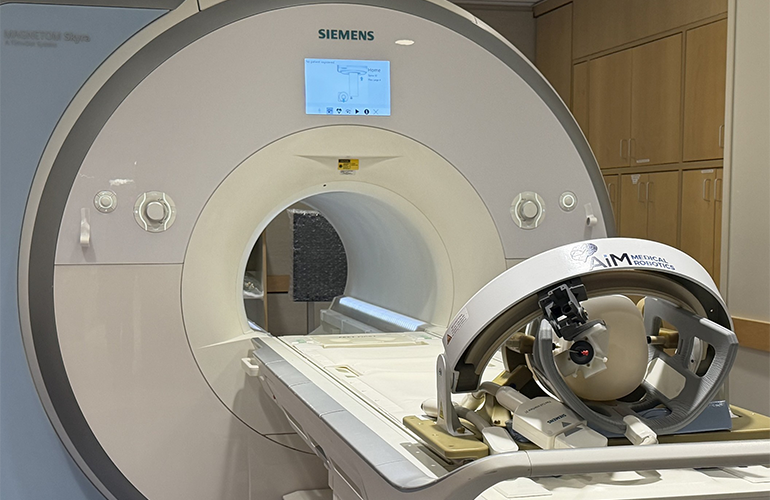
On May 26, 2026, AiM Medical Robotics announced a collaboration with Siemens Healthineers to connect AiM’s MRI-compatible robotic stereotactic neurosurgery system with Siemens MAGNETOM scanners.
The software interface will support data exchange and coordinated functionality between the robot and MRI equipment, covering Siemens systems operating at 1. 5T, 3T, and 0.
55T. AiM says its platform is designed for real-time, MRI-guided procedures including neurostimulator-lead placement, tumor and epilepsy ablation, biopsies, and therapeutic delivery.
The companies describe the interface as a foundation for deeper integration, while Siemens has expressed interest in broader software synchronization; the announcement provides no clinical outcome data.
Key facts:
AiM announced the Siemens collaboration on May 26, 2026.
The interface connects AiM’s MRI-compatible robot with Siemens MAGNETOM scanners.
Compatibility spans 1.5T, 3T, and 0.55T MRI systems.
Applications include lead placement, ablation, biopsies, and therapeutic delivery.
Siemens expressed interest in broader software synchronization.
Why it matters: The agreement could make AiM’s robot easier to integrate into hospitals already using Siemens MRI equipment, reducing a practical barrier to MRI-guided neurosurgery. The stated compatibility also includes the 0.
55T MAGNETOM Free. XL, which AiM links to greater accessibility for MRI-guided interventions.
For now, the development is an integration milestone rather than evidence of improved patient outcomes. The next consequential steps are deeper software coordination, clinical deployment, and regulatory progress.
AiM also says it plans to add artificial intelligence that could learn from real-world data, optimize workflows, and provide real-time predictive insights, but those capabilities remain part of its forward-looking development plan.
Shukra Pharmaceuticals Plans Medical-Technology Pivot and Name Change
Shukra Pharmaceuticals’ board approved a proposed corporate-name change to Shukra Medtech Limited on August 22, 2026, as the company prepares to enter medical technology.
The resolution still requires shareholder approval, postal-ballot voting, and regulatory clearance, including from the Central Registration Centre under India’s Ministry of Corporate Affairs.
The proposed amendments would broaden the company’s permitted activities from pharmaceuticals to medical devices, diagnostics, surgical robotic systems, implantable and wearable devices, AI-based healthcare technologies, hospital automation, telemedicine, and digital-health platforms.
Shukra also seeks scope for healthcare software, machine-learning applications, cloud and cybersecurity products, technology partnerships, and medical-technology parks and laboratories; its AGM is set for September 25 by video conference.
Key facts:
The board approved the proposed name change on August 22, 2026.
Shareholder approval and Central Registration Centre clearance remain required.
The expanded objects include surgical robotics, AI healthcare, telemedicine, and digital-health platforms.
The annual general meeting is scheduled for September 25, 2026, by video conference.
CS Rupal Patel was appointed scrutiniser for the postal-ballot e-voting process.
Why it matters: If approved, the change would give Shukra a much broader corporate mandate, spanning devices, diagnostics, robotics, software, infrastructure, and healthcare services.
It could make the company a potential partner for technology providers through joint ventures, licensing, and technology-transfer arrangements, while opening room for domestic and overseas distribution.
The announcement is an authorization and positioning step, not evidence of a launched product, completed partnership, or commercial deployment.
The next signals are shareholder approval, regulatory clearance, and whether Shukra converts the expanded objects into specific investments, facilities, or healthcare technologies.