Healthcare AI Moves From Pilots Into Procedures and Operations
Healthcare AI is moving closer to routine use: Enovis plans to acquire eCential for orthopedic robotics, Penguin Ai is distributing coding and revenue-cycle tools through AWS, and researchers are applying AI to oral screening and newborn-airway training. The push is matched by a need for guardrails—HIMSS is revising its framework around AI-enabled workforces, governance and outcomes, while human review remains central and Medtronic’s reported robotics investment lacks transaction documentation.
Wednesday, Sep 2, 2026
Tracking: Medicine Robotics · AI Medicine · AI Healthcare
Enovis Offers €155 Million for Surgical Robotics Developer eCential
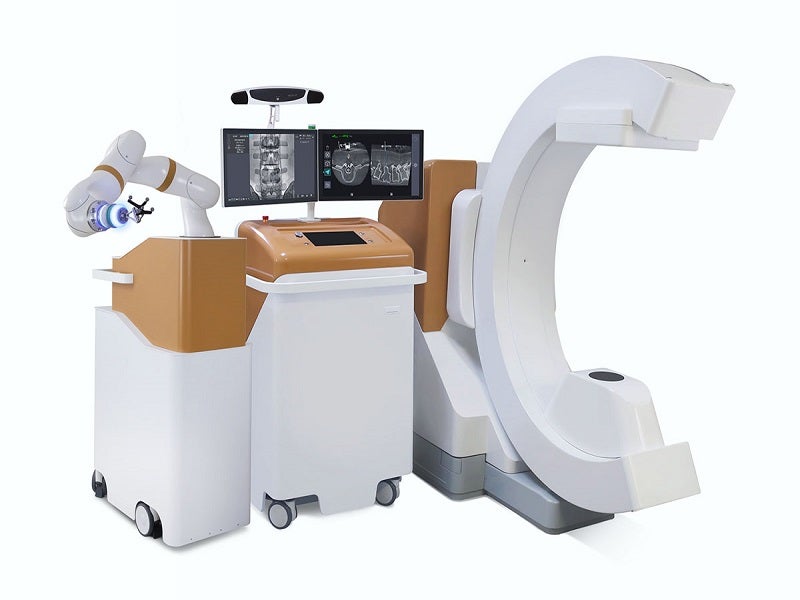
Enovis has made a binding offer to acquire French surgical-robotics developer eCential Robotics, committing €176 million in upfront cash against an enterprise value of about €155 million.
The transaction, announced September 1, also includes up to €35 million in milestone payments and is expected to close by year-end 2026, pending regulatory approvals and French works-council consultation.
The Dallas-based orthopedic-device company says it will bring a next-generation robot to market within two years, starting with knee surgery and following with shoulder applications.
eCential’s Op.n platform combines real-time navigation, robotic guidance and 3D imaging; Enovis plans to connect that capability with its Astra planning software and Arvis augmented-reality headset, while establishing a robotics center of excellence in Grenoble.
The deal would give Enovis an in-house orthopedic robotics platform, a capability competitors such as Stryker, DePuy Synthes and Zimmer Biomet already have, but it also carries an expected net 100-basis-point adjusted-EBITDA margin headwind in 2027.
Key facts:
Enovis announced the binding offer on September 1, 2026.
Upfront cash is approximately €176 million; enterprise value is approximately €155 million.
Milestone payments could add up to €35 million.
Closing is expected by year-end 2026, subject to approvals and consultation.
Enovis targets a knee robot within two years, followed by shoulder applications.
Why it matters: Enovis is buying more than a robot: it is bringing navigation, imaging and robotic guidance inside its orthopedic portfolio.
That could let the company offer a single workflow across its Astra planning software, Arvis headset and future robot, rather than asking surgeons to choose between user experiences—an integration its CEO presents as the strategic benefit.
Execution remains the key watchpoint. The robot is still a planned product, the definitive acquisition agreement follows French works-council consultation, and closing needs regulatory approval.
Enovis expects the deal to create a net 100-basis-point adjusted-EBITDA margin headwind in 2027, so commercialization and milestone delivery will determine whether the strategic expansion offsets the early financial cost.
Rochester wins $3.1 million grant for AI oral-disease screening
On August 31, 2026, University of Rochester researchers received a five-year, $3.1 million grant from NIDCR to develop SMARTeeth++, an AI platform for detecting tooth decay and early gum disease outside traditional dental clinics.
It will combine portable oral imaging with patient health information to identify disease, estimate who faces worsening disease, and help connect people with care earlier.
The project builds on studies showing dental images can be captured outside clinics and analyzed remotely. Screening during obstetric visits identified early-stage decay in 71.7% of participants.
Researchers envision a mobile platform for individual screening and a clinical management tool for hygienists and other trained health professionals.
A portable system would let trained non-dental personnel capture images, while dentists remain responsible for diagnosis and treatment.
Key facts:
University of Rochester’s EIOH received a five-year, $3.1 million grant on August 31, 2026.
NIDCR is funding SMARTeeth++, combining portable oral imaging, AI, and patient health information.
The platform targets tooth decay and early gum disease.
Earlier SMARTeeth screening during obstetric visits found early decay in 71.7% of participants.
Planned uses include mobile screening and clinical management by trained health professionals.
Why it matters: The award supports a shift from waiting for patients to reach dental clinics toward earlier screening in medical offices and community programs.
That could extend dental expertise to people facing cost, transportation, location, or provider barriers, while allowing limited dental resources to focus on patients needing intervention.
The project also sets a clear boundary for deployment: trained non-dental personnel may capture images, but dental professionals remain essential for diagnosis and treatment.
The key next test is whether SMARTeeth++ can produce the reliable, reproducible predictions and community-level risk models envisioned by the researchers.
HIMSS Previews Five-Dimension Digital Health Indicator for the AI Era

At HIMSS26 APAC on September 1, HIMSS previewed DHI 2.0, an update to its Digital Health Indicator that expands the model from four dimensions to five and embeds artificial intelligence across them.
The redesign separates an “AI-enabled workforce” dimension from governance and workforce, reflecting AI’s growing role in clinical work and uncertainty around continuously learning systems.
The updated framework is still being developed, but HIMSS says it will put more weight on trusted data flowing across facilities, accessibility, integrity, privacy and security.
Key facts:
HIMSS previewed DHI 2.0 at HIMSS26 APAC on September 1, 2026.
The model will expand from four dimensions to five, with AI embedded across each.
DHI 2.0 separates AI-enabled workforce from governance and workforce.
HIMSS is developing the components that will determine what the revised model measures.
The existing DHI scores digital ecosystem capacity on a 0-to-400 scale.
Why it matters: DHI 2.0 reframes AI readiness as an organizational issue, not simply a software or analytics purchase.
Health-system leaders will be assessed on whether data can move across a patient’s care journey, whether clinicians can use and trust tools, and whether organizations can monitor changing models and manage risk.
That gives providers a common strategic lens without prescribing particular infrastructure or AI deployments.
The key next developments are the measurement components—and whether the companion outcomes framework produces comparable evidence on AI value and return on investment across institutions.
Wisconsin Researchers Develop AI Coach for Newborn Airway Training
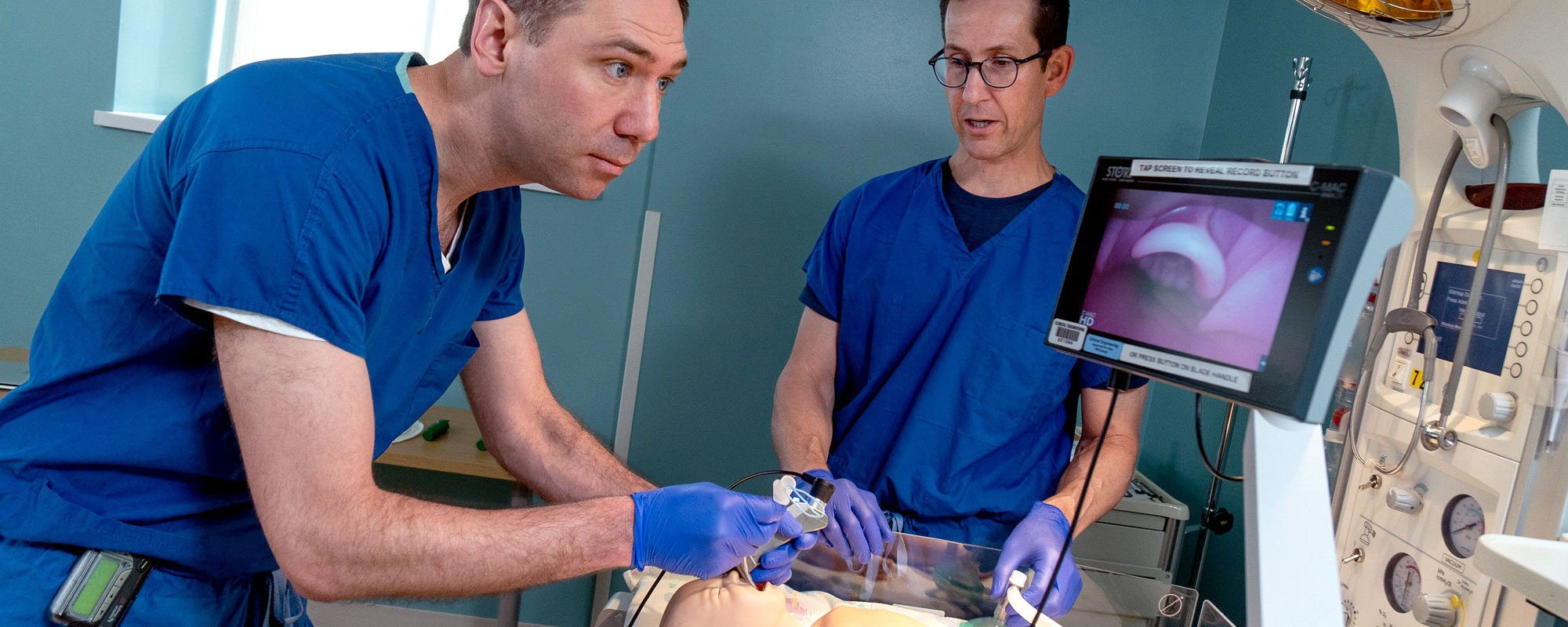
University of Wisconsin researchers are developing an AI “digital mentor” to help clinicians train for neonatal intubation, a high-risk procedure used to place breathing tubes in newborns.
The system analyzes video-laryngoscopy recordings, identifies airway anatomy and classifies how deeply the laryngoscope blade is inserted.
The team adapted YOLOv8 and I3D deep-learning systems and reviewed more than 100 de-identified videos—nearly 300,000 frames—to mark the glottic opening and blade position.
Learning intubation can require up to 100 supervised attempts, while prolonged or repeated attempts can cause low oxygen, low heart rate and airway trauma.
In earlier published work, the model identified the vocal-cord region at performance comparable to or better than novice and intermediate clinicians, although experienced clinicians were faster; the researchers describe the tool as coaching support, not an operator replacement.
Key facts:
UW researchers are developing an AI digital mentor for neonatal intubation training.
Researchers analyzed more than 100 videos and nearly 300,000 frames.
Models identify the glottic opening and classify laryngoscope blade insertion depth.
Training intubation can require up to 100 supervised attempts.
The earlier model matched or exceeded novice and intermediate clinicians identifying vocal-cord anatomy.
Why it matters: This approach addresses a specific training bottleneck: clinicians need extensive supervised practice, but opportunities to perform neonatal intubation are limited.
If future testing shows that visual cues improve recognition and technique, the tool could give learners more consistent feedback without taking control away from the clinician.
The evidence so far centers on anatomy recognition in recorded video, not demonstrated improvement in patient outcomes.
The next development to watch is whether the UW team can show that the digital mentor improves training performance across clinicians and settings while preserving privacy in the underlying recordings.
Medtronic Reportedly Invests $700 Million in Cornerstone Robotics
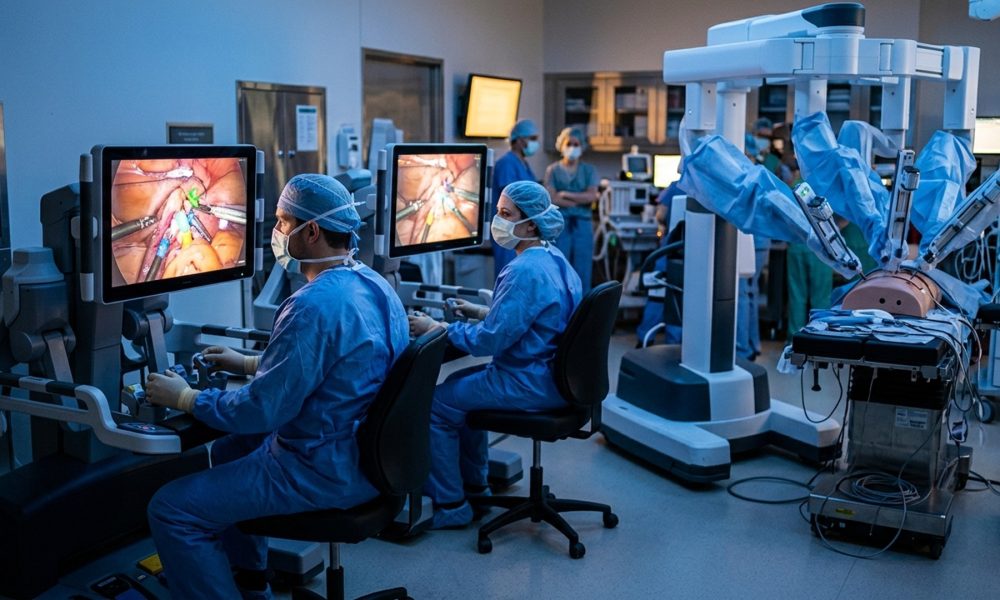
A September 1 LinkedIn post by Steve Bell reports that Medtronic is investing $700 million in Cornerstone Robotics, describing the move as a major expansion in soft-tissue surgical robotics.
Bell links the development to industry discussion about a system called Sentire, though the post does not provide transaction documents or detailed product information.
The post presents the investment as a sign that Medtronic intends to remain an active challenger to Intuitive and Johnson & Johnson in robotic surgery. It also raises, without resolving, whether Medtronic’s Hugo system could be shelved.
Bell argues that the broader opportunity is expanding access to robot-assisted surgery, particularly in markets where adoption remains limited, but the post supplies no supporting penetration data.
Key facts:
Steve Bell’s LinkedIn post is dated September 1, 2026.
Bell reports a $700 million Medtronic investment in Cornerstone Robotics.
The post links the investment to soft-tissue surgical robotics.
Bell names Intuitive and Johnson & Johnson as competitive reference points.
The post questions whether Medtronic will shelve its Hugo system.
Why it matters: If accurate, the reported investment would signal that Medtronic is still pursuing a major role in surgical robotics rather than retreating from the field.
It could add competitive pressure around robotic platforms and give hospitals another potential supplier, although the post does not establish how Cornerstone’s technology fits with Medtronic’s existing Hugo strategy.
The immediate issue to watch is confirmation: the post provides no deal structure, closing details, or statement from Medtronic or Cornerstone.
Further clarity on Sentire, Hugo, and the investment’s intended products will determine whether this is a new platform strategy, an acquisition-related move, or a broader portfolio expansion.
Penguin Ai Brings Autonomous Medical Coding to AWS Marketplace
Penguin Ai, a healthcare-native AI company, announced Sept. 1, 2026, that its Intelligent Medical Coding and Intelligent Revenue Cycle Management (RCM) solutions are available through AWS Marketplace.
The listing gives providers a way to procure and deploy the software on AWS with consolidated billing and standardized terms.
The coding system identifies and validates codes across more than 72,000 ICD-10 codes; RCM adds claims scrubbing, billing review, denial triage, auto-generated appeal letters, and chart summarization.
Every output includes a human-readable rationale, and human review can be configured for each workflow.
Penguin Ai says deployment inside a customer's AWS account keeps clinical and billing data within that environment and requires no new business associate agreement.
It reports a 93 percent appeals overturn rate, review cycles shortened from 48 hours to five minutes, and a 90-day ROI guarantee.
Key facts:
Penguin Ai announced AWS Marketplace availability on September 1, 2026.
Its coding tool covers more than 72,000 ICD-10 codes.
RCM workflows include claims scrubbing, denial triage, appeals, and chart summarization.
Deployment remains inside the customer's AWS environment, according to Penguin Ai.
Human review is configurable across every workflow.
Why it matters: The launch reduces procurement and deployment friction for providers already operating on AWS, while offering a way to keep clinical and billing data within their existing governance perimeter.
Configurable human review and explainable outputs may also make the tools easier to audit than opaque automation, particularly in claims and coding workflows.
The immediate commercial opportunity is administrative rather than diagnostic: reducing manual work, denials, and reimbursement delays.
The reported performance figures and 90-day guarantee are vendor claims, so provider deployments will determine whether the promised savings and faster appeals translate beyond Penguin Ai's stated results.