Pennsylvania House advances clinical AI disclosure; Carvolix appoints Anne Lange; Kawasaki and Gemelli plan robotics work
Healthcare AI and robotics are moving through different stages: Pennsylvania lawmakers would make clinical AI use more visible and preserve clinician authority, while Carvolix and Kawasaki are building regulatory, commercial, and hospital collaboration pathways. Pay attention to whether disclosure, independent evaluation, and validation keep pace with platform launches and proposed deployments.
Friday, Oct 2, 2026
Tracking: Medicine Robotics · AI Medicine · AI Healthcare
Pennsylvania House Advances Mandatory Disclosure for Clinical AI

Pennsylvania’s House passed bipartisan legislation requiring healthcare facilities to tell patients when artificial intelligence is used for clinical decision-making.
House Bill 1925 passed 144-59 and would also require disclosure when AI generates personalized clinical communications, with information written in plain language and posted on facility websites.
The bill would preserve human authority: AI recommendations could not supersede a provider’s decision, and clinicians could not be penalized for disagreeing with an algorithm.
The move comes as Regenstrief Institute argues that connected health data, governance and independent evaluation are needed to establish whether clinical AI improves real-world care; an investment screen meanwhile highlights AI applications spanning drug development, rehabilitation and hospital technology.
Key facts:
Pennsylvania House Bill 1925 passed 144-59 on October 1, 2026.
The bill covers hospitals, healthcare providers and insurers.
AI-generated personalized clinical communications would require patient disclosure.
Regenstrief links Indiana’s AI opportunity to its connected health-data network.
Why it matters: Pennsylvania’s proposal would shift AI transparency from a matter of provider disclosure to a formal operating requirement for healthcare organizations.
Patients would gain clearer information about algorithmic involvement in decisions and communications, while clinicians would retain explicit authority to reject AI recommendations.
The harder issue is implementation: disclosure alone does not establish whether a system is accurate, effective or handling patient data appropriately.
Regenstrief’s emphasis on governance and real-world evidence points to the next policy question—how providers will independently evaluate tools after telling patients they are in use.
Commercial interest is broadening across diagnostics, rehabilitation, drug discovery and hospital workflows, increasing the importance of those safeguards.
Carvolix Names Anne Lange Chair as AI-Robotics Expansion Accelerates
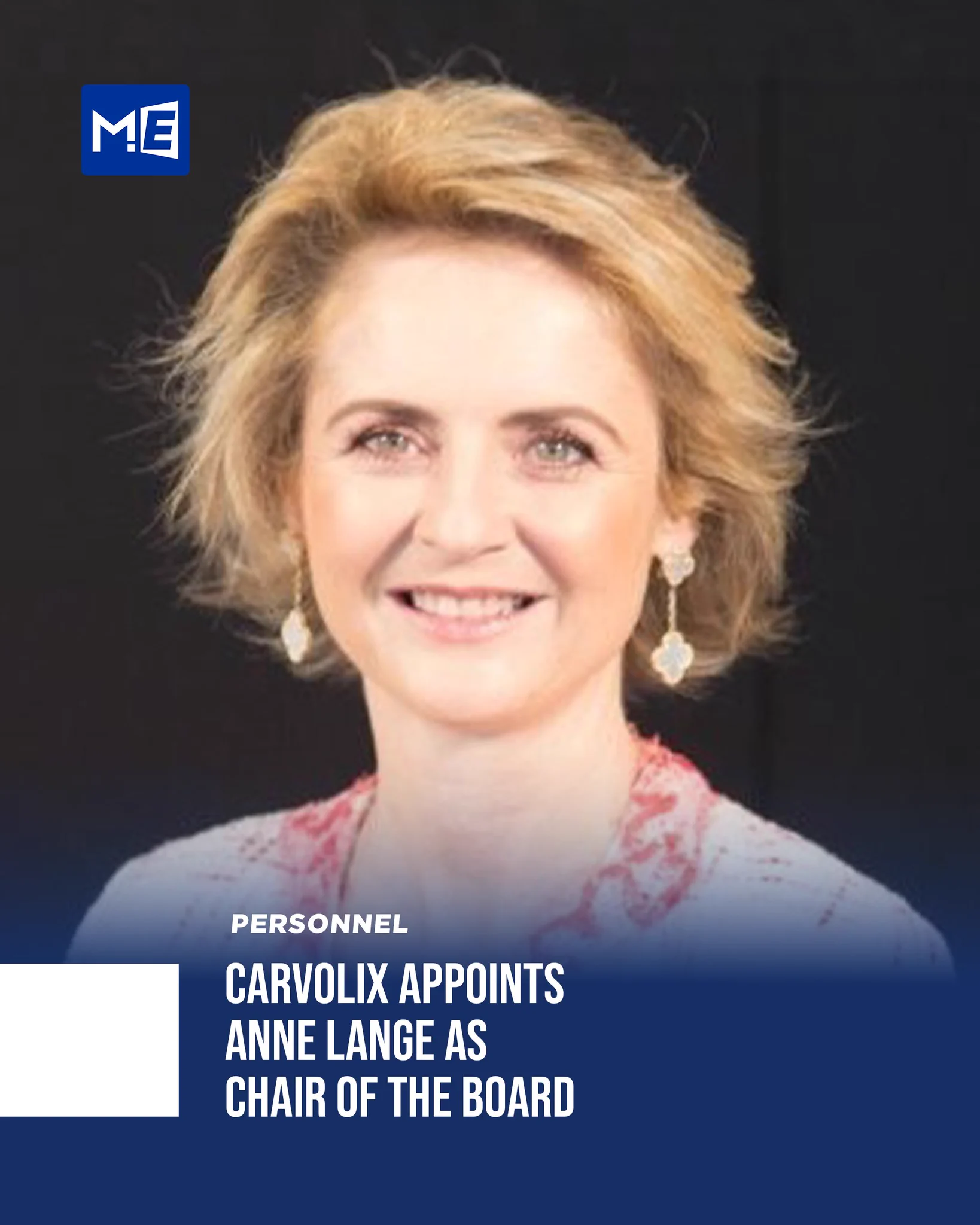
On September 30, French medtech company Carvolix appointed Anne Lange chair of its board, succeeding Liane Teplitsky, who remains a director. Lange, a former French government and Cisco executive and founder of Mentis, joined the board in April.
The governance change accompanies regulatory and commercial steps for TAVIPILOT, Carvolix’s AI-driven robotic platform.
The company says its software CE-marking dossier was filed, with certification expected by year-end and European launch targeted for early 2027; its US rollout has begun at reference centers, including 10 procedures at Rush University Medical Center over the summer.
Carvolix also filed the TAVIPILOT Robot FDA dossier, expecting clearance in early 2027 for a complete-platform launch. It reported 2026 first-half results but supplied no figures in this announcement.
Key facts:
Anne Lange became Carvolix board chair on September 30, 2026.
Liane Teplitsky remains a director after handing over the chairmanship.
TAVIPILOT Software’s CE-marking dossier was filed; European certification is expected before year-end.
Carvolix reported 10 TAVIPILOT procedures at Rush University Medical Center during summer 2026.
The FDA dossier for TAVIPILOT Robot was filed, with clearance expected in early 2027.
Why it matters: Lange’s appointment gives Carvolix a chair with government, technology, investment and corporate-board experience as the company moves from development toward commercialization.
The company specifically links her role to international growth, AI networks and stronger governance. The immediate test is whether regulatory filings become approvals and routine clinical use.
The announcement establishes an early, controlled US rollout rather than broad deployment; investors and healthcare providers will be watching for European certification, FDA clearance and the planned launches in 2027.
Kawasaki and Gemelli Hospital Sign MOU on Medical Robotics Collaboration

On September 30, Kawasaki Heavy Industries signed a memorandum of understanding with Rome’s Fondazione Policlinico Universitario Agostino Gemelli IRCCS, known as Gemelli University Hospital.
The agreement creates a framework to explore next-generation healthcare solutions using medical robotics and digital-transformation technologies, with Kawasaki’s Strasbourg-based Kawasaki Innovation Centre Europe (KIC-EU).
It is KIC-EU’s first partnership with a European healthcare institution. The partners will consider joint development, proof-of-concept work, and validation, including the possibility of a permanent development hub at the hospital.
Kawasaki says its initial “one-stop” approach could combine group technologies—including the hinotori surgical robot, Nyokkey semi-humanoid robot, FORRO delivery robot, and mapxus positioning system—with AI and remote technologies.
The immediate step is collaboration and validation planning, rather than a reported clinical rollout.
Key facts:
Kawasaki and Gemelli University Hospital signed an MOU on September 30, 2026.
The proposed partnership is KIC-EU’s first with a European healthcare institution.
The parties may establish a permanent joint development hub inside the hospital.
KIC-EU began operations in March 2026.
Potential projects could combine Kawasaki robotics, AI, and remote technologies.
Why it matters: The MOU gives Kawasaki a hospital setting for developing and testing integrated robotics and digital-health concepts with healthcare professionals. For Gemelli, it creates a channel to shape prototypes around hospital needs before any wider deployment.
The important near-term question is execution: whether the proposed hub is established, which proof-of-concept projects are selected, and whether any advance into formal validation or healthcare delivery.
The announcement signals a structured partnership, but not yet a clinical result or deployed system.