ISG outlines software-led U.S. device development; Sudhir Srivastava pitches robotics for India
Medical-device innovation is moving toward integrated platforms: U.S. manufacturers are connecting software, regulation, quality, cybersecurity and post-market data, while an Indian medtech leader sees surgical robotics as a path toward domestic capability. Both developments point to the same constraint: progress depends on validation, human oversight, training, investment and manufacturing capacity rather than technology alone.
Tuesday, Oct 6, 2026
Tracking: Medicine Robotics · AI Medicine · AI Healthcare
U.S. Medical Device Makers Rebuild Around Software Lifecycles

On October 5, ISG published a 2026 U.S. medical-device report describing a shift toward software-defined products that continue evolving after launch.
The report says companies are directing investment toward complete product lifecycles, linking engineering, regulatory affairs, quality, cybersecurity and post-market operations rather than treating them as separate programs.
Manufacturers are applying AI and automation to development, testing, validation and documentation, while remaining cautious about autonomous “agentic” AI in safety-critical work.
They are connecting remote monitoring, predictive maintenance and complaint intelligence to product decisions, seeking earlier safety signals, shorter complaint cycles, lower validation effort and fewer quality issues.
The report evaluated 25 providers across three service areas and says shared data, governance and human oversight increasingly shape regulated AI adoption.
Key facts:
ISG published its 2026 U.S. Medical Device Digital Services report on October 5.
The report evaluated 25 providers across three digital-service quadrants.
Accenture, Capgemini, Cognizant, HCLTech, Infosys, LTTS, TCS and Wipro led all three quadrants.
Manufacturers are using AI for engineering, testing, validation and technical documentation.
Remote monitoring, predictive maintenance and complaint intelligence target earlier safety signals.
Why it matters: The shift puts software maintenance and field data closer to regulated product development.
A device update may alter validation evidence, cybersecurity posture, regulatory documents and field performance, making integrated data and change control operational requirements rather than isolated IT upgrades.
Manufacturers could gain faster engineering and earlier signals from deployed devices, but they must show that AI workflows remain explainable, governed and supervised.
Service providers may gain work coordinating these functions, while the key test will be whether the reported investments produce shorter complaint cycles, lower validation effort and fewer quality issues.
Indian expert pitches surgical robotics as route beyond medical-device imports
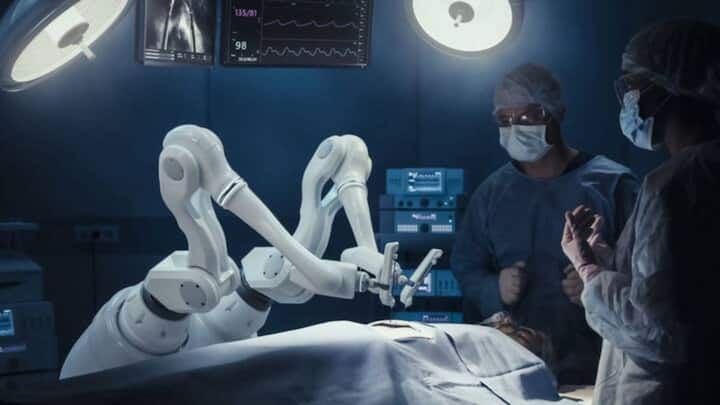
An Indian medtech executive is presenting surgical robotics as a potential route from import dependence to domestic innovation.
Dr Sudhir Srivastava, founder, chairman and CEO of SS Innovations International, says building robots would force closer integration of precision engineering, artificial intelligence, imaging, medical-grade software, cybersecurity, clinical validation and specialist training.
The argument comes as government data cited by Firstpost puts imports at about 60% of India’s medical-device consumption.
Srivastava says Indian-designed platforms are moving beyond pilot stages into international healthcare systems, but warns that a durable industry will require investment in research, trials and manufacturing, wider adoption in Tier 2 and Tier 3 hospitals, and capabilities spanning intellectual property through global distribution.
Key facts:
Firstpost published the analysis on October 5, 2026.
Dr Sudhir Srivastava leads SS Innovations International as founder, chairman and CEO.
Imports account for around 60% of India’s domestic medical-device consumption, according to cited government data.
Srivastava says Indian-designed surgical platforms are moving beyond pilots into international healthcare systems.
He says Tier 2 and Tier 3 adoption could increase volumes, lower costs and generate clinical data.
Why it matters: If the ecosystem develops as described, hospitals could gain more locally produced options, while companies could use domestic deployment to build experience and data for overseas markets.
The central constraint is execution: integrating engineers, clinicians, technicians and manufacturers while funding trials and meeting cybersecurity and clinical-validation requirements.
The next signal to watch is whether Indian platforms expand beyond individual ventures and pilot-stage deployments into repeatable adoption across the broader hospital network.
That would indicate a shift from importing or assembling sophisticated devices toward capturing more of their intellectual property, production and distribution value.