Texas halts data-center permits; California expands local oversight; Maryland orders state review
States are placing new conditions on data-center growth as electricity and water demands become harder to ignore. Texas has paused permits and opened investigations, while California is shifting infrastructure and disclosure responsibilities to developers and Maryland is creating a state review system without imposing a ban.
Friday, Sep 25, 2026
Tracking: Data Center · Data Centre
Texas halts new data-center permit approvals pending audits

Texas Gov. Greg Abbott ordered the Texas Commission on Environmental Quality to stop issuing new data-center permits on September 21.
The pause will remain until the Electric Reliability Council of Texas (ERCOT) and Texas Water Development Board complete audits of projects seeking construction, including their expected electricity and water use, ownership, tax breaks and effects on local communities.
The order expands Abbott’s August 3 moratorium on new data centers connecting to the state’s grid. It also addresses “behind-the-meter” projects that generate their own power and might otherwise avoid ERCOT review.
The move follows weak participation in a state water survey—only 28% of data centers responded—and June directives requiring developers to cover electric-infrastructure costs and reduce pressure on consumers.
TCEQ must use the audit findings in future permit decisions.
Key facts:
On September 21, Abbott ordered TCEQ to stop issuing new data-center permits.
Approvals await ERCOT and TWDB audits of electricity, water, ownership, tax breaks and community impacts.
Only 28% of data centers responded to a state water-use survey.
Abbott’s August 3 grid moratorium required audits before ERCOT connections.
Why it matters: The immediate consequence is a statewide permitting hold that adds a review gate for data-center developers, including projects planning private power generation.
TCEQ cannot proceed until state agencies gather information on infrastructure demands, water use, ownership and public incentives.
The order gives communities and state officials more leverage to examine projects before approval, while delaying developers’ ability to advance construction.
The next decisions will come from the ERCOT and TWDB audits, followed by TCEQ’s use of those findings in permit reviews; lawmakers may also face pressure to expand regulators’ authority, as the PUC chair requested in July.
California signs seven laws giving communities more control over data centers

California Gov. Gavin Newsom signed seven bills on September 21 to increase oversight of data centers and give communities more information before proposed projects move forward.
The package covers electricity, water, workforce, and land use, with the stated aim of preventing residents and ratepayers from absorbing infrastructure costs linked to data-center growth.
The laws require proposed facilities to provide local governments and water suppliers with information on water use, supply, efficiency, and drought planning.
They also require data centers to pay grid-upgrade costs, comply with state energy-procurement rules, and bring new clean-energy supply onto the grid.
Separately, the projects become ineligible for blanket environmental exemptions and must meet state standards on energy, water, and fuel consumption before judicial streamlining can be approved.
Key facts:
Newsom signed seven California data-center bills on September 21, 2026.
AB 1577 establishes new data-center reporting requirements.
Electricity laws require data centers to pay grid-upgrade costs.
Proposed facilities must disclose water use, supply, efficiency, and drought planning.
Data centers are ineligible for blanket environmental exemptions.
Why it matters: The package shifts more of the development burden toward data-center applicants and away from ordinary electricity ratepayers.
Operators will need to account for grid, water-supply, and environmental requirements earlier in project planning, while local governments gain information to weigh promised economic benefits against infrastructure demands.
The immediate issue is implementation: proposed projects will have to demonstrate compliance with energy, water, and fuel standards before receiving judicial streamlining, and data centers may have to fund related electricity and water-supply upgrades.
That could make local review and infrastructure-cost negotiations more consequential for future projects.
Maryland Orders State Review of Data Centers, Stops Short of a Ban

Maryland Gov. Wes Moore signed an executive order on September 23 creating a state task force to review large data-center proposals.
Projects expecting at least 25 megawatts of peak electricity demand can be classified as aligned, conditionally aligned, or not aligned with state principles covering ratepayer costs, environmental protections, and community support.
Local governments retain final authority over approvals, but state agencies must defer substantive permit review for projects deemed not aligned until required local approvals are documented.
Maryland will publish a monthly dashboard showing developers, projected electricity demand, and anticipated water use, while agencies are barred from entering new nondisclosure agreements with developers.
Moore also said he will seek repeal of the state’s 2020 data-center tax exemption, stopping short of a statewide pause or ban as more than a dozen local governments impose their own restrictions.
Key facts:
Gov. Wes Moore signed the executive order on September 23, 2026.
Seven state agencies will staff the Maryland Data Center Task Force.
Projects at least 25 megawatts of peak demand enter the task force’s review.
Maryland will publish developers, peak electricity demand, and anticipated water use monthly.
Moore will seek repeal of the 2020 data-center tax exemption.
Why it matters: The order changes how Maryland’s state government engages with data-center developers without overriding local zoning authority.
Projects seeking state incentives, financing, permits, or letters of support must receive an aligned or conditionally aligned finding, giving the task force practical leverage over development timelines and public backing.
The policy also shifts the debate toward who pays for grid and infrastructure demands, with Baltimore Gas and Electric supporting requirements that large new users fund the costs of serving them.
Developers gain a clearer statewide process but face greater disclosure and scrutiny; communities gain new information, though critics say local moratoriums may expire before stronger safeguards arrive.
The legislature’s January session is the next major test, particularly over the tax exemption and possible statewide restrictions.
Texas Probes Hundreds of Data Centers Over Water Reporting
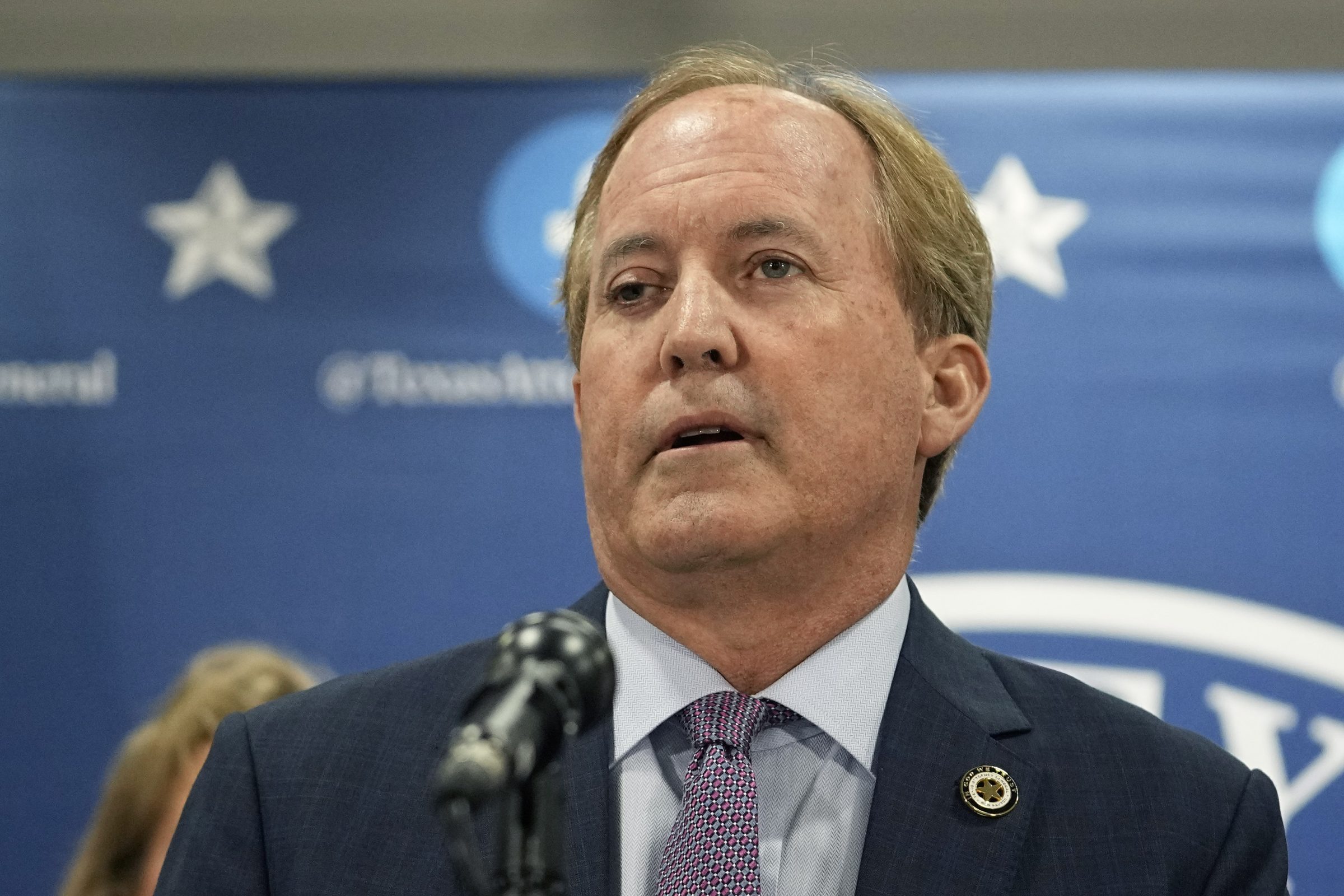
Texas Attorney General Ken Paxton said Sept. 24 that his office is investigating hundreds of data-center developments that did not answer a Texas Water Development Board survey on water-use reporting.
The inquiry spans counties including Harris, Travis, Dallas and El Paso, and follows state efforts to compel major water users to provide required information. The move adds legal scrutiny to a broader pause in Texas data-center approvals.
Gov. Greg Abbott ordered environmental regulators on Sept. 21 to stop issuing permits sought by data centers until the Electric Reliability Council of Texas completes an audit; the state has also paused new construction while reviewing grid connections.
More than 40 companies, including Amazon, Google, OpenAI and Anthropic, have said they will comply with new standards.
Key facts:
Paxton announced the investigation on September 24.
The inquiry covers hundreds of data-center developments statewide.
The Texas Water Development Board survey concerned water-use reporting requirements.
Abbott ordered environmental regulators to stop issuing data-center permits September 21.
More than 40 companies publicly agreed to comply with Texas standards.
Why it matters: Texas is making data-center expansion conditional on better information about water use and grid impacts.
For operators, failing to answer required surveys now carries potential legal scrutiny, while permitting and construction remain constrained by state audits. The state says agencies need the grid and water reviews before approving projects.
The next important developments are the audits’ findings and whether regulators impose legal consequences on companies that failed to meet reporting requirements.
New Research Puts AI Data Centers’ Water Infrastructure Costs in Focus
New September research puts water infrastructure alongside electricity as a constraint on U.S. artificial-intelligence data-center growth.
The Pacific Institute found individual facilities withdraw roughly 270 gallons to 3.9 million gallons daily; a separate 2026 study estimates new demand could require $10 billion to $58 billion in water-system capacity through 2030.
The pressure extends beyond cooling towers. A Berkeley estimate cited by EP Magazine found data centers’ indirect water footprint from electricity was nearly 800 billion liters in 2023, about 12 times direct use.
Hyperscalers are responding: Microsoft reports more than $500 million for water and wastewater projects since 2020, while Ecolab completed its approximately $4.75 billion CoolIT acquisition to expand direct-liquid-cooling services.
Key facts:
Pacific Institute’s September 2026 study found facility withdrawals ranging from 270 gallons to 3.9 million gallons daily.
About 74 percent of withdrawn water is consumed at a typical facility.
U.S. data centers may require up to $58 billion in additional water-system capacity through 2030.
Berkeley estimated indirect electricity-related water use was nearly 800 billion liters in 2023.
Microsoft says it invested over $500 million in 75-plus water projects since 2020.
Why it matters: AI data-center economics are expanding beyond land, buildings, chips and electricity.
Communities may need new pipes, pumps, treatment capacity and wastewater systems before large campuses can operate, raising questions about who pays and how local governments measure cumulative demand.
Cooling and water-treatment suppliers stand to gain from the buildout, while hyperscalers face pressure to fund infrastructure and disclose facility-level use.
Lower-water designs can also require more electricity, so policymakers will need to evaluate water and energy impacts together rather than treating cooling efficiency as a standalone measure.
Maryland and Texas tighten data-center oversight as AI power demand grows
Maryland Governor Wes Moore signed an executive order on September 23 creating statewide review rules for data centers seeking state action at 25 megawatts or more.
A task force will assess grid, water, community and economic effects, publish determinations, and support a monthly dashboard listing each project's location, developer, expected electricity and water use, approvals and outcome.
Texas is taking a harder line: Governor Greg Abbott ordered the Texas Commission on Environmental Quality on September 21 to stop issuing data-center-related permits while regulators audit electricity and water demands.
The move follows an August directive requiring the Public Utility Commission of Texas and ERCOT to audit projects seeking grid connections, including their power, water, cooling, ownership and community-impact plans.
Maryland is also seeking legislative repeal of its data-center sales-tax exemption, while its executive order leaves that benefit intact.
Key facts:
Moore’s order covers data centers of 25 megawatts or more seeking Maryland state action.
Maryland’s task force will classify projects as Aligned, Conditionally Aligned or Not Aligned.
The state dashboard will update monthly and disclose projected electricity and water use.
Abbott ordered TCEQ to halt data-center permits on September 21 during electricity and water audits.
Texas grid audits require data on power, water, cooling, ownership and community impacts.
Why it matters: Maryland is establishing a more predictable but more visible approval process: developers must disclose resource demands, while regulators and communities gain a formal basis for judging projects.
Projects can receive conditional or negative determinations, and the proposed repeal of the tax exemption could raise their costs if lawmakers approve it. Texas’s permit pause creates immediate uncertainty for projects awaiting approvals or grid connections.
The next significant signals will be Maryland’s first task-force determinations, the monthly dashboard, legislative action on the tax break, and Texas’s audit findings.
Maryland Orders New State Review of Large Data Centers
Maryland Gov. Wes Moore has issued an executive order creating a new oversight system for large proposed data centers seeking state approval or support.
Projects using at least 25 megawatts must be reviewed by a state task force, while a public dashboard will disclose each developer, location, projected electricity and water use, requested state actions, and state findings.
Moore says five principles will guide reviews, including grid protection, economic benefits, community input, environmental safeguards, and transparency.
He also said he will ask lawmakers to repeal Maryland’s data-center sales-and-use tax exemption, enacted in 2020.
The policy is not a statewide moratorium: local land-use decisions remain with counties, but projects already in the pipeline can face the standards if they seek more state support, add electric load, or request state changes.
Key facts:
The order covers proposed data centers using at least 25 megawatts seeking state action.
A public dashboard will disclose projected electricity and water use for covered projects.
Moore will seek repeal of Maryland’s 2020 data-center sales-and-use tax exemption.
Counties retain land-use authority, while qualifying pipeline projects can face the new standards.
Why it matters: Maryland is adding state-level scrutiny without overriding county zoning or imposing a statewide construction ban.
Developers seeking permits, incentives, letters of support, additional electric load, or other state changes will face more disclosure and review, while communities and ratepayers gain a formal channel for examining grid, water, environmental, and economic effects.
The proposed tax-break repeal could change the economics of future projects, although lawmakers must still act.
The immediate test is whether the task force and dashboard produce meaningful review while Maryland tries to retain data-center investment that supporters associate with jobs and local property-tax revenue.