Data Centers Hit Limits of Power, Permits and Public Support
The drive to expand AI and data-center capacity is colliding with electricity shortages, environmental permitting, rising infrastructure demands and political resistance. New York’s temporary permit pause and the shift toward privately controlled natural-gas generation show two competing responses, while subsidy backlash, lobbying and community opposition make public support a growing constraint on expansion.
Monday, Aug 3, 2026
Tracking: Data Center · Data Centre
1. New York Pauses New Hyperscale Data Center Permits for Up to One Year

Governor Kathy Hochul has created a statewide moratorium on new hyperscale data centers, temporarily pausing New York environmental permits for up to one year.
During the pause, the Department of Environmental Conservation will not issue discretionary permits for projects that were not already deemed complete.
The state will use the period to develop consistent environmental standards covering energy demand, water use and quality, and air quality.
It is also directing regulators to make data centers pay more for electricity or supply their own power, while creating local benefit-negotiation guidance covering infrastructure, childcare, labor standards, hiring, and workforce development.
Key facts:
Executive Order 62 establishes New York’s statewide moratorium on new hyperscale data centers.
The permitting pause will last up to one year.
DPS will develop a Generic Environmental Impact Statement for data centers.
Energize NY may require data centers to pay more or supply their own energy.
Empire State Development must issue the Community Investment Framework within 60 days.
Why it matters: New York is temporarily changing the development path for large data centers from project-by-project permitting toward statewide standards.
That creates near-term uncertainty for developers, while potentially giving regulators more leverage over grid costs, environmental impacts, and infrastructure demands.
Local governments may gain a clearer framework for negotiating community benefits, including financial support and workforce commitments.
The outcome will depend on the forthcoming environmental review, the state’s energy-cost rules, and whether lawmakers approve the proposed repeal of sales-tax exemptions.
2. Grid delays push data centers toward private natural-gas power
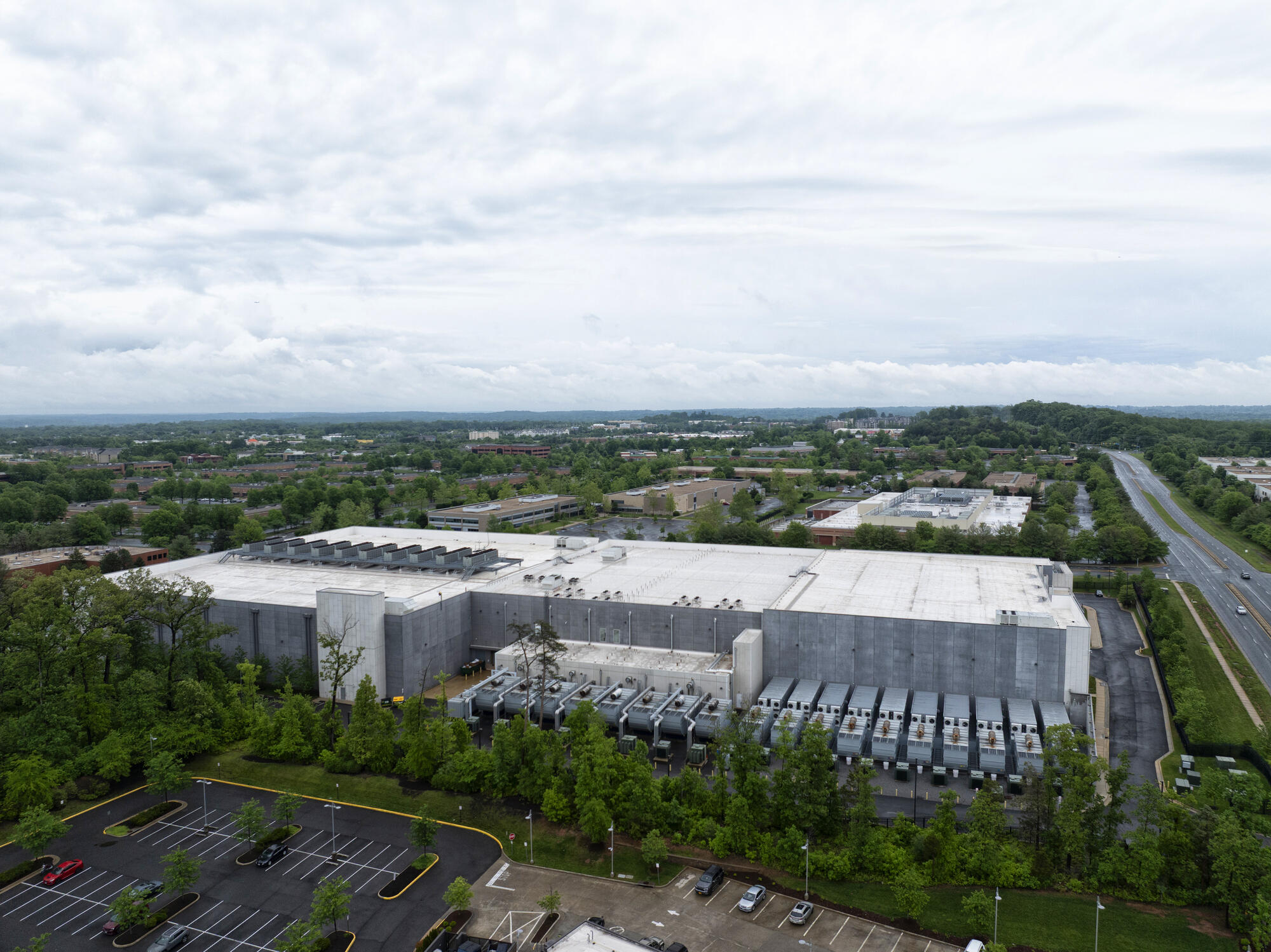
Data center developers are increasingly looking beyond the public grid as electricity shortages and lengthy interconnection queues collide with AI’s rising power needs.
Enverus projects that roughly 40% of U.S. data center capacity added through 2030 could operate off-grid, using privately controlled generation rather than waiting for utility connections.
Amazon and Google are pursuing natural-gas generation, with activity expected to concentrate in Texas, the PJM market region, and the Western United States.
Enverus estimates the buildout could require about $5 trillion in investment, add 62 gigawatts of gas-fired generation, and create domestic gas demand of 1.3 billion cubic feet per day by 2030.
Analysts say speed, availability, and reliability—not climate goals—are driving the shift, complicating companies’ carbon-reduction commitments.
Key facts:
Enverus projects off-grid systems will power roughly 40% of U.S. capacity additions through 2030.
The buildout could require approximately $5 trillion in investment.
Off-grid data centers could add 62 gigawatts of natural-gas generation.
Amazon and Google are pursuing privately controlled natural-gas generation.
Off-grid facilities could consume 1.3 billion cubic feet of gas daily by 2030.
Why it matters: Behind-the-meter generation gives operators a way to pursue AI data center expansion without waiting for public-grid interconnections.
It could shift investment and infrastructure growth toward Texas, the PJM region, and the Western United States while increasing the role of natural gas in near-term power supply. The trade-off is greater tension with corporate emissions commitments.
Texas and Louisiana may benefit if carbon capture develops along the Gulf Coast: Enverus estimates storage could break even at $8.70 per ton there, while only about 1% of Appalachian formations could reach comparable costs under current subsidies.
3. Data center expansion collides with politics, infrastructure limits and subsidy backlash

The four reports point to a new constraint on data-center growth: projects are advancing, but their costs and political legitimacy are becoming harder to secure.
In London, the Financial Times describes Europe’s largest data-center hub as facing tensions over AI facilities competing with housing for energy, space and water.
In Central Asia, Uzbekistan’s 6MW TAS-1 is due by year-end, while Kazakhstan is targeting a 125MW facility with 100,000 Nvidia chips by 2027.
In the United States, four states have rolled back or paused data-center tax incentives, and nine others are considering repeal; The Information reports equipment costs could rise at least 7%.
Kansas’s data-center boom has also become a defining issue in the governor’s race, according to Politico. Together, the developments show that access to power and public subsidies is becoming as important as computing hardware.
Key facts:
London is described as Europe’s largest data-center hub, with AI facilities straining housing, power and water.
Uzbekistan’s 6MW TAS-1 is due by year-end.
Kazakhstan targets a 125MW facility with 100,000 Nvidia chips by 2027.
Four U.S. states rolled back or paused data-center tax incentives.
Nine other states are weighing incentive repeals.
Why it matters: The developments show the data-center race splitting into two connected contests.
In Central Asia, governments and investors are announcing large AI-oriented capacity projects; in London and Kansas, the central question is whether communities and political systems will accept the infrastructure burden.
Housing, water, electricity and land are becoming direct constraints on expansion rather than background planning issues.
The U.S. tax-policy shift could change project economics: if incentives disappear, operators may face higher equipment costs or reconsider where to build.
Kansas demonstrates the downstream political risk, while London illustrates the resource conflict that can follow concentration in an established hub.
The next signals to watch are whether the Central Asian projects meet their announced timelines, and whether more U.S. states repeal incentives.
4. Data-center lobbying groups double as expansion faces opposition

Data centers are drawing a much larger organized presence in the policy debate.
Politico reports that the number of companies, associations and other groups that reported lobbying on data centers has doubled from last year, expanding the range of interests seeking to influence decisions about the industry.
The development comes alongside visible opposition. A July 18 nationwide protest against AI data-center expansion included demonstrators in Imperial, California, according to the article’s image caption.
The report does not identify the lobbying organizations, specify the policies they are pursuing, or quantify the facilities, investment, electricity demand, jobs or environmental effects involved.
It does establish a widening political contest around data-center growth, with industry interests and organized opponents increasingly visible.
Key facts:
Companies, associations and groups reporting data-center lobbying doubled from last year.
Politico published the development on July 28, 2026.
Demonstrators protested AI data-center expansion in Imperial, California, on July 18, 2026.
Why it matters: More organized participants can raise the political stakes around data-center expansion, giving operators, industry groups and opponents greater incentives to shape public decisions.
The article does not show that lobbying has changed policy or secured approvals; it shows that the competition to influence those outcomes is expanding.
The next developments to watch are the identities of the new lobbying participants, the policies they seek to influence and whether opposition seen in Imperial appears in other communities.
Those details would clarify whether the surge reflects industry efforts to accelerate construction, resistance to AI-related facilities, or both.
5. Communities Push Back Against Expanding AI Data Center Construction

Communities across the United States are pushing back against the rapid construction of AI data centers, CBS News reports.
Technology companies are building large facilities to support artificial-intelligence initiatives, and more than 4,000 data centers are already operating nationwide.
The resistance centers on concerns about the environmental and financial implications of placing such facilities in local communities.
AI advocates argue for continued construction, creating a broader debate over how the infrastructure behind the technology should expand and who should bear its consequences.
CBS’s “Sunday Morning” segment, originally broadcast April 12, 2026, presents the conflict as a nationwide contest between the drive to build and local opposition.
The report does not yet identify particular projects, communities, permitting decisions, or policy outcomes.
Key facts:
CBS News reported growing resistance to AI data center construction nationwide.
More than 4,000 data centers are operating across the country.
Technology companies are building facilities to support artificial-intelligence initiatives.
Communities cite environmental and financial concerns.
The segment originally aired April 12, 2026.
Why it matters: The report frames a direct tradeoff: AI advocates seek continued construction, while communities fear environmental and financial burdens. Future expansion will therefore be judged not only by technology demand, but also by local acceptance.
Because the report provides no project-level details or policy outcomes, the next development to watch is whether opposition produces concrete changes in facility locations, approvals, or construction plans.
6. Palantir and Armada deploy containerized AI data centers for combat zones
Palantir and infrastructure partner Armada have begun deploying mobile data centers built inside standard shipping containers for combat zones, according to TechRadar.
Each unit includes computing hardware, storage, networking and cooling systems, and uses Nvidia B300 AI accelerators with Palantir’s modular AIP platform; the platform was introduced in a July 2026 announcement.
The containers can analyze intelligence and sensor data locally without a continuous public-cloud connection, and can be isolated from external networks when required.
TechRadar reports that the approach is intended to reduce dependence on communications links vulnerable to jamming, interception or destruction, but says there is no public independent verification of performance under sustained combat stress.
Key facts:
Palantir and Armada began deploying mobile data centers inside standard shipping containers.
Each unit includes computing, storage, networking and cooling equipment.
Nvidia B300 accelerators power the servers.
Palantir’s AIP platform connects models with operational workflows and company tools.
The mobile computing platform was introduced in a July 2026 announcement.
Why it matters: The development shifts some AI processing from distant centralized clouds to deployable nodes near battlefield sensors and commanders.
If validated, military operators could retain local analysis when cloud connectivity is unavailable, while distributed nodes could reduce dependence on a single central failure point.
The main uncertainty is operational: TechRadar says no public independent verification exists for the systems’ performance under sustained combat stress.
That leaves resilience, cooling, networking and model effectiveness in real deployments as the key issues to watch.
7. Biztoc flags a Central Asia data-center race without supporting details
The supplied Biztoc item is titled “Starting gun for Central Asia data center race triggered” and is dated August 3, 2026. However, the readable article text contains only site navigation and related links, not the report itself.
That leaves the development unverified from the supplied material. The text does not identify any data-center operators, investors, locations, power arrangements, construction milestones, capacity figures, or government decisions.
The headline alone supports only that Biztoc presented a story about intensifying data-center activity in Central Asia; it does not establish what happened or which projects are advancing.
Key facts:
Article 1 is titled “Starting gun for Central Asia data center race triggered.”
The source is listed as Biztoc, dated August 3, 2026.
Readable text provides no project names, capacity figures, locations, or completion dates.
Why it matters: There is not enough verifiable information to assess which companies may benefit, whether electricity or grid constraints are emerging, or how the projects could affect regional infrastructure and investment.
The next useful evidence would be project announcements, planning approvals, utility agreements, or statements from named operators and public authorities.