Data Center Boom Meets Its Local Limits
Rapid AI data-center expansion is colliding with local concerns over electricity, water, pollution, land and limited community benefits, prompting Massachusetts approval rules, Iowa moratoriums and new Michigan environmental guidance. Google’s €13 billion Finnish investment shows the scale of the buildout, while health warnings and growing political opposition make local safeguards and the costs of new infrastructure the issues to watch.
Friday, Sep 11, 2026
Tracking: Data Center · Data Centre
Massachusetts Requires Local Approval for New Data Centers

Massachusetts Gov. Maura Healey announced Sept. 8 that new data centers must win host-community approval before state agencies issue permits.
Developers will also need a community benefits agreement, and state agencies cannot use nondisclosure agreements with developers under the new executive order.
Projects must either provide their own clean energy or pay into a ratepayer-protection fund, while demonstrating they will not harm the environment or water supply and will bring community benefits such as jobs.
The rules target new facilities, not disputes involving existing sites. They arrive after Massachusetts paused a 2024 data-center tax incentive in June, as Lowell and Mansfield imposed moratoriums and Holyoke adopted a citywide ban.
The policy reflects a political tradeoff: data centers promise investment, jobs and digital infrastructure, but opponents cite electricity, water, air and noise pressures.
Key facts:
Healey announced the executive order on September 8, 2026.
New data centers need host-community approval before receiving state permits.
Developers must secure community benefits agreements with host communities.
Projects must supply clean energy or pay into a ratepayer-protection fund.
Rules apply only to new facilities, not established data centers.
Why it matters: The order gives municipalities greater leverage over projects and makes local benefits, transparency, energy costs, and environmental safeguards conditions of state permitting.
That may help communities negotiate jobs and protections, while raising the requirements and potential uncertainty for developers seeking to expand in Massachusetts.
The clean-energy and ratepayer provisions address a central political risk: residents could face higher utility costs as data-center electricity demand grows.
Because the rules exclude existing facilities, they do not resolve current disputes such as Lowell’s, but they establish a stricter framework for future construction.
Google commits €13 billion to Finnish AI infrastructure expansion

Google announced on September 9 that it will invest at least €13 billion ($15.1 billion) in Finnish AI infrastructure during 2027 and 2028, its largest single investment in Europe.
The program will expand the Hamina data center and open operations in Kajaani, Muhos and Vaala, supporting Gemini, Search, Maps and YouTube.
The package links computing growth to power supply: a 22-year agreement with Fortum covers up to half of Loviisa nuclear plant’s output, alongside a 94MW battery, new wind capacity and grid improvements.
Google forecasts 37,000 construction-phase jobs and €3.6 billion in annual GDP contribution; €31 million will fund local programs. Reports differ on the nuclear deal’s end date, citing 2049 or 2050.
Key facts:
Google plans at least €13 billion investment across four Finnish locations in 2027 and 2028.
Hamina expansion accompanies new data center operations in Kajaani, Muhos and Vaala.
Fortum agreement covers up to 50% of Loviisa output for 22 years.
Google will contract a 94MW battery near Kajaani and support additional onshore wind.
Google forecasts 37,000 jobs and €3.6 billion in annual GDP contribution during construction.
Why it matters: Google is pairing hyperscale expansion with dedicated low-carbon power and grid-balancing assets.
That could ease the infrastructure burden of new facilities and give Fortum commercial support for extending Loviisa, while Finland gains investment, jobs and workforce training.
However, Fingrid forecasts data-center growth will increase electricity consumption by 40%, keeping capacity and price pressures central to the project’s outcome. The expansion also shifts attention to local execution.
Construction must advance across three new sites while Google funds ecological restoration and community programs.
Finland’s security service has warned that municipalities may weigh data-center economic benefits more heavily than risks linked to foreign ownership, making ownership, infrastructure resilience and local planning issues to watch alongside power delivery.
Iowa Communities Move to Regulate Expanding Data Center Development
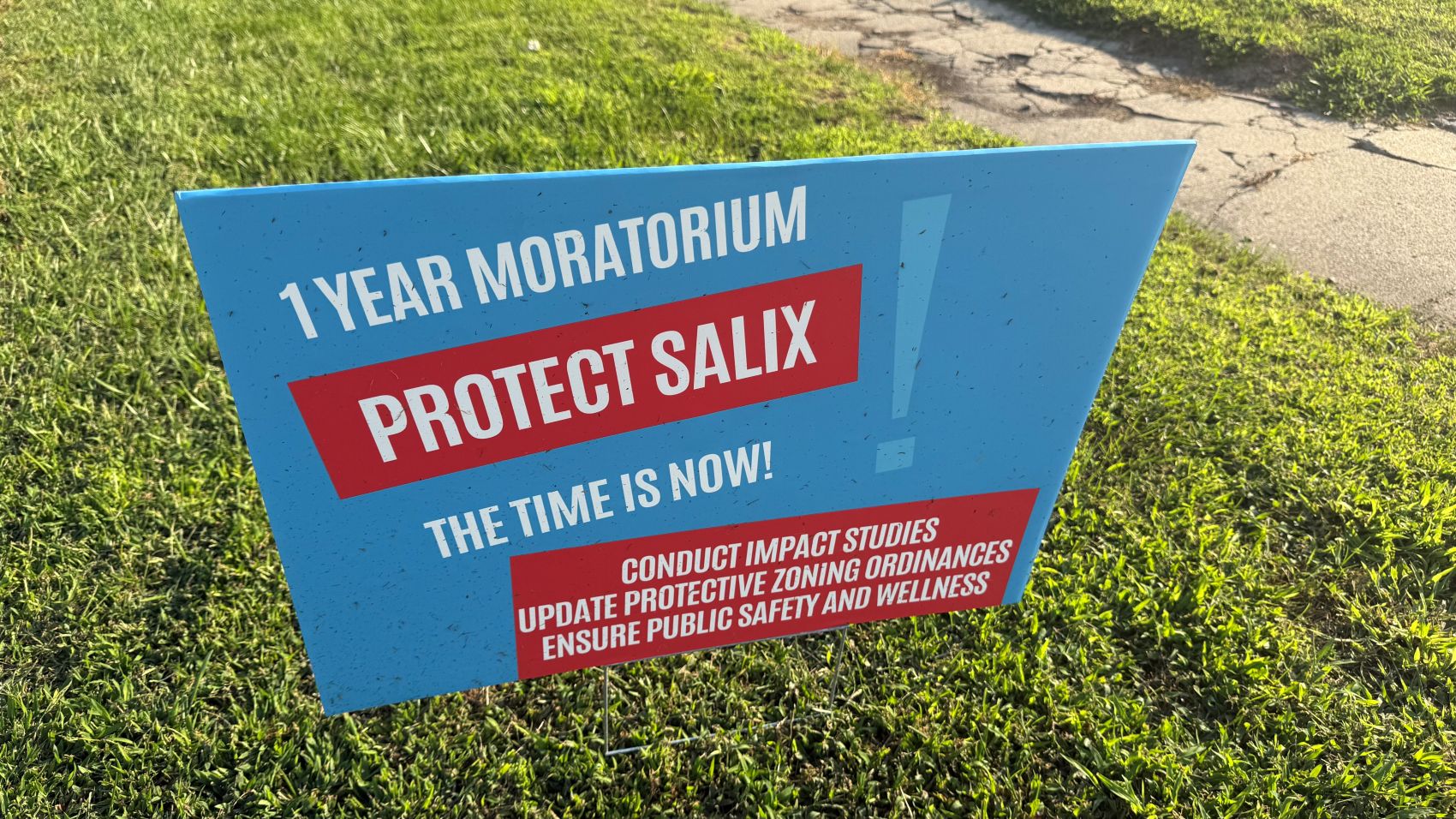
Iowa officials are moving to regulate data centers as development spreads across the state: at least six cities and 10 counties are considering policies, while several local governments have imposed moratoriums lasting three to 18 months.
The measures are intended to give officials time to write rules addressing land use, energy, water, environmental effects and community engagement without closing off potential economic gains. Marshalltown illustrates the local debate.
Its City Council approved a 120-day moratorium in August as Swarm Systems explores buying 21 acres of city-owned industrial-park land for a proposed 150,000-square-foot facility; the pause is scheduled to end Nov. 23, with a possible 60-day extension.
Separately, the University of Iowa has created a free decision tool to help communities assess zoning, resources, incentives and construction before deciding whether or how to host projects.
Key facts:
At least six Iowa cities and 10 counties are considering data center regulations.
Several local governments have enacted moratoriums lasting three to 18 months.
Marshalltown’s 120-day moratorium began in August and may be extended 60 days.
Swarm Systems is considering a 150,000-square-foot facility on 21 acres near JBS Foods.
The University of Iowa’s free decision tool covers zoning, water, energy, incentives and construction.
Why it matters: Data centers can bring property-tax revenue, construction and technical jobs, and related businesses, but the same factors attracting developers—available land, water and relatively low energy costs—force communities to decide how those resources should be allocated.
The regulatory push gives local officials time to set expectations before projects are finalized, while potentially slowing proposals during moratoriums.
The immediate test is Marshalltown: its zoning administrator plans to release a draft for public review and take it to the Planning and Zoning Commission on Sept. 17.
The outcome will show how one industrial city balances a developer’s proposal against resource and environmental questions now being raised statewide.
New report warns AI data center growth is outpacing federal health safeguards
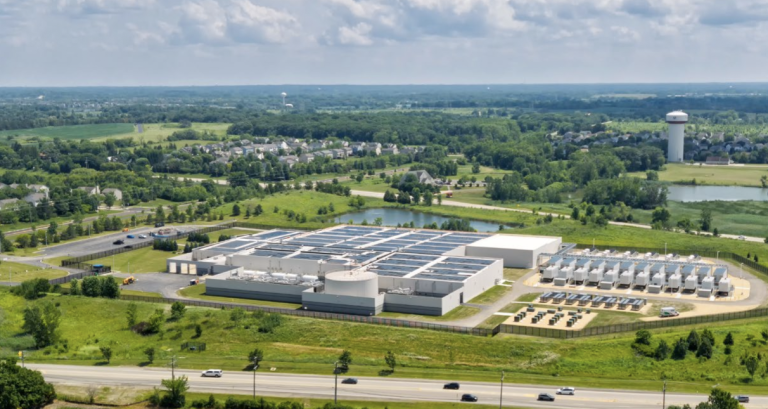
A September 10 report from the Environmental Protection Network documents at least 30 federal actions since January 2025 that it says weaken pollution safeguards, accelerate approvals, reduce public participation, and diminish scientific and enforcement capacity as AI data centers expand.
The group says risks extend beyond campuses, reaching communities near backup generators, turbines, and power plants supplying electricity to them.
The report cites research estimating $11.7 billion to $20.9 billion in annual public-health costs by 2028, including about 600,000 asthma symptom cases and 1,300 premature deaths under a high-growth scenario.
More than 90% of estimated impacts came from supplying power plants. A separate state-policy tracker shows the expansion is also prompting legislative responses, listing 120 data-center bills among 447 AI-related measures across 48 states.
Key facts:
EPN’s September 10 report catalogs at least 30 federal actions since January 2025.
Seventeen actions explicitly target AI or data centers; 13 affect power, permitting, or enforcement.
A cited study estimates $11.7 billion–$20.9 billion in annual health costs by 2028.
More than 90% of estimated impacts came from power plants supplying data centers.
The tracker lists 447 bills across 48 states, including 120 data-center measures.
Why it matters: The report shifts the data-center health debate beyond local construction sites.
Its cited research indicates that most modeled impacts arise from the wider electricity system, meaning communities can face pollution even when facilities and generators are elsewhere.
Delayed plans to retire or switch nearly 10 gigawatts of coal capacity, alongside at least 74 proposed gas plants dedicated to data centers, show how demand can reshape the power mix.
The policy response is becoming more visible at state level: the tracker lists measures covering data-center site and sound assessments, water-use reporting, and restrictions on nondisclosure agreements.
The next test is whether federal and state authorities require the emissions measurement, regional modeling, public disclosure, and enforcement that EPN says are currently insufficient.
Michigan Clarifies Environmental Review for Data Center Projects

Michigan’s Department of Environment, Great Lakes, and Energy (EGLE) has published guidance explaining how it reviews data-center projects and which environmental permits may apply.
The September 11 FAQ says EGLE can coordinate pre-application meetings for complex projects, review technical materials and site plans, and consider public comments before making decisions.
The guidance separates environmental oversight from electricity regulation: the Michigan Public Service Commission regulates utilities and approves their contracts to supply data centers. Wastewater permitting is case-specific.
A facility discharging nondomestic wastewater to a publicly owned treatment works may be designated a significant industrial user and require a permit, depending on the local pretreatment program, sewer rules, discharge, and treatment-plant constraints.
EGLE also says it inspects facilities, reviews reports, and can take enforcement action when problems arise.
Key facts:
The Michigan FAQ was published September 11, 2026.
EGLE reviews permits, site plans, technical information, and environmental protection measures.
MPSC regulates utilities and approves contracts supplying power to data centers.
Wastewater permits depend on local pretreatment programs and discharge characteristics.
EGLE can inspect facilities, review reports, and pursue enforcement when necessary.
Why it matters: For developers, the practical signal is to engage EGLE early and map applicable permits across project activities rather than treat environmental review as a single approval.
The guidance also gives residents routes to public notices, comment periods, permit records, and compliance information.
For utilities and local wastewater authorities, data-center growth creates separate review tracks: MPSC handles power contracts, while approved local pretreatment programs decide whether wastewater controls are needed.
The next questions for any project are which permits apply, whether its wastewater is nondomestic, and whether local treatment infrastructure can accept it.
Data centers become a top 2026 midterm issue amid growing community opposition
Data centers have become a leading 2026 midterm issue as voters challenge the economic and environmental case for rapid expansion.
In Alabama, former senator and gubernatorial candidate Doug Jones says the issue has overtaken affordability at town halls, including events drawing 600 people in Huntsville and several hundred at Troy University.
He is seeking closer scrutiny of financial consequences for cities and towns, while rival Tommy Tuberville calls data centers “gold mines.
” National polling cited by both publications shows unusually broad opposition, including among Republicans, with concerns about electricity costs, property values, water, pollution, noise, land loss, and limited permanent employment.
President Donald Trump is urging communities to accept facilities for jobs, taxes, and lower burdens, but Minnesota’s disputes show the practical stakes: Meta has brought the state’s first hyperscale center online, while Google seeks approval for two more near Rochester and Duluth.
Key facts:
Doug Jones says data centers have displaced affordability as Alabama voters’ leading concern.
Six hundred people attended a data-center town hall in Huntsville.
A Heatmap Pro/Embold poll found 75 percent of registered voters opposed data centers.
Fifty-two percent of Republicans opposed a nearby data center, versus 28 percent supporting one.
Meta brought Minnesota’s first hyperscale data center online in Rosemount.
Why it matters: The political argument is shifting from whether data centers create jobs to whether their promised gains offset local costs.
Construction work and tax revenue can benefit host communities: about 30 facilities in Quincy, Washington, fund public construction, while Loudoun County, Virginia, has reduced residential property taxes repeatedly amid data-center revenue.
Residents and candidates are demanding clearer answers on electricity costs, utility burdens, environmental impacts, permanent employment, and public finances.
The next pressure points are Minnesota’s Google approvals and Alabama’s governor’s race, where candidates offer sharply different responses to the same expansion drive.
AI Data Center Expansion Drives Land Rush and Political Backlash
AI-driven data-center construction is moving beyond a technology investment story into a rural land and infrastructure fight. U.S.
purchases of land for future centers reached about $6 billion in the first half of 2026, up 79% from last year, while data centers accounted for 27% of U.S. development sites this year, according to Avison Young.
The expansion is raising land prices and drawing protests over electricity, water and community capacity.
At a July Texas protest, Agriculture Commissioner Sid Miller said developers sometimes offer 10 times farmland’s value; in Lancaster, Pennsylvania, resident Bobbi Thompson questioned water supplies as CoreWeave builds a center.
NBC News reports the backlash now threatens to shape the 2026 midterm elections, while pro-AI strategists say the policy fights are “in the early innings. ”
Key facts:
U.S. data-center land purchases reached about $6 billion in the first half of 2026.
Avison Young reported a 79% increase from the same period last year.
Data centers represented 27% of U.S. development sites in 2026.
Sid Miller said developers sometimes offered farmers 10 times farmland’s value.
A Loudoun County developer reportedly offered $4.4 million per acre.
Why it matters: Premium bids can reward landowners who sell, but they also price home builders out of some sites.
In Loudoun County, a reported $4.4 million-per-acre offer vastly exceeded the county’s 2025 median land price of $125,000, illustrating how data-center demand can reshape housing and rural land markets. The conflict is also moving into infrastructure politics.
Communities are questioning who will provide and pay for the electricity and water needed by large facilities, while protests give the issue an electoral dimension.
The next test is whether local opposition produces new policy or becomes a broader 2026 campaign issue.