YC’s AI Pipeline Moves From Funding to Specialized Workflows
Across new YC directories, startup hiring pages and Metal’s $4.5 million seed round, AI is moving into specialized, operationally difficult work—from oncology and government software to subscription analytics and robotics data. The breadth is notable, but most companies remain small and early, so the key question is whether hiring, pilots and early customer claims develop into durable scale rather than simply expanding YC’s portfolio.
Thursday, Sep 3, 2026
Tracking: Y Combinator
Geography: Mountain View, Silicon Valley, San Francisco Bay Area, United States
YC-Backed Metal Raises $4.5 Million Seed Round

Pakistan-based AI startup Metal has raised $4.5 million in seed funding, according to News Post.
The company was founded by Airlift co-founder Usman Gul, and the round was led by a16z Speedrun and Y Combinator as Metal seeks to expand in artificial intelligence.
The funding is separate from a German deal reported by Dealroom on the same day: AI data analytics startup Zeit AI raised a €5 million seed round backed by Y Combinator.
Dealroom said the round was larger than 92% of German seed deals, placing both announcements within a broader pattern of YC-linked early-stage investment across different markets.
Key facts:
Metal raised $4.5 million in seed funding.
Airlift co-founder Usman Gul founded Metal.
a16z Speedrun and Y Combinator led Metal’s seed round.
Zeit AI raised a €5 million seed round.
Dealroom reported Zeit AI’s round on September 3, 2026.
Why it matters: The two deals show Y Combinator participating in seed financing for AI startups in Pakistan and Germany, extending its reach beyond the immediate Bay Area ecosystem.
For founders, that signals continued investor interest in early AI companies with region-specific opportunities.
The next test is execution: Metal must use its new capital to grow in the AI market, while Zeit AI must convert a comparatively large German seed round into progress in data analytics.
Neither source provides details on valuation, product traction, or planned hiring.
Y Combinator publishes 2026 directories for 476 developer-tool and 44 AI-learning startups
Y Combinator’s September 2026 directory pages show a broad pipeline of early-stage companies in developer tools and AI-enhanced learning.
The developer-tools directory lists 476 funded startups, while the AI-learning directory lists 44; featured 2026 companies include Maritime, Quippy, Wondering, and Bloomy, all based in San Francisco. The new listings sit within a much larger portfolio.
Eqvista’s September 3 ranking counts 5,668 YC-backed companies across 48 batches since 2005, with an estimated combined portfolio value above $600 billion and $145 billion in follow-on funding.
Its figures also include 82 unicorns and 17 public companies, although the ranking relies on disclosed financing and estimated private-company values.
Key facts:
Y Combinator’s September 2026 directory lists 476 developer-tools startups and 44 AI-enhanced learning startups.
Maritime, an F2026 company, has three employees and builds cloud infrastructure for AI agents.
Quippy is labeled F2026; its San Francisco profile lists one employee.
Wondering and Bloomy are labeled S2026, with two and one employee, respectively.
Eqvista counts 5,668 YC-backed companies across 48 batches since 2005.
Why it matters: The directory update provides a current view of where YC is adding companies: AI applications, learning products, and infrastructure for software agents.
It also shows how the accelerator’s newest founders are entering the ecosystem at very small scale, often with one to three employees, alongside established alumni such as GitLab, Algolia, and Amplitude.
For investors and founders, the directory is a useful map of emerging categories and potential recruiting, partnership, or financing targets.
The next signal to watch is whether the 2025–2026 companies convert their early YC profiles into customer traction, larger teams, and disclosed funding; Eqvista’s portfolio totals are estimates and should not be read as current private-company valuations.
Y Combinator’s September Pages Spotlight AI GovTech, Transportation and Alumni Hiring
Y Combinator’s September 2026 directory updates put a fresh spotlight on two areas where its portfolio is building operational software: government and transportation.
The govtech page lists 50 companies, including several 2026-batch startups using AI for permitting, application review, public-records requests and government affairs.
Its transportation page lists 29 companies, ranging from carrier back-office automation to EV-charger access. Separately, YC’s jobs page, dated September 3, lists recent openings at alumni companies, including engineering, operations and product roles.
The postings include a $170,000–$240,000 cloud-infrastructure role at Accord and a Mountain View/San Francisco engineering-manager role at Athelas, while Curo says it is active across five states and has grown 50 percent month over month for six months.
Together, the pages show portfolio activity through new company formation, hiring and reported operating traction—not a single funding announcement or batch-wide financial result.
Key facts:
YC’s September 2 govtech page lists 50 funded companies, including 2026-batch startups.
Stratum Industries says its agents review government applications end to end with human oversight and auditability.
YC’s September 3 transportation page lists 29 funded companies.
Curo says it has grown 50% month over month for six months and operates across five states.
Accord advertised a San Francisco cloud-infrastructure engineering role paying $170,000–$240,000.
Why it matters: Taken together, the updates show YC’s public-facing portfolio signal moving beyond startup intake: it is also surfacing companies trying to automate labor-heavy workflows and recruiting staff for older alumni businesses.
That creates potential value for governments, fleets and employers if the products work as described, while giving founders a channel to reach candidates; the pages provide company-reported claims rather than independent performance validation.
Near-term watchpoints are execution and conversion: whether 2026 govtech companies turn their products into deployments, whether transportation startups sustain reported growth, and whether listed roles translate into continued hiring.
The evidence supports active portfolio development, not a new YC financing decision.
Y Combinator’s September directory updates spotlight oncology and customer-support startups
Y Combinator’s September 2026 directory pages provide a fresh snapshot of two active startup clusters: oncology and customer support.
The oncology page lists 21 companies, while the customer-support page lists 25; both pages identify San Francisco as a base for several featured teams. The profiles show early YC companies pairing AI with specialized workflows.
Omanta is building patient-specific oncology research programs, Gamgee is running personalized mRNA cancer-vaccine trials for dogs in Australia, and Dialogus is developing infrastructure for enterprise voice agents that connect to business systems and human escalation.
These are separate portfolio updates, not a single financing or batch announcement, but together they show YC’s emphasis on narrow, operationally difficult applications rather than generic software alone.
Key facts:
YC’s oncology directory page, dated September 3, lists 21 funded startups.
Omanta, a San Francisco S2026 company, has five employees and remains active.
Gamgee is running personalized mRNA cancer-vaccine clinical trials in Australia.
YC’s customer-support page, dated September 2, lists 25 startups.
Dialogus, a San Francisco S2026 company, has three employees and builds enterprise voice-agent infrastructure.
Why it matters: The updates show YC backing companies that tackle specialized problems requiring more than a general-purpose software layer: patient-specific research, genomic vaccine design, and enterprise voice systems connected to internal tools and human escalation.
That positioning could give these startups clearer differentiation, but it also makes execution central to their prospects. The next milestones are practical.
Omanta must turn individualized research infrastructure into an ongoing clinical collaboration model; Gamgee aims to make its one-off canine treatment repeatable; and Dialogus must move voice agents from demonstrations into reliable production workflows.
RevenueCat hires engineers to expand AI agents for subscription businesses
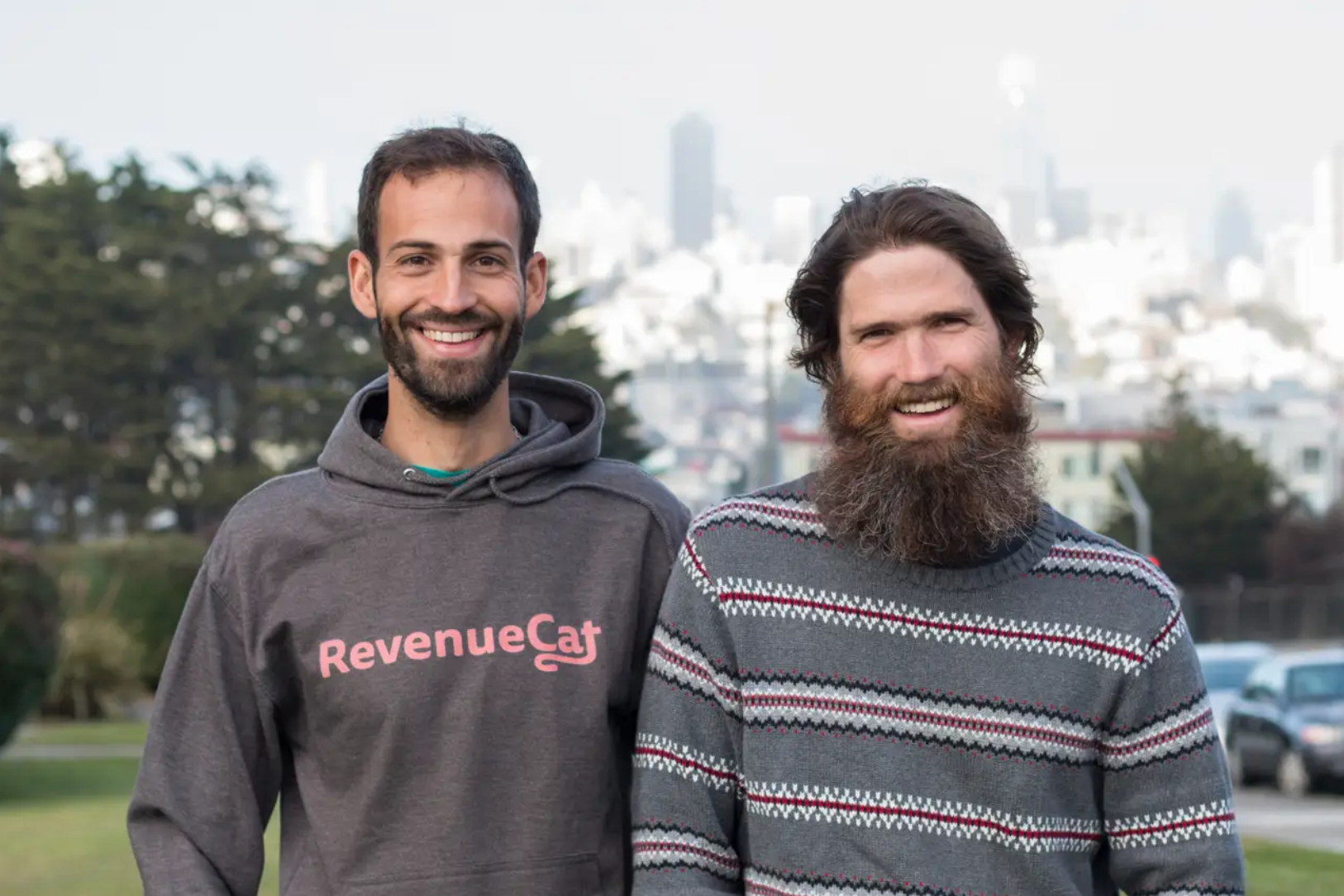
Y Combinator-backed RevenueCat is recruiting senior engineers for product, backend, and agent-focused roles in postings dated September 2, 2026.
The company says it has more than 150 remote-first employees across 25 countries, serves over half of newly shipped subscription apps, and processes more than $16 billion in annual purchase volume.
The most distinctive opening supports Rico and Astra, RevenueCat’s AI agents for subscription analysis and paywall creation.
Rico can explain revenue changes, compare performance, and perform selected actions after customer approval; Astra helps developers build and edit paywalls through an online editor, command line, or MCP.
A September 3 YC jobs page also listed remote engineering roles at LiteLLM and W26 startup Rhizome AI.
Key facts:
RevenueCat’s September 2 listings seek senior product, backend, and agents engineers.
The company says it processes $16 billion-plus annually and reaches 50%+ of newly shipped subscription apps.
Rico and Astra support subscription analysis, paywall creation, and approved account actions.
YC’s September 3 page listed LiteLLM and Rhizome AI engineering roles with stated salaries.
Why it matters: The postings show RevenueCat investing in AI systems that take actions inside a revenue-critical product, rather than offering only conversational assistance.
The agents role emphasizes orchestration, tool execution, context management, evaluation, security, reliability, and human approval—requirements that point to a focus on controlled deployment for thousands of developers.
For founders and job seekers, YC’s listings show two recruitment channels operating together: a large alumni company hiring specialized senior talent, and newer startups seeking remote engineers across multiple countries.
The next meaningful signal will be whether Rico and Astra expand from assisted analysis and approved changes into broader production workflows.
YC’s 2026 Directory Shows AI Startups Moving Into Specialized Workflows
Y Combinator’s September 2–3, 2026 company-directory updates show a new batch of very small startups pushing AI into specialized workflows, from creator content and filmmaking to bank models, robotics data, and auto repair.
The listings include S2026 companies such as Lyon, which says it trained a model on 28 billion transactions, and Koyal, which reports pilots with major music and production organizations; they also identify F2026 hardware company Hemlock in Los Angeles.
The pattern is less a single product launch than a portfolio snapshot: YC-backed founders are targeting proprietary data, regulated or operationally complex industries, and tools that automate end-to-end work.
Most listed teams have between one and five employees, while early customer claims—such as Multiplier’s six hedge funds and Koyal’s five videos surpassing 1.5 million views—offer initial traction signals but not proof of scale.
The pages give no funding totals, so the clearest development is the breadth and specialization of YC’s 2026 pipeline.
Key facts:
YC’s September 2026 directory lists 31 creator-economy startups, including Grocalo and TryNearby.
Lyon, a San Francisco S2026 company, trained a model on 28 billion fintech transactions.
Koyal says pilots with Universal Music and T-Series produced five videos exceeding 1.5 million views.
Hemlock’s F2026 Bracelet measures forearm muscle signals to capture force for robotics training data.
Multiplier says six hedge funds use its platform, with users spending over four hours daily.
Why it matters: The listings suggest YC’s latest companies are moving beyond general-purpose AI demos toward narrow, defensible applications.
Their proposed advantage comes from proprietary data, domain-specific workflows, or operational integration—features that can make products harder to copy but also lengthen the path to reliable deployment.
For founders and investors, the early signal is concentration rather than scale: teams are small, customer evidence is still largely company-reported, and the directory provides no funding totals.
The next developments to watch are whether pilots convert into recurring contracts, whether these startups expand beyond their initial verticals, and whether their data or workflow advantages produce measurable customer outcomes.