YC Pushes Growth as Regulation and AI Stakes Rise
Y Combinator is pressing for fewer barriers to startup growth, backing the CLARITY Act ahead of a Senate preliminary vote while its leaders criticize safety-driven AI regulation and its companies expand hiring. The through-line is how founders can scale faster—from testing ideas while employed to building larger teams and AI marketplaces—but the unresolved tension is whether lighter rules will support innovation without addressing the risks regulators are targeting.
Tuesday, Sep 15, 2026
Tracking: Y Combinator
Geography: Mountain View, California, United States, Silicon Valley
Y Combinator Backs CLARITY Act Ahead of Senate Preliminary Vote
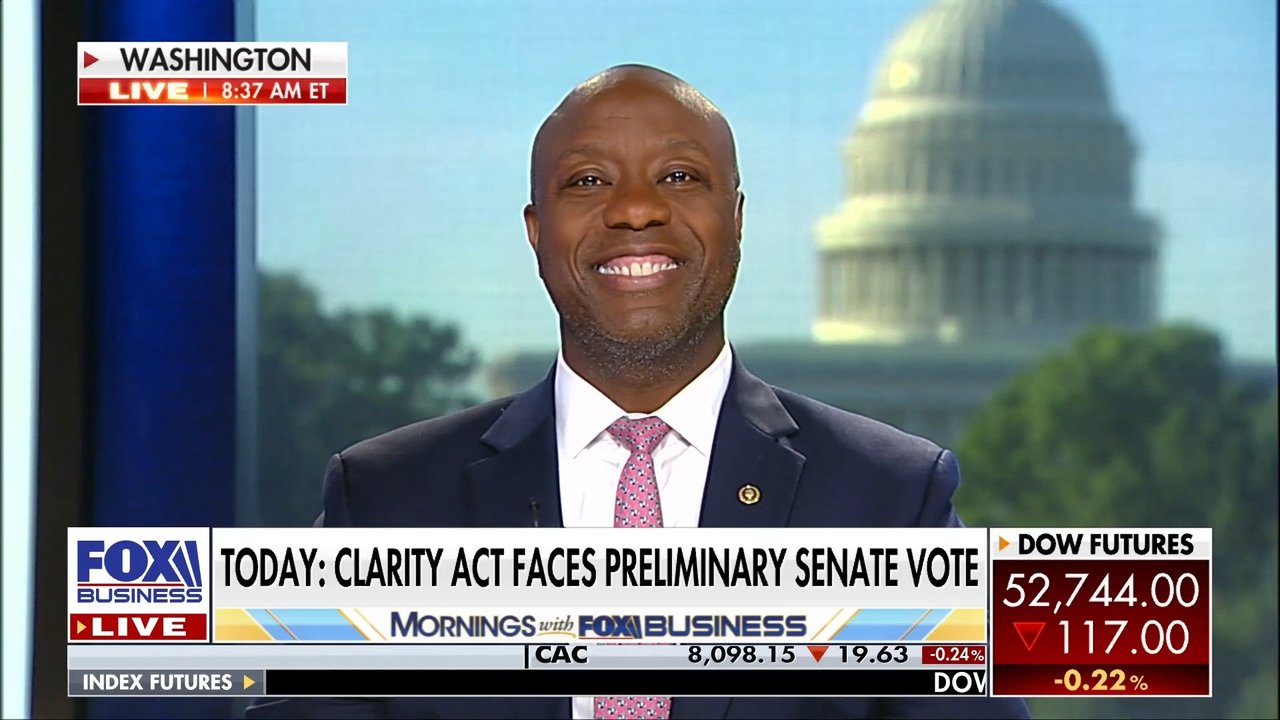
Y Combinator has publicly backed the U.S. CLARITY Act, saying it is “bullish” on legislation expected to face a preliminary Senate vote this week.
The Mountain View accelerator says the bill would reduce uncertainty for U.S. entrepreneurs building blockchain products by clarifying regulatory responsibilities and applicable rules.
YC argues that clearer rules could support fintech and blockchain startups developing fast, low-cost global payments, near-instant settlement, and markets operating around the clock.
The organization says institutions have held back because of unclear regulation, while some startups have built outside the U.S. ; it is urging senators to pass the bill.
For YC, the intervention also speaks to its portfolio: the article says clearer rules could lower compliance barriers, improve access to funding and users, and make U.S. -based companies more competitive, though those outcomes depend on passage.
Key facts:
YC called the CLARITY Act “bullish” ahead of a Senate preliminary vote this week.
The bill would clarify regulatory responsibilities and rules for blockchain products built by U.S. entrepreneurs.
YC cited sub-penny global payments, settlement within seconds, and continuously open asset markets.
YC said unclear rules push some startups to build outside the U.S. market.
Why it matters: YC’s move puts an accelerator’s policy voice behind a specific legislative timetable, rather than a general endorsement of crypto.
The immediate event to watch is the Senate’s preliminary vote; the article establishes support, not passage or a final regulatory framework. If the bill passes, clearer agency boundaries could make U.S.
compliance more predictable, encourage institutional funding, and reduce the incentive to locate startups offshore. That could also bring domestic compliant companies into stronger competition with firms relying on regulatory gray areas.
These are projected consequences, not outcomes yet.
Research Points to Employee Side Projects as a Source of High-Growth Startups
Research presented by Sergio Rodriguez-Garnica and Ali Mohammadi argues that employee side projects are an overlooked pipeline for high-growth entrepreneurship.
Their conclusion is that “hybrid entrepreneurship”—testing a business while keeping a regular job—lets founders build prototypes, speak with customers, and reject weak ideas before taking on major financial and career risk.
The article, published September 15, 2026, frames experimentation as a bridge between employment and company formation. The argument challenges employer policies that treat side projects mainly as distractions or intellectual-property risks.
It also highlights a founder-supply effect: highly skilled employees often have the expertise, networks, and knowledge to build scalable ventures, but face the highest opportunity costs when leaving secure jobs.
For accelerators and investors, the implication is that promising companies may emerge first as private experiments rather than formal startups.
Key facts:
Sergio Rodriguez-Garnica and Ali Mohammadi researched side-project experimentation and high-growth entrepreneurship.
Hybrid entrepreneurs test prototypes and customer demand while retaining regular employment.
Most side projects never become companies, but testing helps participants discard weak ideas cheaply.
High-skilled employees face major opportunity costs when leaving jobs, despite having relevant skills and networks.
Why it matters: The finding shifts attention upstream, toward the experiments that precede company formation.
Employers that ban or heavily restrict side projects may close off a low-cost route to ventures with scaling potential, while employees gain a safer way to test ideas before leaving secure jobs.
For startup ecosystems, the takeaway is that founder discovery may begin before incorporation, fundraising, or accelerator applications.
The next practical question is whether companies can permit experimentation while protecting confidential information, intellectual property, and employees’ primary responsibilities.
Garry Tan casts safety-driven AI regulation as a threat to startups

Two reports published 15 September place Y Combinator leader Garry Tan among Silicon Valley’s most vocal “boosters” of rapid AI development.
They say Tan portrays safety-driven regulation as a threat to small companies that cannot absorb compliance costs, aligning the accelerator with investors such as Marc Andreessen and David Sacks.
The coverage frames this as part of a broader political and commercial contest, not a settled policy debate.
“Doomers,” including Anthropic co-founder Dario Amodei and researchers Geoffrey Hinton and Yoshua Bengio, warn about AI’s dangers, while boosters argue development is beneficial and should face limited restraint; Anthropic is fundraising to counter pro-growth political spending.
Large technology companies are presented as seeking a middle position, while Nvidia CEO Jensen Huang rejects extinction fears but supports a unified federal framework and industry peer review.
Key facts:
Both reports dated 15 September 2026 place Garry Tan among AI accelerationism’s loudest voices.
Tan argues regulation costs could burden small companies unable to absorb them.
Anthropic is fundraising to match pro-growth political spending by Andreessen allies.
Jensen Huang rejects extinction fears but supports a unified federal AI framework and industry peer review.
Geoffrey Hinton and Yoshua Bengio warned about AI threats after ChatGPT’s 2022 release.
Why it matters: Tan’s position makes Y Combinator part of a larger argument over whether AI rules will protect the public or entrench established companies.
For startups, the trade-off is direct: lighter regulation could reduce compliance burdens, while stronger safety requirements could raise costs that smaller firms struggle to absorb. The next pressure point is political influence.
Andreessen’s allies are funding lawmakers who support AI growth, while Anthropic is building a counter-effort; the balance could shape future rules affecting founders, investors, and AI product launches.
Y Combinator’s Ooak Data hires for rapid AI workforce expansion
Ooak Data, a Y Combinator company, is hiring a Head of People as it expands from four employees in June to 16 today.
The company says it expects roughly 25 employees by Christmas, with the new leader responsible for recruiting, onboarding, development and retention as hiring accelerates.
The startup converts enterprise data from tools such as Slack, Notion and Jira into anonymized digital twins and reinforcement-learning environments for AI agents.
Ooak says it now delivers those environments in three weeks, has signed contracts with three frontier AI labs, and has founders working full-time since December 2025.
It seeks someone who has scaled a startup or scale-up, personally closed difficult hires, and ideally recruited for AI or data companies.
Key facts:
Ooak Data grew from four employees in June to 16 by September 2026.
The company expects to reach approximately 25 employees by Christmas.
Ooak says it has signed contracts with three frontier AI labs.
Its founders have worked full-time on the company since December 2025.
The startup reduced delivery time for training environments to three weeks.
Why it matters: The hiring move marks a shift from founder-led recruiting toward a dedicated people function.
Until now, all hires were screened, sourced or closed by one of the three founders; bringing in a specialist could give them more time for product, engineering and customers while the team grows.
The next test is whether Ooak can preserve its stated standards around trust, ambition, kindness and collaboration as headcount rises.
Its planned growth also increases the importance of hiring people able to work across AI, data and enterprise software, particularly as the company expands delivery for its three frontier-lab customers.
YC Startups Post New Roles Across AI, Databases, and Satellites

Y Combinator’s startup job board carried fresh hiring postings on September 14 and 15 for companies spanning civil-engineering AI, databases, and satellite communications.
Mach9, which says it has about 30 employees, is hiring a founding People Operations lead as it targets roughly 75 staff within 18 months; QuestDB is seeking a North American pre-sales engineer for enterprise database deployments.
Astranis posted roles for a fall 2026 radiation-effects intern and a technical program manager for US government space relays.
The postings portray a maturing company with five satellites in orbit, more than $1 billion in commercial-contract backlog, over $750 million raised, and 450 employees.
Taken together, the listings show YC companies hiring not only engineers, but also the operational, customer-facing, and program-management staff needed to turn technical products into scaled businesses.
Key facts:
The postings were dated September 14–15, 2026.
Mach9 has approximately 30 employees and expects roughly 75 within 18 months.
QuestDB says its open-source repository has surpassed 17,000 GitHub stars.
Astranis says five satellites are on orbit and its commercial backlog exceeds $1 billion.
Astranis employs 450 engineers and entrepreneurs and has raised over $750 million.
Why it matters: The hiring mix points to a shift from building products to scaling delivery.
Mach9 is adding its first dedicated People Operations leader, QuestDB is strengthening technical enterprise sales, and Astranis is staffing government-program execution and spacecraft testing.
The roles also show how hiring conditions vary by company and sector. Mach9 requires full-time office work, QuestDB describes itself as remote-first, and Astranis roles involving space technology require qualifying US work status.
Candidates and investors can read these postings as signals about each company’s operating model, customer base, and next stage of growth.
Paul Graham publishes a two-step growth playbook for AI startups
Paul Graham, Y Combinator’s co-founder, has published a blog post urging founders to ask, “What would make this company more powerful?
” The question comes from his office hours with founders, where he says bigger conceptual changes can produce larger gains than simply improving monetization. Graham stepped down from leading Y Combinator in 2014.
For AI companies, Graham recommends two paths: let users opt into model training in exchange for access to a better model, and explore whether AI agents can pay one another.
He says the latter could turn an AI service into a marketplace, while network effects may make products more valuable as usage grows.
He points to app stores as an example of a service becoming a marketplace and says some users will resist training participation.
Key facts:
Paul Graham’s new blog post centers on the question, “What would make this company more powerful?”
Graham says network effects can increase product value as more people use it.
AI users could opt into training and receive access to a better model.
AI agents paying one another could turn a service into a marketplace.
Graham stepped down from leading Y Combinator in 2014.
Why it matters: Graham’s framework pushes founders beyond near-term sales tactics toward product structures that can compound: participation can improve an AI model, while transactions can widen a service’s role.
For startups still defining their category, the advice offers a way to search for growth mechanisms before settling on a business model. It also exposes tradeoffs.
Opt-in training depends on enough users accepting the exchange, while agent-payment products would need real transactions between agents; Graham presents both as possibilities to investigate, not established outcomes.
The next question is whether startups can turn these designs into sustained usage and commerce.