Big Capital Moves From Models Into Machines and Markets
The strongest through-line is a shift from funding AI models to building deployable systems, as Mistral AI closes a €3 billion round, Stoke Space raises $1 billion for reusable rockets, and startups target robotics, content compliance, creator tools, and government work. Expansion is accelerating alongside constraints: compute demands and frontier-AI caution are rising, while Washington’s procurement and regulatory decisions increasingly shape which products reach the market.
Tuesday, Sep 8, 2026
Tracking: Y Combinator
Geography: San Francisco Bay Area, United States, Global
Stoke Space Raises $1 Billion for Reusable Rocket Development
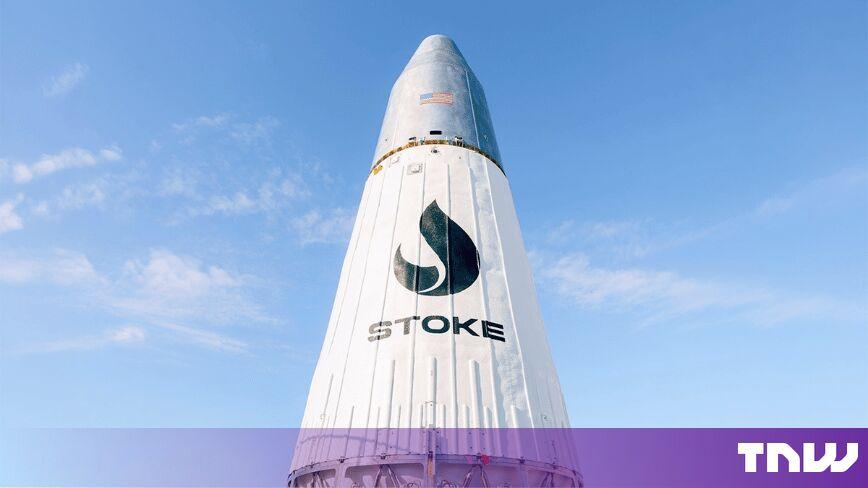
Stoke Space has completed the initial closing of a $1 billion Series E, giving the reusable-rocket developer $2.3 billion in total capital.
Announced September 8, the round was co-led by Point72 Ventures and Spark Capital, with Y Combinator among participating investors.
The money will fund Stoke’s push toward its first orbital launch, expanded production and launch capacity, and development of its larger Nova Block 2 vehicle.
Nova Pathfinder is approaching its first flight, targeted for early 2027; Block 2 is designed to carry 15 metric tons to low Earth orbit in a five-meter payload fairing, with its first launch targeted for 2029.
Stoke says the financing also supports manufacturing, testing, launch and recovery infrastructure for high-cadence operations, while Pathfinder proves the architecture and reuse technologies that Block 2 will carry forward.
Key facts:
Stoke completed the initial closing of a $1 billion Series E on September 8, 2026.
Y Combinator joined Point72 Ventures, Spark Capital, and other investors in the financing.
The round lifts Stoke’s total capital raised to $2.3 billion.
Nova Pathfinder’s first orbital launch is targeted for early 2027.
Nova Block 2 targets 15 metric tons to low Earth orbit and a first launch in 2029.
Why it matters: Stoke now has funding to pursue both a near-term flight demonstration and development of a larger vehicle.
Pathfinder is intended to prove the company’s reusable architecture in flight, while Block 2 applies those technologies to greater payload capacity and operating cadence. The next concrete milestone is Pathfinder’s targeted early-2027 orbital launch.
Y Combinator’s participation places the accelerator among investors backing Stoke as it moves from technology development toward production, launch and recovery operations; the company’s stated promise of greater customer capacity and flexibility still depends on executing those milestones.
Conveo Announces $50 Million Series A With Y Combinator Participation

Conveo, led by Pieter Lemstra, has announced a $50 million Series A led by DST Global Partners. Balderton, Visionaries, 6 Degrees Capital and Y Combinator also participated, according to Lemstra’s September 8 LinkedIn post.
The announcement came alongside Conveo’s appearance at Esomar in Valencia, where its research and commercial teams met partners and clients.
Lemstra highlighted a presentation by Conveo’s Head of Research & Methodologies, Niels Schillewaert, with Google, and said the company is hiring through an Ashby careers page.
Key facts:
Conveo announced a $50 million Series A led by DST Global Partners.
Balderton, Visionaries, 6 Degrees Capital and Y Combinator participated.
Pieter Lemstra said Conveo is hiring after the financing announcement.
Conveo’s Niels Schillewaert presented with Google at Esomar in Valencia.
Why it matters: The financing gives Conveo substantial new backing while Y Combinator remains involved as the company advances beyond its earlier startup stage.
The hiring announcement signals that the round is tied to continued expansion, although the post does not specify the roles, deployment plan or valuation.
The next indicators to watch are whether Conveo converts the new capital into additional hiring, customer growth or broader partnerships.
Its public appearance with Google also provides a concrete signal of commercial engagement, but the post does not describe the scope of that relationship.
Y Combinator-Backed Blee Raises $27 Million for AI Content Compliance
Y Combinator-backed Blee announced a $27 million funding round on September 8, bringing in Fin Capital and SMBC’s Atlas Beyond Ventures alongside Y Combinator, Penny Jar Capital, Treasury, Cardumen Capital, Hannah Grey VC and National Bank of Canada.
Blee sells software that reviews AI-generated marketing content, manages approvals with a full audit trail, and monitors published material across websites, social platforms and influencers.
The company says dozens of Fortune 500 companies use its product to reduce review times, and it is hiring across engineering, product, sales and marketing.
Key facts:
Blee announced a $27 million round from Fin Capital and SMBC’s Atlas Beyond Ventures.
Y Combinator participated alongside Penny Jar Capital, Treasury and other investors.
Blee reviews AI-generated content and manages approvals with an audit trail.
The platform monitors content across websites, social media and influencer channels.
Blee says dozens of Fortune 500 companies use its product.
Why it matters: Blee is targeting a growing operational problem for companies using generative AI: producing content faster can overwhelm legal, compliance and brand-review teams.
Its product positions approval and monitoring as part of the content workflow, rather than as a final manual check. The round gives Blee new backing from financial, banking and startup investors as it sells into large enterprises.
Its claimed Fortune 500 adoption and broad hiring plans suggest the company is focusing on expanding an enterprise product, while its Y Combinator participation connects the accelerator to a startup building governance infrastructure around commercial AI use.
YC’s September Directory Highlights 2026 Startups in Physical AI and Creator Tools
Y Combinator’s September 8, 2026 directory pages spotlight S2026 startups building software and hardware for physical systems, alongside a growing creator-economy cluster.
San Francisco entries include Dreamscale Labs, which offloads robotics inference to the cloud, Orca Aerospace, which uses language models to support satellite operations, and Vernius Systems, which is developing radar seekers for autonomous interceptors.
The Los Angeles and creator-economy pages show AI moving deeper into media workflows.
Grocalo says its systems generated two billion views and four million followers for creators in two months, while TryNearby connects local restaurants with nearby creators; San Francisco startups Flick and Koyal are developing AI filmmaking tools.
These are directory profiles, not announcements of financing rounds, but they provide a current snapshot of YC’s early-stage bets and founders’ reported traction.
Key facts:
YC’s September 8 directory lists Dreamscale Labs and Orca Aerospace as active San Francisco F2026 startups.
Dreamscale says cloud inference for robotics delivers 40–50% lower latency than existing neoclouds.
Vernius says it has more than $580 million in Archimedes letters of intent.
Grocalo says its creators generated two billion views and gained four million followers in two months.
TryNearby says more than 100 restaurants and thousands of creators use its Southern California platform.
Why it matters: The directory snapshot shows YC-backed founders pursuing AI applications beyond general-purpose software: robotics, satellites, defense systems, filmmaking, creator distribution, and local commerce.
That breadth gives investors and prospective founders a view of where early experimentation is concentrating across San Francisco and Los Angeles.
The strongest commercial signals are company-reported rather than independently verified: Vernius cites letters of intent, while Grocalo and TryNearby cite usage and audience metrics.
The next developments to watch are whether these startups convert pilots, platform activity, and defense interest into durable revenue, deployments, or outside financing.
Mistral AI Closes Europe’s Largest Tech Funding Round

French startup Mistral AI has closed a €3 billion funding round three years after its inception, according to a September 8 episode of 5 Minute AI News Podcast. The report describes it as the largest tech funding round in European history.
That gives the European AI company a major new financing milestone as competition among advanced-model developers intensifies.
The round sits alongside two other signals in the report: Anthropic has committed more than $500 billion to compute deals, while OpenAI’s chief scientist is calling for an industry-wide slowdown in model development as the company automates substantial parts of its research pipeline.
Together, the developments point to a widening gap between the money and infrastructure needed for frontier AI and the caution emerging around increasingly capable automated systems.
For founders and early-stage investors, the question is whether new capital can produce lasting advantages as compute demands and research-pacing concerns reshape the market.
Key facts:
Mistral AI closed a €3 billion funding round.
The round came three years after Mistral AI’s inception.
The report calls it Europe’s largest tech funding round in history.
Anthropic committed more than $500 billion to compute deals.
OpenAI’s chief scientist urged an industry-wide slowdown in model development.
Why it matters: Mistral’s €3 billion round resets the visible scale of European AI financing, while Anthropic’s reported compute commitments show that model competition requires both capital and infrastructure.
That combination benefits companies able to attract large checks and secure computing capacity, raising the entry bar for smaller startups.
OpenAI’s call for slower development introduces a counterpressure: technical capability is advancing alongside concern about pacing.
Investors and founders will be watching whether capital deployment accelerates product development or is tempered by demands for safer, more controlled progress.
Washington’s tech scene shifts from lobbying hub to AI growth center
Washington’s 2026 technology profile presents the region as more than a lobbying destination: companies are designing products, managing risk, and planning regulatory strategy there at the same time.
The shift is visible in artificial intelligence, where startups and established firms are building systems that act on data, manage power demand, and automate government work.
The article highlights Emerald AI’s grid-balancing system, Pentagon awards of $200 million each to xAI, OpenAI, and Google, and Cvent’s planned $1 billion investment in its AI engine.
It also points to a political environment shaped by Silicon Valley investors, a White House framework seeking to preempt state AI laws, and congressional action on unauthorized deepfakes.
Together, these developments show Washington’s tech economy being shaped by federal procurement, policy, and company-building—not only by lobbying.
Key facts:
Washingtonian’s September 8 profile says Washington is becoming an AI epicenter.
Emerald AI, founded by Varun Sivaram, slows AI workloads during grid stress.
The Pentagon awarded xAI, OpenAI, and Google $200 million each last summer.
Cvent plans $1 billion over three years for its Cvent IQ AI engine.
The White House framework urges Congress to preempt burdensome state AI laws.
Why it matters: Washington’s expanding role gives AI companies access to a major customer: the federal government.
Firms working on autonomous systems, energy management, multilingual data, and other infrastructure can increasingly develop products alongside procurement and regulatory planning rather than treating government engagement as a separate lobbying function.
That proximity also raises the stakes around policy. Silicon Valley investors are influencing the administration’s preference for fewer restrictions, while Congress is separately advancing protections against unauthorized deepfakes.
Founders and investors will need to track both sides of that equation: federal demand can accelerate adoption, but policy decisions may determine which products can scale and under what rules.