AI Startups Move From Chatbots Into High-Value Workflows
Across healthcare, finance and consumer research, startups are applying AI to operational workflows—from medical records and staffing to investment teams and enterprise intelligence—while major funding rounds at Nourish and Conveo show investor appetite for companies with early commercial traction. Y Combinator’s healthcare and investment directories point to a widening pipeline, while Michael Seibel’s strategy lesson offers the counterweight: startups may win not by matching incumbents’ scale, but by exploiting where their distribution and products are weakest.
Saturday, Sep 5, 2026
Tracking: Y Combinator
Geography: San Francisco Bay Area, United States
Nourish raises $100 million Series C as YC-backed expansion accelerates
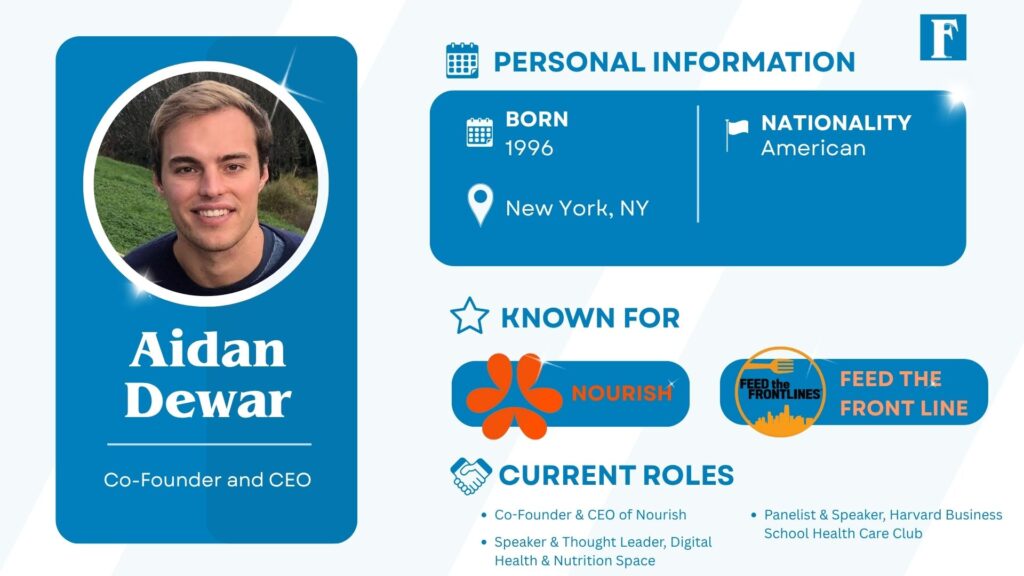
Nourish, a dietitian-led digital health company, says it raised a $100 million Series C in 2026, taking total funding to $215 million. Menlo Ventures led the round, joined by Thrive Capital, Index Ventures, J.P.
Morgan Growth Equity Partners, Maverick Ventures, Y Combinator, BoxGroup, Atomico, Daybreak and Operator Partners.
The company says it matches patients with more than 10,000 registered dietitians, physicians, medications, lab testing and AI agents, with insurance-covered care available across all 50 states.
It also reports millions of completed appointments, threefold year-over-year growth and partnerships with health plans covering more than 200 million Americans across 250-plus health systems.
A newly advertised provider-partnerships role in Evansville, Indiana, points to continued field-based expansion beyond its digital platform.
Key facts:
Nourish raised a $100 million Series C in 2026.
The round brought Nourish’s reported total funding to $215 million.
Menlo Ventures led the round, with nine additional investors participating.
Nourish says it works with more than 10,000 registered dietitians.
The company advertised a provider-partnerships role in Evansville, Indiana.
Why it matters: The financing gives Nourish more backing as it scales an AI-native healthcare model combining clinicians, medication, lab testing and software.
Its reported growth and partnerships suggest the company is expanding beyond a purely virtual product toward a broader care-delivery network.
Y Combinator’s participation keeps the accelerator connected to a company that has progressed into a sizable institutional funding round.
The Evansville hiring also shows that expansion is producing field-based commercial work, particularly around building referral relationships with healthcare providers.
YC Graduate Conveo Raises $50 Million to Expand AI Consumer Intelligence Platform

Conveo, a Y Combinator graduate founded in 2024, has raised a $50 million Series A from DST Global Partners, Balderton Capital, Visionaries, 6 Degrees Capital and Y Combinator.
The round brings the company’s total funding to $55.8 million and will support expansion in the United States. The company sells AI-powered consumer research infrastructure to enterprises, with more than 400 customers, including over 50 Fortune 500 companies.
Its newer StoryLines product continuously researches strategic topics, while its AI interviewer can conduct more than 1,000 consumer conversations monthly across markets; Conveo says StoryLines has produced multi-million-dollar enterprise deals.
Key facts:
Conveo raised a $50 million Series A on September 5, 2026.
The financing brings Conveo’s total funding to $55.8 million.
More than 400 enterprises use Conveo, including over 50 Fortune 500 companies.
Conveo was founded in 2024 by Dieter De Mesmaeker and Hendrik Van Hove.
StoryLines continuously researches strategic topics for enterprise customers.
Why it matters: Conveo is positioning AI consumer research as an ongoing information layer rather than a series of isolated studies.
That could change how large companies gather input for product, marketing and strategy decisions, particularly if continuously updated research proves more useful than periodic projects. The round gives Conveo capital for U.S.
expansion while its reported customer base already includes major global brands. The next test is whether the company can turn early enterprise adoption and StoryLines’ multi-million-dollar deals into repeatable growth across more customers and markets.
YC lists Kimpton and six other investment startups in September 2026 directory
Y Combinator’s September 2026 investment directory lists seven startups in its Investments category, including Kimpton, an active 2026 company building financial AI for investment teams.
The page says Kimpton has five employees, is based in New York, and has a first institutional client: a $3.3 billion manager. The group reflects demand for AI products serving finance and venture workflows.
Zarna, a four-person San Francisco startup from Fall 2025, sells AI agents for private-equity business-development teams, while Metal, backed by a16z and YC, helps founders identify venture investors and introductions; it says more than 100 YC founders pay for its service.
The list also includes ProSights, InferEdge, Aqua, and acquired San Francisco company InterPrime, spanning newer AI ventures and older portfolio companies.
Key facts:
YC’s September 2026 page lists seven startups under its Investments category.
Kimpton says it is live with a first institutional client managing $3.3 billion.
Metal reports more than 100 YC founders as paying customers.
Zarna is a four-person San Francisco startup from Fall 2025.
Why it matters: The directory points to two practical markets for YC-backed AI: investment decision-making and venture fundraising.
Kimpton is positioning AI to turn fund data into structured trade proposals, while Metal uses venture intelligence to help founders find investors and introductions.
The commercial signals come at different stages: Kimpton reports a live institutional client, while Metal reports more than 100 paying YC founders.
Because the directory mixes active 2026 startups with older companies and an acquired business, it is best read as a portfolio snapshot rather than a measure of one batch’s performance.
Y Combinator’s 2026 healthcare cohort shows AI moving into operations
Y Combinator’s September 2026 healthcare directory lists 127 startups, including several 2026-batch companies building AI tools for medical records, therapy practices, hospital staffing, surgery planning and regulatory submissions.
The entries show a pipeline extending beyond clinical chatbots into the administrative systems that healthcare companies use every day. Several startups report early commercial or institutional traction.
Hubble says it signed its first paying customers within three weeks of launch, Klarify says nearly 8,300 therapists use its product, and Scheduling Wizard says 20 departments across 16 hospitals outsource physician scheduling to it.
Mango Medical reports an eight-figure letter of intent and is pursuing FDA clearance, while San Francisco-based Klarify is listed as an active, four-person P2026 company.
Key facts:
Y Combinator’s September 2026 directory lists 127 healthcare IT startups.
Hubble is labeled S2026, active, and has two employees in Seattle.
Klarify is labeled P2026, active, and has four employees in San Francisco.
Scheduling Wizard says 20 departments across 16 hospitals outsource physician scheduling.
Mango Medical reports an eight-figure letter of intent and is pursuing FDA 510(k) clearance.
Why it matters: The directory captures where early-stage startup activity is concentrating: automating paperwork, records access, scheduling, claims and regulatory writing rather than only attempting diagnosis or direct patient care.
That creates potential value for therapists, hospitals, drug companies and developers that depend on fragmented healthcare data.
The strongest signals to watch are conversion of reported pilots and customer use into sustained revenue, plus regulatory progress for products used in clinical decisions.
For investors and founders, the entries suggest that narrowly targeted workflow tools can reach large institutions before attempting broader healthcare platforms.
Michael Seibel urges startups to attack incumbents where they are weakest

Michael Seibel, who has worked with more than 1,000 startups at Y Combinator Community, says founders should build competitive strategy around an incumbent’s weaknesses.
The September 5 account describes Microsoft’s advantages: copying products, acquiring competitors, bundling technology, and using its enterprise sales organization. Seibel contrasted that power with Slack’s employee-led distribution.
Rather than challenge Microsoft through traditional enterprise sales, Slack spread upward from employees, building significant daily usage before executives joined the decision; Seibel says that adoption could make removal painful.
He argues that investors asking about a startup’s “secret sauce” are testing whether founders understand the competitive landscape and the specific weakness they intend to exploit.
Key facts:
Seibel says he has worked with more than 1,000 startups at Y Combinator Community.
Microsoft can copy products, acquire competitors, bundle technology, and use enterprise sales.
Slack spread through employees before executives joined the purchasing decision.
Seibel says investors use “secret sauce” questions to test founders’ competitive understanding.
Why it matters: For early-stage founders, the advice shifts attention from matching an incumbent feature-for-feature to finding a distribution path outside its strongest channel.
Investors can use that framework to distinguish a generic product claim from a strategy built around a specific competitive opening. The Slack model is not universal.
Where compliance or regulated data blocks employee-level adoption, startups still need an executive sponsor, even if users already want the tool.