AI Startup Capital Is Chasing Proof, From Unicorns to Pilots
AI startup funding is widening from Conveo’s $50 million enterprise push and AfterQuery’s reported $3.2 billion valuation to Metal’s seed round and YC’s expanding industry-specific pipeline. The key tension is between extraordinary reported growth and valuations on one side, and earlier evidence such as creator pilots, customer claims and directory-stage companies on the other; watch how these startups convert traction into durable products and revenue.
Wednesday, Sep 2, 2026
Tracking: Y Combinator
Conveo Raises $50 Million Series A for Consumer Insights
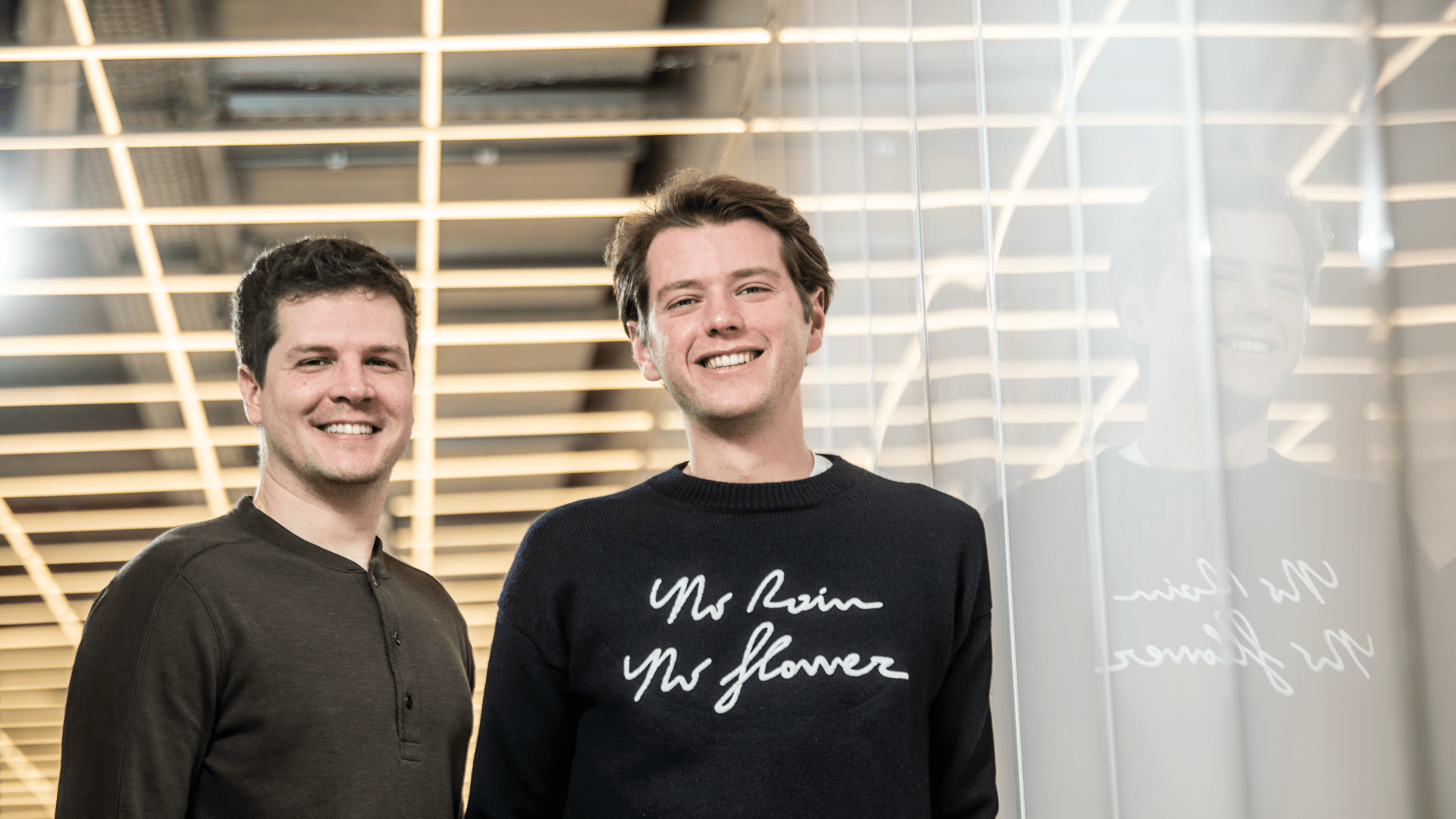
Conveo announced a $50 million Series A on September 2, 2026, lifting its total funding to $55.8 million. The round was led by DST Global Partners, Balderton, Visionaries, 6 Degrees Capital and Y Combinator.
Balderton investor James Wise called Conveo one of the fastest-growing companies he has seen from $0 to $10 million.
Founded two years ago as an AI research assistant, Conveo says customer demand pushed it toward a platform that can process thousands of conversations and identify patterns across research and data streams.
More than 400 enterprises use it, including over 50 Fortune 500 brands such as Google, Unilever, AB InBev and Canva. Conveo says customers increasingly want the platform embedded in infrastructure supporting marketing, product development and M&A decisions.
The new capital will support that expansion across Antwerp, London, New York and beyond.
Key facts:
Conveo announced a $50 million Series A on September 2, 2026.
The financing brings Conveo’s total funding to $55.8 million.
DST Global Partners, Balderton, Visionaries, 6 Degrees Capital and Y Combinator led the round.
More than 400 enterprises use Conveo, including over 50 Fortune 500 brands.
Conveo evolved from an AI research assistant into an enterprise insights platform.
Why it matters: Conveo’s financing shows how an early-stage AI product can reposition itself around broader enterprise workflows as customers shape its direction.
The immediate beneficiaries are the founders and investors, who gain capital for expansion; customers gain a claimed way to gather user insight faster and at larger scale. The repositioning also raises the execution bar.
Conveo must turn a product used by hundreds of enterprises into dependable infrastructure across multiple offices, while proving that pattern detection improves decisions rather than simply producing more research.
Hiring, office expansion and sustained enterprise adoption will be the next indicators to watch.
YC-Backed AI Startups Raise $4.5 Million; AfterQuery Reportedly Reaches $3.2 Billion
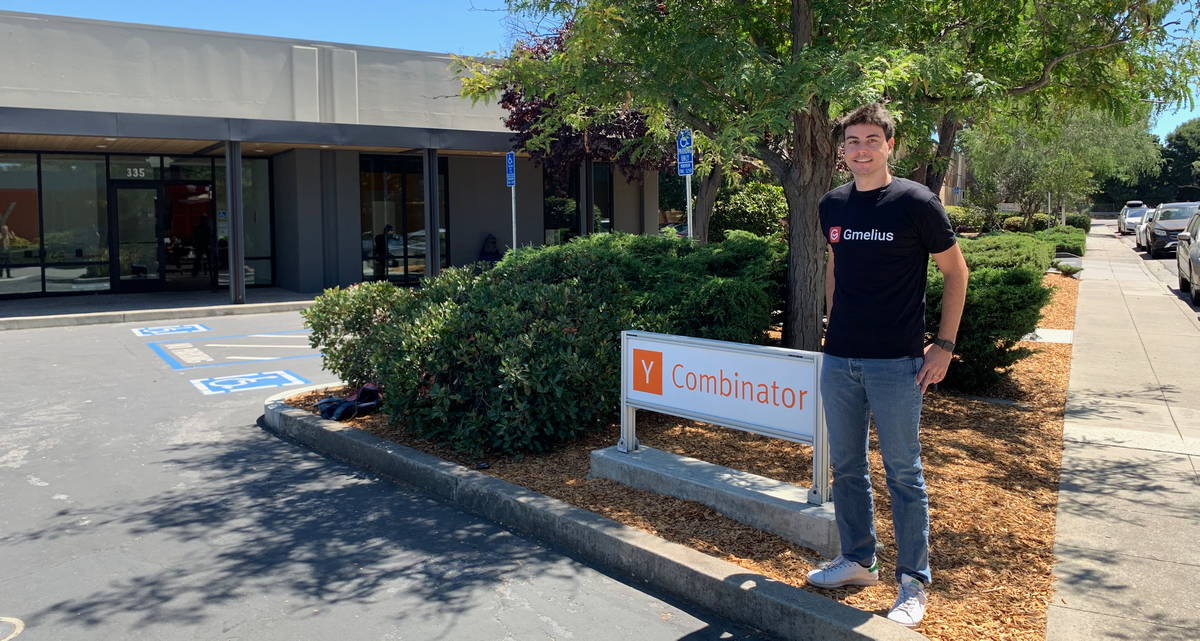
Two Y Combinator-backed AI startups produced sharply different but connected funding signals this week.
Pakistan-based Metal raised $4.5 million in seed financing led by a16z Speedrun and Y Combinator, while AfterQuery was reportedly valued at $3.2 billion about 18 months after attending YC’s Winter 2025 cohort.
Metal, founded by former Airlift CEO Usman Gul, is building software for fundraising and venture-capital workflows.
Gul says the company has posted six consecutive quarters of 30%–80% quarter-on-quarter growth and is tracking toward multi-million-dollar FY2026 revenue.
AfterQuery’s reported valuation followed a $30 million Series A at $300 million in April; the startup said it had then reached a $100 million annualized revenue run rate and served major AI labs and other customers.
Key facts:
Metal raised $4.5 million in seed funding on September 2, led by a16z Speedrun and Y Combinator.
Metal says it recorded six consecutive quarters of 30%–80% quarter-on-quarter growth.
AfterQuery was reportedly valued at $3.2 billion, up from $300 million in April.
AfterQuery’s founders attended YC’s Winter 2025 cohort and are now 22 and 23.
Metal’s platform supports startup fundraising and venture-capital workflows using artificial intelligence.
Why it matters: Together, the reports show Y Combinator’s network producing companies at very different stages of the AI funding cycle: Metal is raising institutional seed capital around software for capital formation, while AfterQuery is reportedly attracting a multibillion-dollar valuation after rapid commercial growth.
Metal’s stated goal of becoming infrastructure used beyond fundraising could expand its role from a transaction tool into a continuing operating system for venture-backed companies.
The AfterQuery figure remains a reported valuation rather than a fully disclosed financing: TechCrunch said Forbes first reported the round and that AfterQuery could not immediately be reached.
Investors and founders should therefore watch for confirmation of the financing terms, while Metal’s next test is whether its reported growth converts into the projected FY2026 revenue.
YC’s Startup Pipeline Combines a $3.2 Billion Outlier With New Founder Opportunities
Y Combinator’s startup ecosystem is showing both extraordinary upside and a widening set of bets.
On September 1, Forbes reported that AfterQuery, founded by two high-school friends who entered YC without a product, reached a $3.2 billion valuation—more than ten times its $300 million valuation five months earlier, according to two people with direct knowledge.
YC partner Gust Alströmer said the milestone would make it the accelerator’s fastest startup to become a unicorn.
YC’s September directory pages also list 911 artificial-intelligence startups and 23 design startups, including several companies founded in 2025 and 2026.
For founders, the immediate decision point is YC’s September 25 application deadline; Antler closes the same day for pre-team founders, while Entrepreneur First accepts applications through October 15.
The result is a market offering both a high-profile success signal and more competition for early-stage capital and accelerator attention.
Key facts:
AfterQuery reached a $3.2 billion valuation 18 months after joining Y Combinator.
AfterQuery’s valuation rose more than tenfold from $300 million in five months.
Y Combinator’s September directory lists 911 artificial-intelligence startups.
Y Combinator’s September 25 application deadline coincides with Antler’s deadline.
Why it matters: AfterQuery gives founders and investors a vivid example of how quickly an AI company can reprice in the current market.
But it is an exceptional outcome, not evidence that every YC startup can reach similar valuations; the claim rests on Forbes’s report citing two people with direct knowledge.
For founders, the near-term consequence is a compressed application timetable: YC and Antler close September 25, while Entrepreneur First remains open until October 15.
The directory counts also show how broad the opportunity set has become, spanning AI infrastructure, on-device software, robotics, industrial design, and other specialized products.
YC’s September Directory Highlights AI Startups Across Three Industries
Y Combinator’s September 2026 startup directory pages show S26 companies applying AI to reinforcement-learning infrastructure, genomics and creator tools.
The pages list 39 reinforcement-learning companies, 23 genomics companies and 31 creator-economy companies, though they are thematic directory views rather than a single funding announcement. The strongest pattern is application-specific AI.
Prodigy Research says it built a quantitative-finance foundation model and more than doubled capital during the batch; Grocalo says its creator clients generated 2 billion views and gained 4 million followers in two months.
Other S26 companies are building agent-training systems, robotics benchmarks, personalized canine cancer vaccines and creator-business marketplaces.
These figures appear in company profiles and represent reported positioning and traction claims, not independently verified performance.
Key facts:
YC’s September pages list 39 reinforcement-learning, 23 genomics and 31 creator-economy startups.
Prodigy Research claims more than 100% live-trading returns during its YC batch.
Grocalo claims 2 billion views and 4 million followers for creators in two months.
Gamgee is running Australian clinical trials for personalized mRNA cancer vaccines for dogs.
TryNearby says more than 100 restaurants and thousands of creators use its platform.
Why it matters: The pages show where YC-backed founders are testing the next seed-market narratives: AI systems that improve models, automate specialized workflows or turn audience data into distribution.
The potential customers are more specific than users of a general-purpose chatbot—labs, robotics teams, drug developers, creators and restaurants—but the execution demands are higher.
For investors, the directory offers category signal rather than proof of product-market fit.
The next evidence to watch is repeatable revenue, validated clinical results, sustained model performance and customer retention; the profiles establish that founders are building and promoting these products, not that every claim has been independently confirmed.
Y Combinator’s September 2026 directory highlights 21 oncology startups
Y Combinator’s September 2026 oncology directory lists 21 funded startups, including two active companies from its Summer 2026 batch: Omanta and Gamgee.
Omanta, a five-person San Francisco company, runs patient-specific research programs for oncology, rare disease and undiagnosed cases, coordinating tissue, diagnostics, data and multiomic analysis.
Gamgee, with two employees in San Francisco, is developing personalized mRNA cancer vaccines for dogs after using AI and genomic analysis in its founder’s dog.
The company says it is running clinical trials in Australia, working with veterinarians, oncologists and specialized laboratories, and accepting cases globally.
The page also shows YC’s oncology portfolio extending across engineered viruses, immune-cell therapeutics and disease-activated proteins, with companies from the 2024 and 2026 cohorts.
Key facts:
Y Combinator’s September 2026 directory lists 21 oncology startups.
Omanta is an active Summer 2026 company with five employees in San Francisco.
Gamgee is an active Summer 2026 company with two employees in San Francisco.
Gamgee says it is running clinical trials in Australia.
Gamgee develops personalized mRNA cancer vaccines for dogs.
Why it matters: The directory shows YC backing a broad set of oncology approaches, from individualized patient research and veterinary vaccines to engineered viruses and programmable immune therapeutics.
That breadth gives founders and investors a snapshot of where early-stage experimentation is occurring beyond conventional drug development.
The clearest near-term milestone is Gamgee’s clinical work in Australia and its effort to turn a single dog-treatment effort into a repeatable system.
Omanta’s progress will depend on converting its research infrastructure into useful guidance for clinicians and patients with complex cases.
Ninad AI Reports Three New Creator Onboardings After Startup School
Scaler School of Technology said student-founded Ninad AI has moved from an early conversational-AI concept to live creator pilots, after joining Y Combinator Startup School and receiving nearly $25,000 in AI credits.
In a September 2 post, the school said the company had onboarded three additional major creators after a pilot with Aneri Thakkar drew more than 300 users in six hours.
The startup was co-founded by Eshita Yalawatti, Arnav Gupta and Yash Gaikwad to build AI personas that let fans pay to talk with content creators.
The team says it interviewed more than 250 creators before proceeding, and has also reached the national finals of FutureX AI; Yalawatti was selected for Monad’s Student Founder Fellowship.
The post also says she demonstrated the product to Nagarjuna Akkineni and discussed it with Parul Gulati.
Key facts:
Scaler’s September 2 post says Ninad AI joined Y Combinator Startup School.
The team received nearly $25,000 in AI credits, according to Scaler.
A pilot with Aneri Thakkar brought more than 300 users in six hours.
Three other major creators had been onboarded by the post’s publication.
Eshita Yalawatti co-founded Ninad AI with Arnav Gupta and Yash Gaikwad.
Why it matters: Ninad AI is showing an early path from student experimentation to distribution: creator conversations informed the product, a pilot generated rapid user acquisition, and additional creators joined.
Startup School and AI credits provide ecosystem access and technical support, but they are not evidence of venture investment or revenue. The next test is whether the company can turn initial creator interest into sustained usage and paid fan conversations.
For founders, the case highlights the value of validating demand before building; for investors, the reported onboarding and six-hour user spike are promising signals, but still limited evidence of a durable business.