Carney Hardens Against Washington as Poilievre Faces Mounting Pressure
The Canada–U.S. trade dispute is escalating, with Carney promising dollar-for-dollar retaliation and refusing to resume negotiations until Washington changes its approach. That external fight is unfolding alongside growing domestic pressure on Poilievre over weak polling, fundraising concerns and economic criticism, while Carney advances major defence and Senate changes despite a narrow governing coalition.
Wednesday, Sep 2, 2026
Tracking: canada politics · carney · poillievre · conservative party of canada
Geography: Canada
Canada vows dollar-for-dollar retaliation after US tariffs follow failed trade talks
On August 22, US tariffs of 50% on roughly $20 billion of Canadian goods took effect after trade talks collapsed.
Prime Minister Mark Carney recalled Canadian negotiators and vowed to match Washington “dollar for dollar,” escalating a dispute affecting products from hockey sticks to tongue depressors.
The breakdown followed President Donald Trump’s August 18 pause of the tariffs, announced on the basis that the countries had a deal pending final documents.
Carney said later US demands would have reduced tariff relief for Canadian vehicles and constrained Canada’s trade and sovereignty; US Trade Representative Jamieson Greer blamed Canada for seeking additional concessions.
Trade experts cited potential job losses, while both reports warn the confrontation could disrupt supply chains and further threaten the future of the USMCA North American trade pact.
Key facts:
US tariffs of 50% on roughly $20 billion of Canadian goods took effect August 22.
Mark Carney vowed Canada would match the tariffs “dollar for dollar.”
Donald Trump paused the scheduled tariffs on August 18, citing a pending deal.
The targeted goods represent about 5% of Canada’s annual US exports.
Both governments blamed the other for the collapse of trade negotiations.
Why it matters: The failed talks moved the dispute from brinkmanship to active retaliation, raising costs and uncertainty for Canadian sellers and businesses dependent on US buyers.
The Canadian Federation of Independent Business said many members feared the duties could halt their US sales, while trade experts warned of store closures and job losses. The political consequences may extend beyond the affected products.
Carney’s response frames Washington’s demands as a challenge to Canadian sovereignty and the reliability of bilateral agreements, while the US argues it is protecting American workers and supply chains.
With no further talks planned, pressure will grow on both governments to manage economic damage and clarify the future of the USMCA.
Carney addresses Liberal byelection victories and Canada–U.S. ties
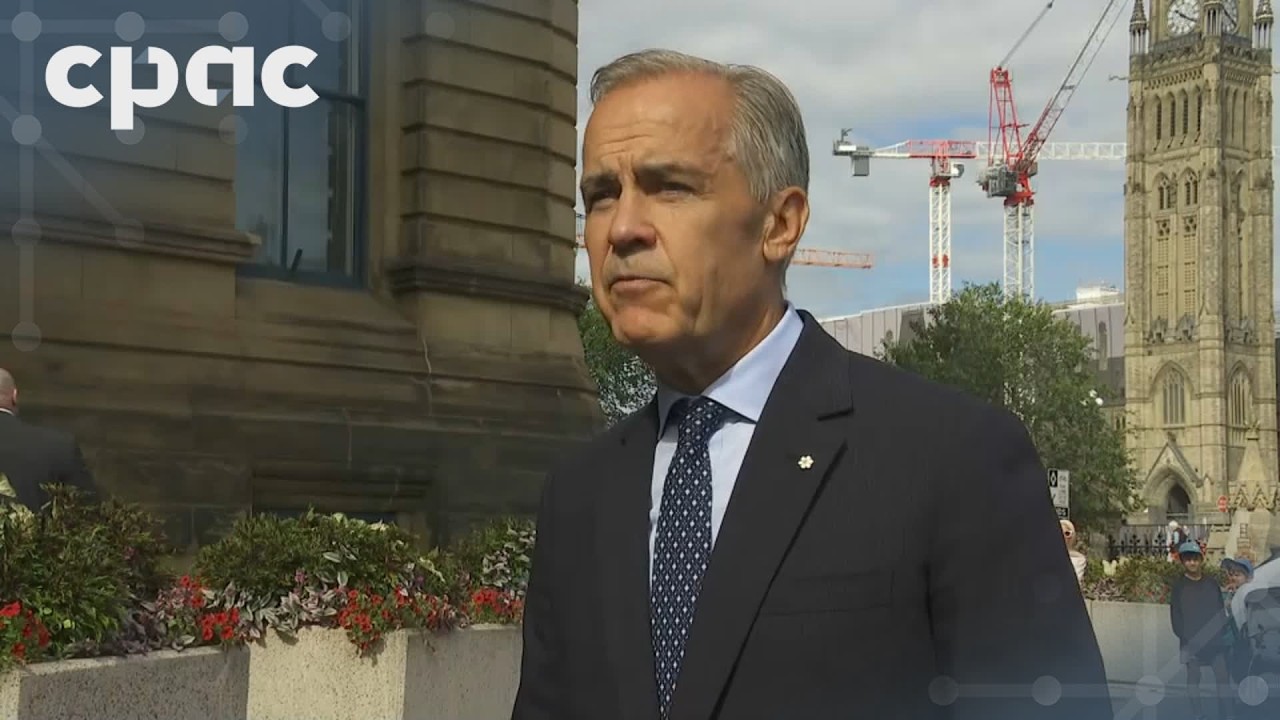
Prime Minister Mark Carney’s latest CPAC-listed appearance combines two subjects: Liberal byelection victories and Canada–U.S. relations.
The record is dated September 1, 2026, making it the clearest new political development in the supplied material: the governing party’s electoral performance is being presented alongside the bilateral relationship.
Key facts:
CPAC published Carney remarks on Liberal byelection victories September 1, 2026.
The September 1 appearance also addressed Canada–U.S. relations.
Carney spoke after Parliament’s sitting concluded on June 25, 2026.
Carney spoke with reporters in Ankara, Türkiye, on July 8, 2026.
Why it matters: The September 1 framing places electoral success and Canada–U.S. relations in the same public conversation.
For Carney, that creates an opportunity to connect domestic political momentum with the government’s international agenda, although the supplied material does not show how he made that connection.
The next important signal will be whether Carney treats the byelection victories as evidence of broader political support, and how Conservatives respond.
The available records establish the subjects of the appearances, but not policy changes, polling effects or a direct exchange with Pierre Poilievre.
Poilievre Faces Fresh Conservative Pressure as Harper Leads Leadership Alternatives
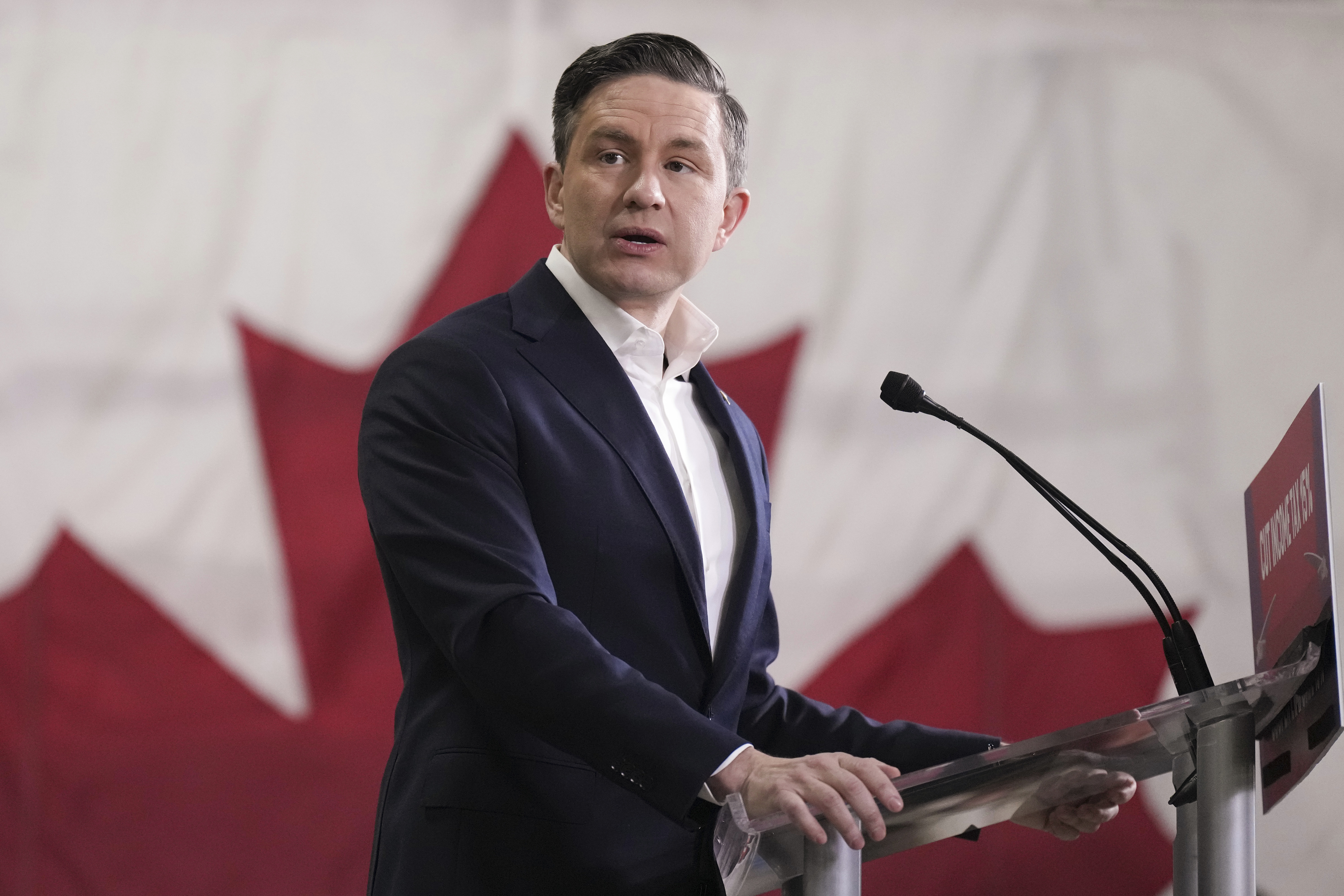
Pierre Poilievre is facing renewed questions about his ability to lead the Conservatives after a Nanos survey found Stephen Harper, not Poilievre, was the most frequently named potential challenger to Mark Carney.
Sixteen per cent chose Harper, 15 per cent chose Poilievre, while 33 per cent said no Conservative could defeat Carney. The survey also gave Carney a 36-point lead over Poilievre as the preferred prime minister.
The Tyee reported that 15 of 17 Conservative MPs contacted by CTV agreed the poll reflected serious concerns, with some doubting Poilievre would remain leader until the next election.
The party’s immediate test is the August 31 federal byelections, particularly Chicoutimi–Le Fjord, which Conservatives narrowly won in 2025.
The backdrop is worsening for Poilievre: an Abacus Data survey conducted in May showed the Liberals leading nationally by 12 points, while Carney attacked Poilievre in June, saying he “doesn’t believe in Canada. ”
Key facts:
Nanos found Harper ahead of Poilievre among Canadians naming a potential Carney challenger.
Sixteen per cent chose Harper; 15 per cent chose Poilievre.
Thirty-three per cent said no Conservative could defeat Carney.
Carney led Poilievre by 36 points as preferred prime minister.
Fifteen of 17 Conservative MPs told CTV the poll reflected serious concerns.
Why it matters: The polling weakens Poilievre’s claim to be the Conservatives’ strongest route back to government and gives caucus critics a concrete measure of voter dissatisfaction.
The Tyee’s account suggests the party’s problem is not only its standing against Carney, but the absence of an obvious replacement: Harper ranked first, yet the article says a return is unlikely, while Doug Ford and Peter MacKay attracted much smaller shares.
The byelections therefore become an early test of whether the polling translates into electoral damage.
A poor Conservative result in Chicoutimi–Le Fjord could intensify internal pressure on Poilievre; a stronger performance could buy him time to revise a campaign approach that the Tyee says failed against Carney in 2025.
Conservatives raise fundraising concerns as Poilievre faces weak polls

Conservative insiders are warning that Pierre Poilievre’s party may be heading toward a fundraising slump as weak polling and public infighting deepen doubts about his leadership.
A Global News analysis of Elections Canada filings found Poilievre attended seven party fundraisers in the first six months of 2026, versus 27 over the same period in 2024, when Conservatives were riding high in the polls.
Q2 results are expected later this month, with insiders worried the party needs the money.
Poilievre’s team disputes the alarm: a senior source expects a “strong” showing, while communications director Sarah Fischer says the party raised $9.4 million from 40,410 individual Canadians in Q1, its second-best non-election first-quarter result.
Still, multiple Conservatives describe a disheartened party and question whether he can recover after the Liberals won another majority; critics want him out, but he vows to fight and MPs remain.
Infighting has become public, including Poilievre’s Calgary jab at “Liberal lobbyists from out east,” interpreted as criticism of strategist Kory Teneycke.
Key facts:
Poilievre attended seven party fundraisers in the first six months of 2026, down from 27 in 2024.
Conservatives raised $9.4 million from 40,410 Canadians in Q1 2026.
Q2 fundraising results are expected to be publicly released by the end of July.
Multiple Conservatives question Poilievre’s election prospects after another Liberal majority.
Poilievre’s Calgary remarks were interpreted as criticism of strategist Kory Teneycke.
Why it matters: The Q2 release will test whether Conservatives can retain the fundraising advantage they treat as evidence of broad appeal.
A weak result could reinforce the image of a leader under siege and give internal critics more leverage, while a strong result would help Poilievre’s team answer doubts about his political position.
Poilievre remains leader, but public attacks within the movement and uncertainty about his electability are now linked to the party’s financial performance.
The immediate question is whether Conservative support can be sustained while the Liberals hold a majority and a snap election appears unlikely.
Carney draws a harder line with Washington as Poilievre attacks economic record
Prime Minister Mark Carney said Aug. 24 that Canada will return to trade negotiations with the United States only when Washington shows the “right attitude” and stops treating Canada as a U.S. subsidiary.
His statement followed President Donald Trump’s threat of another round of tariffs after bilateral talks broke down. The confrontation adds an external test to a domestic political fight.
On May 29, Conservative Leader Pierre Poilievre blamed Carney’s policies after Statistics Canada reported two consecutive quarterly contractions at the start of 2026, a benchmark that can meet definitions of a technical recession.
Economists cited in that report said recession language was premature, while Poilievre pointed to mortgage delinquencies, food-bank use and five quarters of falling business investment.
Together, the reports show Carney defending Canada’s bargaining position abroad while Conservatives frame economic weakness at home as a government failure.
Key facts:
On Aug. 24, Carney said Canada would re-enter talks only after Washington adopts the “right attitude.”
Trump threatened additional tariffs after Canada-U.S. trade talks fell apart.
Statistics Canada reported two consecutive quarterly contractions at 2026’s start.
Poilievre blamed Carney’s policies for Canada entering recession territory.
Poilievre cited five quarters of falling business investment.
Why it matters: Carney’s wording makes renewed negotiations conditional on how Washington treats Canada, reinforcing a sovereignty-focused response to U.S. pressure.
That stance may strengthen his position domestically, but tariff threats and stalled talks keep the economic risk politically visible.
Poilievre has an opening to connect weak economic indicators with household pressures such as mortgage delinquency and food-bank use.
The disagreement among economists over whether Canada is technically in recession gives the Conservatives a potent political argument, but not an uncontested economic verdict.
The next indicators are whether talks resume, whether further tariffs are imposed, and whether the contraction continues.
Carney names first senators under a new hybrid appointment process
Prime Minister Mark Carney has revised the Senate appointment process and named his first senators since taking office.
The new “hybrid” model keeps an independent advisory board but removes the requirement that candidates be non-partisan, allowing appointments from elected and partisan backgrounds.
The first group includes Conservative MP Richard Martel, Carney’s principal secretary Tom Pitfield, Rodney Ouellette of New Brunswick, and Manitoba’s Geeta Tucker.
Senate government leader Pierre Moreau says the change is not a return to the pre-2015 partisan “duopoly.
” Separately, Conservative MP Michelle Rempel Garner argues that Carney should avoid a major summer cabinet shuffle, citing his slim majority, caucus tensions, committee pressures, and the need to manage expectations among floor-crossers and recent by-election winners.
Together, the developments show a government reshaping parliamentary personnel while trying to preserve control over a narrow governing coalition.
Key facts:
Carney’s first Senate appointments included Conservative MP Richard Martel and principal secretary Tom Pitfield.
The revised process removes non-partisanship as a Senate appointment criterion.
An independent advisory board will still recommend Senate candidates.
Pierre Moreau said Carney does not want to restore the pre-2015 Senate duopoly.
Rempel Garner argues against a major summer cabinet shuffle.
Why it matters: The Senate change gives Carney more flexibility to appoint people with parliamentary, partisan, and sector-specific experience while retaining an advisory process intended to preserve institutional independence.
It also creates a clearer route for the government to recruit senators aligned with its legislative priorities without formally rebuilding the old government-versus-opposition Senate structure. The cabinet question is less settled.
Rempel Garner’s argument is political analysis rather than a confirmed government decision, but it identifies the management problem facing Carney: promotions, demotions, committee workloads, floor-crossers, and new MPs all affect discipline when the government’s majority is narrow.
The next signals to watch are the advisory board’s membership and whether Carney delays or proceeds with a broader cabinet reorganization.